
Minor Arctic and Antarctic Studies
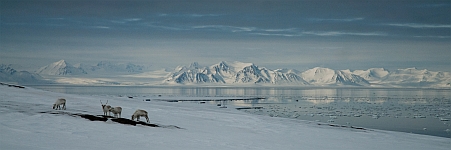
This minor programme is designed to provide a broad social and ecological overview in Arctic human-environment relations, and is suitable for students from a variety of research backgrounds. Instructors in the programme are all carrying out original research in this dynamic part of the world and have experience with policy related issues. The minor will cover both the Arctic and Antarcic
The first minor course sequence starts each year in September. If taken full-time it can be completed in half a year. The full minor contains six courses of five ECTS each. You can choose for fewer courses (see below).
You can also opt for the second minor course sequence, which will start half November.
Click here for information about registration.
For more information, please contact Frits Steenhuisen.
Content of the minor
A set of three courses of 5 ECTS each can be followed full-time. These 3 courses are different in form: in course (a) the student acts like a student, in course (b) the student acts like a teacher and in module (c) the student has to show an approach like a scientist.
The minor starts each year in September and the full-time minor will last for half a year. The minor contains of 6 courses of 5 ECTS each.
The two series courses 1 and 2 each cover half a semester and have a similar structure. Courses 1a and 2a consist of 2 times 2 hour lectures on Tuesday and Friday morning and end with an exam with open questions. These courses are mandatory if you want to follow the (b) and/or (c) course in the same block.
In the courses 1b and 2b each student will be assigned three times to different topics. You will be giving presentations about these topics for your fellow students and write a short paper about these. You will need to grade the presentations and papers of your fellow students. In that sense, you will learn to act like a teacher with a focus on preparation of lessons and grading.
In the courses 1c and 2c you will write a scientific paper. You will learn how to make a scientific analyses on a topic you can choose yourself, but which is linked to the general theme of the lectures 1a and 2a.
Course 1a: Inhabitants of the polar regions
LGX228B05
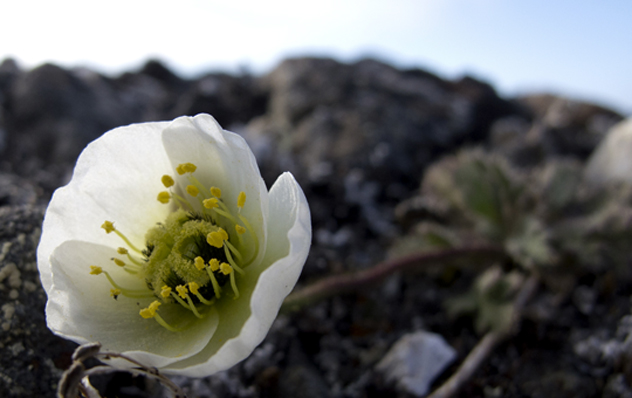
In this series of lectures you will learn about the conditions experienced - and adaptations exhibited -by plants, animals and people in the world’s polar areas. Lectures will integrate diverse subjects, including meteorology, geology, ecology, and anthropology. A strong focus is placed on physical changes, including climate change, and to the effects on inhabitants of these sensitive areas.
Course 1b: Life in polar areas
LGX227B05
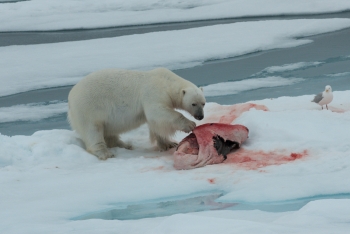
This course covers a wide range of topics relating to nature, culture, and economy in the polar areas. Throughout the course, you as a student will become the. Together with fellow student-teachers you will prepare one lecture through a 30-40 minutes live presentation, one academic poster presentation and one 20 minutes video-lecture. In parallel to giving the lectures, you will also review the work of other groups and provide feedback. This course allows you to gain knowledge, improve your presentation skills and educates you in how to provide useful feedback to others.
Course 1c: Science in polar areas 1
LGX229B05
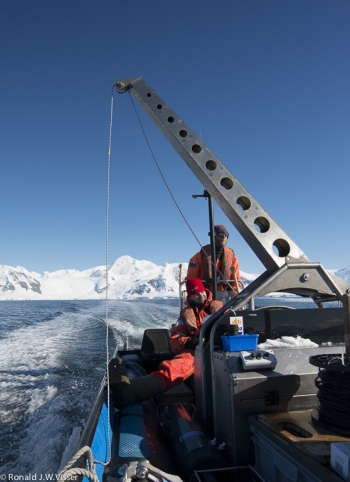
In this course, you will learn how to design your own research. Each year we select a central topic for the course and this year the topic is spatial approaches in regulating tourism in polar areas to protect natural values (e.g., Antarctica, Svalbard, Greenland, North Canada, Alaska). The course will start with a lecture on research design. Next, in small groups you will select two academic articles relevant for the central theme of the course and analyse these articles in relation to research design (e.g., problem statement, central questions and subquestions, methodology, structure, conclusions, sources use). Next, based on these experiences, you will work on your own individual research design on a subtopic relevant to the central topic. This experience will be of great value for your future educational assignments, such as writing your own paper (e.g., course 2C), your bachelor and/or master thesis.
Course 2a: Exploitation of polar areas
LGX231B05
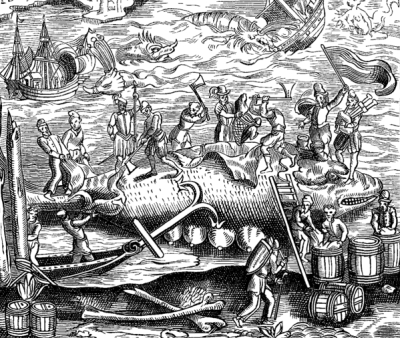
Lectures in this course will address the exploitation of mineral and living resources in the Polar Regions as well as the role of law and international cooperation in governing these regions. In the recent past, over-exploitation by, for example, European coal miners and whalers, has posed serious problems for Arctic ecosystems, and also today the polar ecosystems and people in the North face challenges or risks due to, for instance, climate change, environmental pollution and increasing tourism. We will discuss these developments and governmental responses in both the Arctic and Antarctic. While there are many similarities between both polar pegions, for certain issues it is important to clearly distinguish the Arctic from the Antarctic.
Course 2b: Exploration of polar areas
LGX232B05
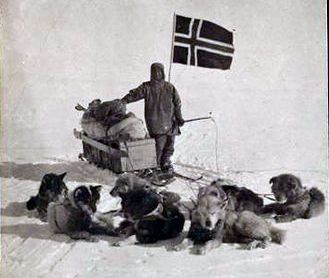
This course covers a wide range of topics relating to activities of historic exploration, scientific research, resource exploitation, and governance of the Polar Regions. Throughout the course, you as a student will become the teacher. Together with fellow student-teachers you will prepare one lecture through a 30-40 minutes live presentation, one academic poster presentation and one 20 minutes video-lecture. In parallel to giving the lectures, you will also review the work of other groups and provide feedback. This course allows you to gain knowledge, improve your presentation skills and educates you in how to provide useful feedback to others.
Course 2c: Science in polar areas 2
LGX230B05
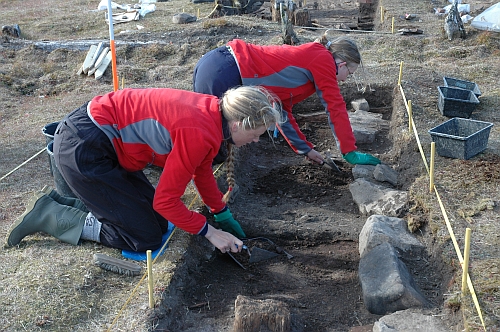
In this course, you will perform a literature study and write a scientific essay on a topic of your own choosing about Antarctic natural, social, or political science. Your topic should relate to the themes of this block being exploitation, discoveries or governance. Under the supervision of an expert researcher in the Arctic Centre, you will learn to (1) formulate a relevant and original research question, (2) review relevant scientific literature, (3) craft a professional paper/report on the topic. and (4) the use or non-use of AI in this process.
Possible themes 1c and 2c
This is an overview of paper subjects from former students
- The consequences of climate change in the arctic
- Ocean acidification
- Archeology / Acient cultures
- Adaptations of Arctic algae to the cold
- Polar bears and climate change
- Vegetation patterns in the Arctic
- Permafrost and archeological sites
- Invasive species in Antarctica
- Climate influence on Inuit way of life
- Indiginous help to Arctic explorers
- What happens after the Antarctic Treaty period?
- Ethical issues with indiginous people while doing archeology
- Developments in cartography
- Arctic security and political deadlock
- Antarctic mineral extraction
- Trans Alaskan Pipeline
What can this minor do for your career?
This programme can provide excellent preparation for a career in research (natural science, social science, humanities and law) or policy/governance. Working independently and in groups, students will learn to think critically, develop original research topics, and write well-formulated analyses. Because the programme focuses on the Polar Regions, students will gain valuable multidisciplinary insights into recent and pre-modern climate change, a topic of great relevance to a variety of research fields—from the hard sciences to history and political science—across the globe.
Additionally, a wide-ranging understanding of the Polar Regions can be a crucial asset to many public- and private-sector employers with operations in the Arctic and Antarctic, such as Royal HaskoningDHV, Musea, IAATO, AECO, the WWF, and Greenpeace.
Former students of the Arctic Centre are currently carrying out original scientific research in universities and museums, as well as policy work in international polar organizations. Others opt for a different career, but value their knowledge about the unique Polar Regions and changes due to climate change as unique background knowledge.
Student responses
From the evaluation of the minor Arctic and Antarctic studies
- "I absolutely loved the minor. It was extremely interesting and all the different professors from different disciplines were really fun.
- "It was a good minor that had a good focus and a nice spread of topic relating to the arctic regions."
- "This was a very enjoyable course. All lecturers were engaging, interesting and approachable. There were no barriers to entry, coming from a student who has never done polar studies! I would highly recommend this course to other students. Thank you."
- "A good and interesting subject. Professors teaching the course are passionate and eager to teach students."
- "The lecturers have not only presented the different topics in an explanatory manner, but they have also engaged (and encouraged to engage) with them critically."
- "The lectures have provided an overview of different topics that feels like a proper introduction to the history, environmental, and legal situations and actors in the polar areas."
Registration
Interest in the minor and studying at the University of Groningen
Register from 21 May following these two steps with different deadlines. The first step is registering your general choice, the second step is about choosing specific courses. Each block consists of three courses of 5 ECTS: course A will be lectures and an exam, course B will be preparing a lecture in a small group on a given subject and course C will be writing an individual essay on a chosen subject.
Step 1. From May 21 (6 p.m.) up and until 3 July 2026, you have to register for the minor in Ocasys. The minor might be divided in two blocks in the first semester. The first block has the focus on nature, climate change, history and indigenous people. The second block focusses on exploitation, governance and rights of nature.
Step 2. In the period from 15 June to 3 July 2026 you have to register for the specific courses in Ocasys.
If you are coming from another university in The Netherlands than the University of Groningen
Register yourself via studielink.nl as a subsidiary course (bijvak) student.as soon as possible. If it is difficult to find the university minor Arctic and Antarctic Studies, it is registered under bachelor and archaeology. With this procedure you get access to the final registration. Do note the dates of the two steps as shown under 1).
If you are studying at a university abroad
See this webpage read item 3 with deadlines 1 May and 1 June, depending on the country of origin.
If you are not studying at an university and want to follow part of the minor
You can register for the lecture courses 1A, 2A or both. Follow the procedure at this link https://www.rug.nl/let/studeren-bij-ons/andere-studiemogelijkheden/opencolleges/
For any problem with the registration or further information or the course syllabus, write an email to the course coordinator Maarten Loonen or contact bsz.let rug.nl.