
Tattoos connect Indigenous Peoples across colonial borders
Governments value cultural heritage and wish to protect it. But how do you go about this when Indigenous heritage transcends national borders? Talisha Schilder investigates how tattoo artists and members of Dayak communities are renewing their mutual cultural ties through tattooing traditions—and, in doing so, safeguarding their heritage.
It is, of course, admirable when governments recognize the value of cultural heritage within their national borders and make an effort to protect it. However, protecting Indigenous heritage proves challenging when it involves traditions that cross national borders and span multiple countries.
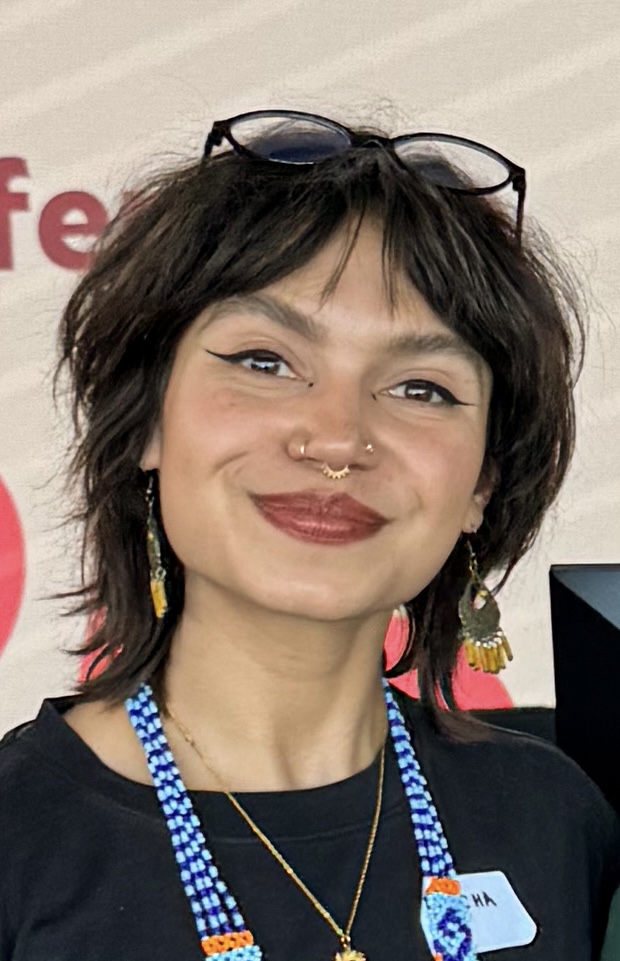
A good example of this can be found on Borneo, where Dayak tattooing traditions are rooted. The term ‘Dayak’ refers to a collective identity encompassing various indigenous communities on Borneo. Today, the island is divided among Indonesia, Malaysia, and Brunei—national borders that were drawn during colonial rule and that cut across the diverse Dayak communities.
Tattoos give Meaning
Talisha Schilder investigates the contemporary revival of Dayak tattooing traditions in Borneo. She focuses specifically on how modern Dayak tattooing practices strengthen cultural bonds and collective Indigenous identity.
Her research sheds light on how contemporary Dayak tattoo artists are reshaping their cultural heritage. Schilder says: ‘During three previous fieldwork trips to Borneo (2024–2026) and through my collaboration with Dayak tattoo artists and their communities, I have learned that the Dayak tattoo revival is about shaping and affirming their identity and interconnectedness. Tattoos allow ancestral knowledge and cultural relationships to be maintained.’
My first tattoo
For Schilder, the interest in tattoos is also personal. ‘I got my first tattoo from my aunt Pasquale when I was eighteen. It was part of a kind of family rite. But it also sparked my enduring fascination with tattoos as a way to record experiences, relationships, and connections to one’s surroundings on the body,’ Schilder explains.
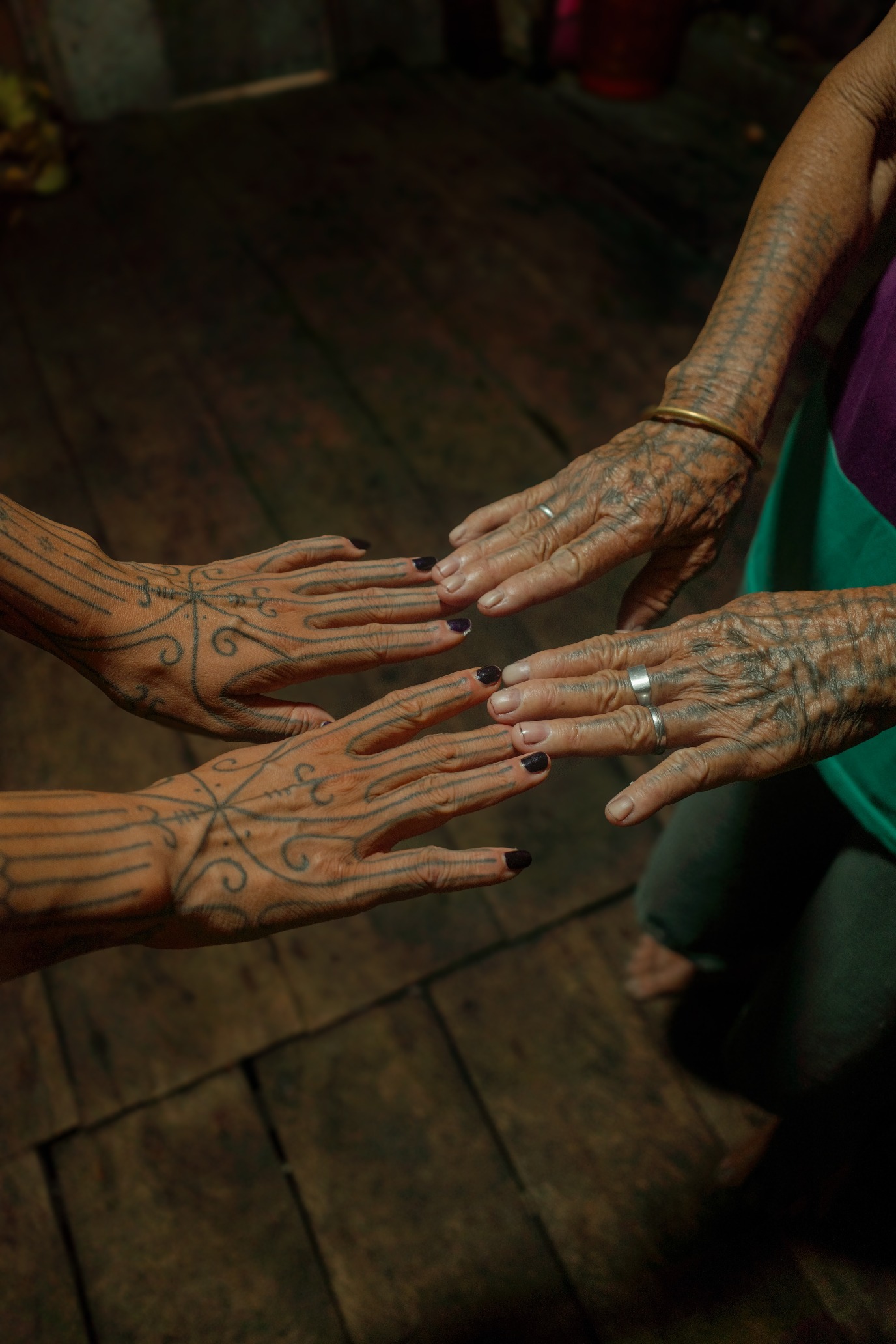
That personal interest converged with her academic pursuits during her master’s studies. Schilder, who has both Indonesian and Dutch family roots, focused on critical heritage studies, Southeast Asian politics, and the ways in which cultural heritage is shaped. For her research at Leiden University, she investigated the revival of Dayak and Mentawai tattoos in Indonesia.
Researching with rather than about
In her work, she aims to consciously break away from more traditional research conventions. Many earlier anthropological studies, for instance, described indigenous tattoos from a Eurocentric and colonial perspective. According to Schilder, this frequently results in a one-sided portrayal of indigenous communities as ‘passive’ or, worse, ‘primitive’. ‘I didn’t want to conduct research about these communities, but rather with them.’ By centering local perspectives and indigenous voices, Schilder seeks to contribute to a different way of viewing indigenous heritage.
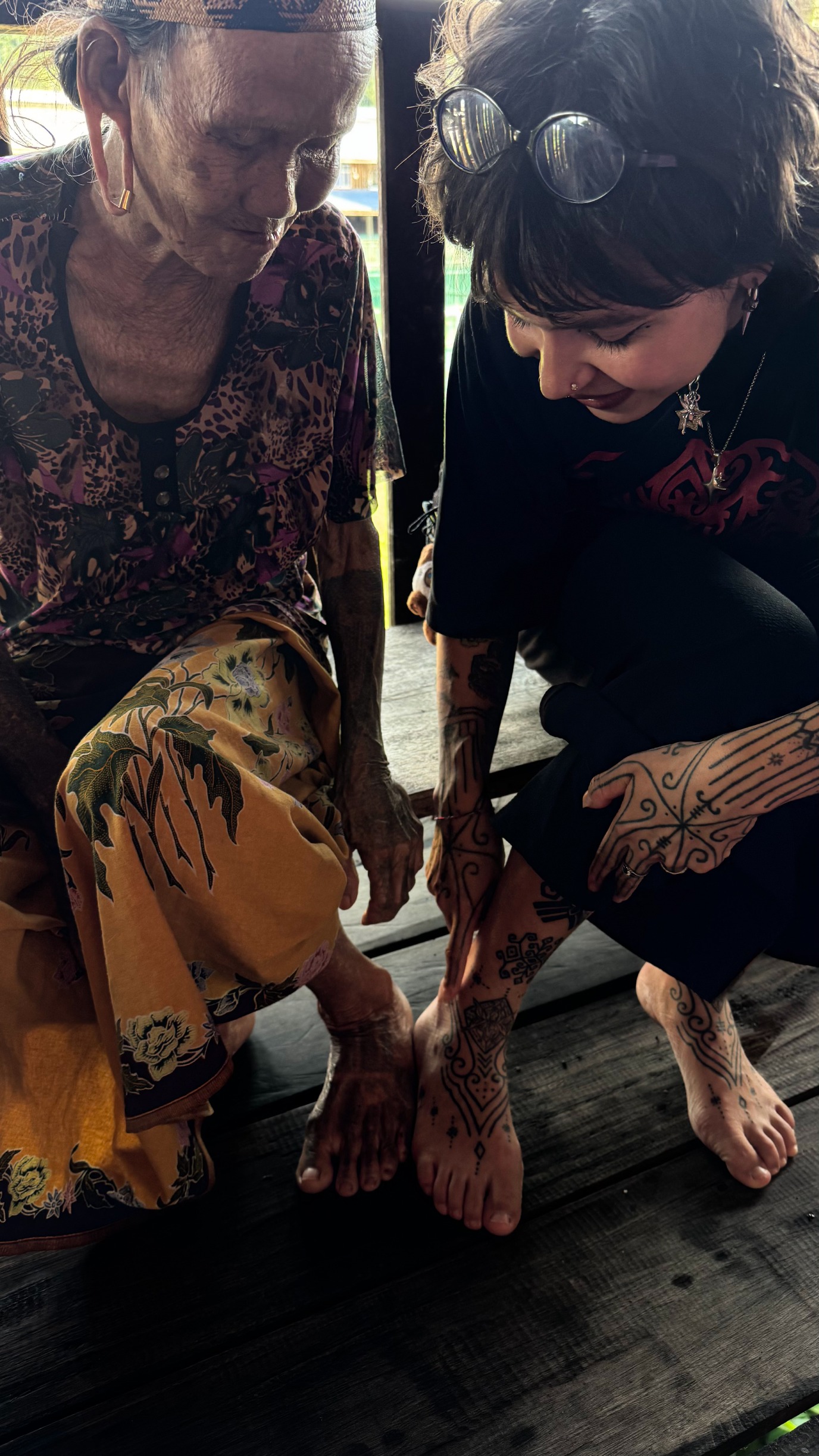
This approach took her to various parts of the Indonesian archipelago—including Kalimantan (Borneo), the Mentawai Islands, Java, and Bali—for eighteen months during her master’s thesis research. During her fieldwork, she collaborated with Indonesian tattoo artists and indigenous communities. She also undertook independent fieldwork in Sarawak and Sabah (Malaysian Borneo) earlier this year, from February to April. In this way, knowledge regarding Dayak communities is not documented solely by researchers but emerges through collaboration with the very people who uphold and renew these traditions.
Handtapping Tattooing
A significant moment in Schilder’s work was her role as a crew member at the international tattoo convention "The Borneo Handtapping Tattooing Weekend" in Kuching, Sarawak, in October 2024. Sarawak is located in the northwestern part of the island of Borneo and is a state within Malaysia.
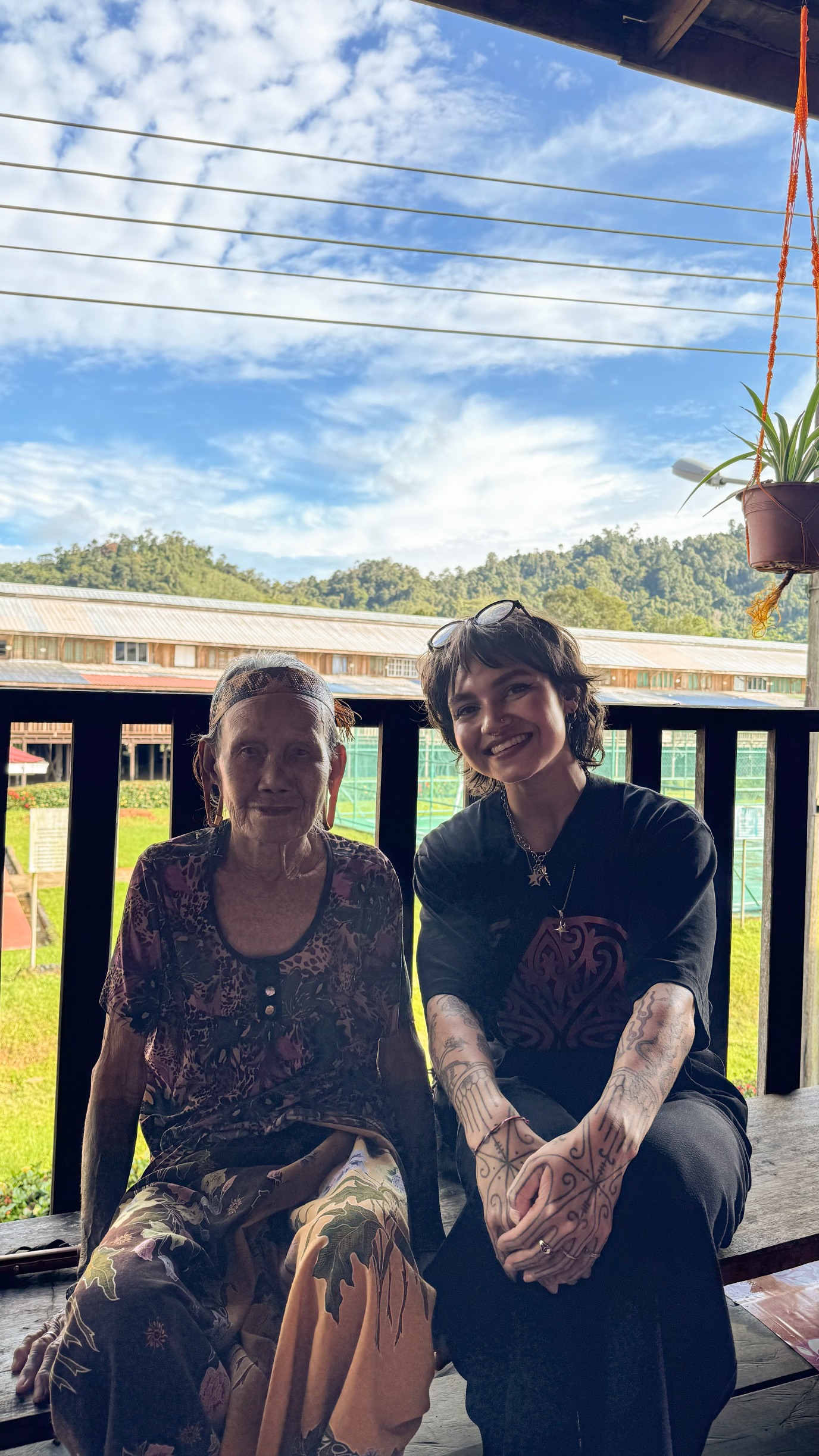
Founded by Indonesian tattoo artist Aman Durga Sipatiti, the convention takes place in the Malaysian part of Borneo and is supported by an Indonesian-Malaysian collaboration. For Schilder, the Borneo Handtapping Tattooing Weekend serves as an empirical example demonstrating that the contemporary revival of Dayak tattooing cannot be understood solely within the borders of Indonesia. This insight forms the basis of her PhD research, supervised by Dr. Shanade Barnabas, prof Dr. Lidewijde de Jong, and prof Dr. Clemens Six at the Faculty of Arts'.
By participating in the convention, Schilder also explicitly challenges the common narrative that indigenous tattooing traditions are simply at risk of disappearing due to colonialism and modernization; a view that portrays indigenous communities as passive victims. 'Such a perspective places too much emphasis on loss and too little on the agency and strength of the communities themselves. The current Dayak tattoo revival demonstrates that traditions can evolve and take on new meanings on the communities' own terms.'
This summer, Talisha Schilder received a grant from the Dutch Research Council (NWO) for her research.
The images accompanying the article were shared with the community's consent.
More news
-
-
14 September 2026
Dementia in migrants: does care in the native language help?
-
14 September 2026
Cesspits reveal what the Dutch ate centuries ago