

Win our summer reading picks!
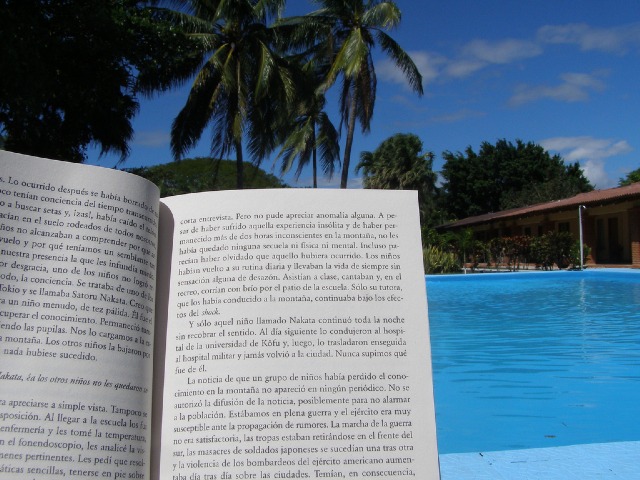
Have you already picked your summer reading list, or are you still recovering from exam fatigue and haven't had the chance to do so yet? If you haven't, Mindwise has you covered. We've picked our favourite books to take on holiday and are giving all of them away to one lucky winner!
All you have to do is comment in this post by July 20th and we will send you all six books, anywhere you are in the world! The competition is open to everyone except the Mindwise editorial teams.
Maybe you can recommend your own favourite book, write about your upcoming vacation, or just comment on why you like Mindwise so much; the most important thing is to use a valid email address so we can contact you if you win! If you want to stay updated with what is new on Mindwise, subscribe to the RSS feed. In the meantime, enjoy your summer holidays!
- The Mindwise Editorial Team
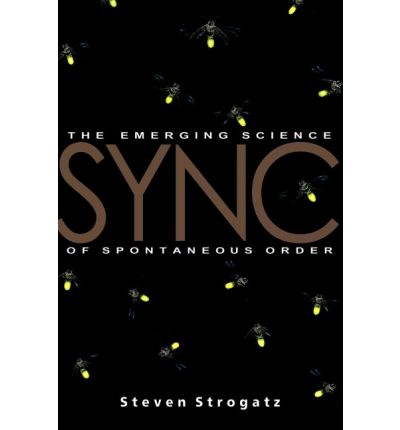
Sync: How Order Emerges from Chaos in the Universe, Nature, and Daily Life
By Steven Strogatz
“At the heart of the universe is a steady, insistent beat: the sound of cycles in sync. It pervades nature at every scale from the nucleus to the cosmos.” Yes, this is how a book should start; this is exactly what triggers my attention! Although technically author Steven Strogatz is a mathematician, the well-written book “Sync” discusses the complexity and spontaneous order in various aspects of live. True, not all topics are related to psychology, such as the synchronized behavior of inanimate objects (Christiaan Huygens observed in 1665 that pendulum clocks swing in sync when placed close to each other), but the most fascinating parts of the book do focus on synchronized human behavior. As an example, take the case of the opening of the Millennium (steel suspension) footbridge in London in 2000. A dangerous situation occurred as hundreds of pedestrians unconsciously adjusted their steps to the bridge's swinging, in sync. This caused the bridge to move in an erratic wavy pattern. The £18.2 million bridge was closed two days later. Do you dare to cross? Wikipedia tells me that the problem has been fixed for a while. After a closure of almost 2 years, the bridge was successfully re-opened in 2002, now minimizing the swinging, and taking people’s natural synchronous behavior into account. - Steffie van der Steen
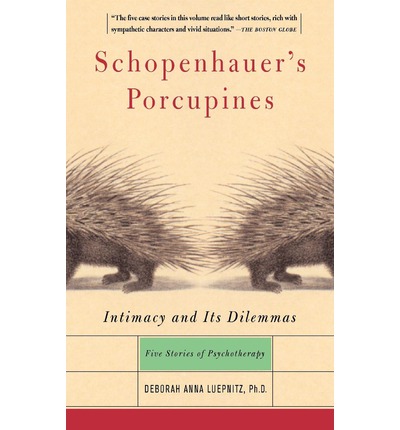
Schopenhauer's Porcupines: Intimacy and Its Dilemmas - Five Stories of Psychotherapy
By Deborah Anna Luepnitz
As a postdoctoral fellow in New York, I worked intensively with people with mood and anxiety problems. The research focused on experimental medications and I learnt a lot about biological psychiatry. At the same time, however, I would attend twice-weekly conferences on psychotherapy and group and family therapy. I loved seeing psychodynamic counselling in action, and got to know some very inspiring psychoanalytically-trained clinicians. I often think back about this time, including every fall during “Introduction in Clinical Psychology.” The course book covers Freudian concepts like transference and countertransference but focuses primarily on cognitive-behavioral interventions. Yes, they are evidence-based at the group level. Nevertheless, I believe that psychodynamic counselling can also be helpful to some people, and Luepnitz provides several excellent examples. - Marije aan het Rot

Beyond Freedom & Dignity
By B.F. Skinner
What causes our behavior? This is one of the fundamental questions of psychology. Behaviorist Burrhus Skinner (1904–1990), professor at Harvard University 1958–1974, emphasized that the environment’s structure of reward and punishment, generally called contingencies, determines behavior through reinforcement and extinction. I remember my student time when we were told that behaviorism was wrong because it neglected the role of internal processing. This seemed plausible back then, but in the meantime I have learned that the way history is told in textbooks is often just half the story. I thus kept in mind that I should read some original sources on behaviorism.
“behavior can be changed by changing the conditions of which it is a function” (p. 143)
Naturally the title of Skinner’s book “Beyond Freedom & Dignity” drew my attention, since I had analyzed the neuroscientific free will debate, questioning individual responsibility (remember titles like “You Are Your Brain”), in detail before. Skinner develops a theory of human malleability through cultural design, generalizing findings from his experiments on operant conditioning to society at large. He is very skeptical of notions like autonomy and freedom because of the strong force of contingencies. While he has been accused of advocating a totalitarian society, it is startling that his book sold millions of copies and spent eighteen weeks on the New York Times Best-Seller list. My own copy already was the 9th printing that appeared in March 1972.
One should keep in mind though that his broader views on social philosophy clearly go beyond his experimental work. Nevertheless, it was an inspiration for me to critically question the rules under which I am living, for example, as a young academic: Which behavior is rewarded (e.g. publishing papers), which is punished (e.g. not receiving grants), who actually enforces these contingencies, who decided them and for which aim? Skinner himself emphasized that to prevent abuse of cultural design, we must become aware of the contingencies and also control our controllers (p. 160); considering this point, his view actually seems very democratic. While the times of behaviorism have long passed, I am reminded of the book anytime I choose a “bonus” product at my local supermarket. - Stephan Schleim
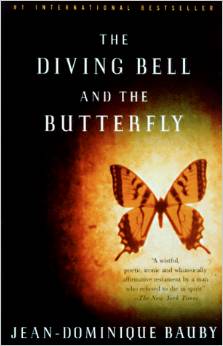
The Diving Bell and the Butterfly: A Memoir of Life in Death
By Jean-Dominique Bauby
I recently read Jean-Dominique Bauby’s book entitled ‘The Diving Bell and the Butterfly: A Memoir of Life in Death’ again. In the book, Bauby describes his life after having suffered a stroke in the brain stem which left him in a locked-in syndrome. A locked-in syndrome is a rare condition in which sufferers are awake and fully conscious but unable to speak or move any body part, with the exception of the eyes (Bauby spelled his book by blinking out his thoughts via his left eye). There is a lot to like in this book but what I like most is that out of a sudden, I enjoy and value all the small details of daily life which we are so ready to take for granted. - Lara Tucha
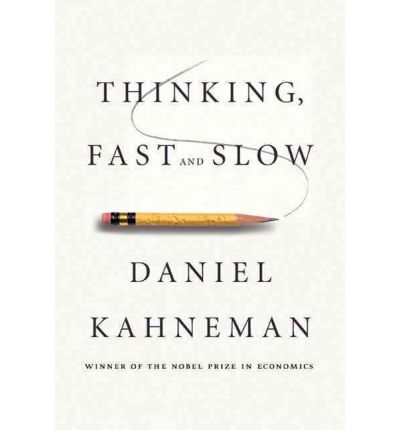
Thinking, Fast and Slow
By Daniel Kahneman
Ask yourself or your friends when you next have the chance: "Why do highly intelligent women tend to marry men who are less intelligent than they are?" It is interesting to hear the range of answers and enjoy their creativity, but I'm willing to bet good money that the real reason doesn't feature among them.
Daniel Kahneman won the 2002 Nobel prize in Economics for the work that he and Amos Tversky did, demonstrating that humans are not the rational decision-makers they claim to be. Now, Kahneman steps into the waters of popular-science writing with a book that is an excellent demonstration of his thinking and writing brilliance. In 38 chapters, he provides an eloquent and approachable summary of most of his career's work, without seeking to talk down to the reader. He frames this under the unifying analogy of two thinking systems; one slow, purposeful, and effortful and one fast, automatic, and effortless. Along the way, he offers convincing insight on how people make choices and decisions, often counter to reason. There are valuable lessons to be learned, but the pills that contain these lessons are easy to swallow, if not easy to digest. - Tassos Sarampalis
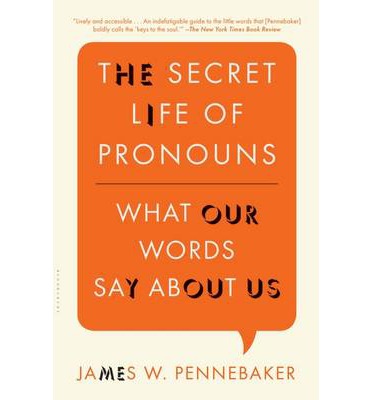
The Secret Life of Pronouns: What Our Words Say About Us
By James W. Pennebaker
In The Secret Life of Pronouns, social psychologist and language expert James Pennebaker uncovers the power of those words that seem so insignificant in our language: The pronouns. The use of I, we, me, and us are related to important everyday questions, ranging from: “How to explain the success of Presidential speeches? (compared to George W. Bush, Barack Obama uses almost half the number of I-words in his speeches)” to “How to predict the likelihood that speed dating couples will go on a second date?”
Although the book does a nice job in relating pronoun use to topics such as lie detection and suicide, I believe the value of Pennebakers book lies in explaining how analysing the use of pronouns and other function words gives insight in the ways in which people are connecting to each other, in terms of group cohesion, power relations, and love. - Namkje Koudenburg
NOTE: Image by José David Leiva, licenced under CC BY 2.0