


Summer reading 2018

You wouldn't tell from the view out your window, but summer's almost here again; just a couple more days until the official arrival. We're half-way through the exam period and the year really is almost over. Everyone's making plans for their holidays and dreaming of adventure, relaxation, a sandy beach, a busy new city, or a peak to climb.
Every year, we ask staff and students from our department to write about the books they love and think you will love too. These are the books that we recommend you take to your vacation this summer and, just to make sure you do, we will send them to one of you for free!
The theme for the selection this year is illusion, a topic that you'll see is interpreted differently by every one who contributed this year. In all cases, though, the books are guaranteed to keep your attention and trip your mind all through the summer.
To enter for a chance to win all five books, all you have to do is leave a comment in this post before July 1st.
THE COMPETITION IS NOW CLOSED
Maybe you want to share with us your favourite summer book, or one that comes to mind most vividly when you think of this year's theme. Even a quick hello will do! Whatever you share with us, we will pick one entry at random and send the lucky winner all five books, wherever they are in the world. The competition is open to everyone except the Mindwise editorial teams.
- The Mindwise Editorial Team
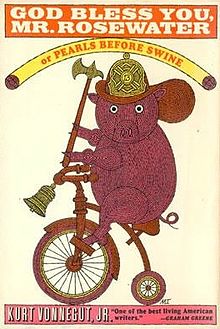
GOD BLESS YOU, MR. ROSEWATER
By Kurt Vonnegut
Hello, babies. Welcome to Earth. It’s hot in the summer and cold in the winter. It’s round and wet and crowded. At the outside, babies, you’ve got about a hundred years here. There’s only one rule that I know of, babies — ‘God damn it, you’ve got to be kind.
Kurt Vonnegut has done a great service to humanity by tirelessly poking holes to the illusory existence of a modern individual. If you are not familiar with his ironic, eloquent, occasionally (seemingly) senseless way of perceiving reality, I would recommend you give it a try. Vonnegut shows us how pathetic we truly are, and yet how marvelous, and full of potential, if only given the chance. Although his writing may seem lighthearted at first, a deeper glance shows a truthful and poignant observation of modern life, and the human character molded by it. One of the most well-known quotes by him: "A purpose of human life, no matter who is controlling it, is to love whoever is around to be loved", is an underlying theme in all of his books, but especially in this one. There is an insistence upon reality in which we are always capable of loving, despite the fact, that we often do not know how to do it properly.
God Bless you, Mr. Rosewater is a story of a truly altruistic pursuit, and reminds us that despite the circumstances that we get placed in, we can still be good to those around us. The story shows the paradox of us humans at every turn expecting the worst of others, and yet still being capable of delivering the most reasonable version of ourselves, if only treated properly. I would recommend it as a summer reading for anyone, but especially to the secret admirers of life in sleepy, little villages, where days filled with nothing in particular, form into lives about nothing in particular, and finally to the closing of peepholes which will be remembered by no one. The question is, was there anything else to be done here, after all? So it goes. - Johanna Sopanen (Philosophy Master student)
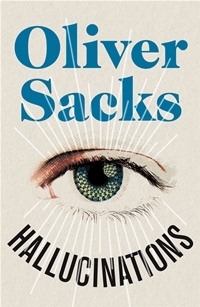
HALLUCINATIONS
By Oliver Sacks
Merriam-Webster defines an illusion as something that appears different from what it actually is. Sometimes, these illusions have their origin in the outside world, and we all experience the same misperceptions. This is the case with the Kanizsa Triangle, where we see a triangle where there is none. Sometimes, however, our brain generates illusions without any external precursor. You may call these illusions hallucinations. We generally think of hallucinations as something abnormal, something only experienced by clinical populations such as schizophrenics, or psychonauts who ingest motley ‘shrooms. In his book Hallucinations, Oliver Sacks illustrates how many “normal” people have such illusory experiences too. Have you ever heard someone calling your name, turning around to greet that person, just to realise that nobody’s there? Yes? Well, then you yourself have experienced a hallucination just there. Give it a try and this book will disillusion your views on hallucinations. - Emil Uffelmann (Psychology Bachelor student)

THE MINDS OF BILLY MILLIGAN
By Daniel Keyes
What is really going on in the mind(s) of a person with dissociative identity disorder? Billy Milligan was the first case in the U.S. who used the disorder as a defense in court after being accused of several felonies, including armed robbery and the rapes of three women. In his book, Daniel Keyes offers us an insight in Billy’s past, who has been a victim of child abuse himself. The tales of his abuses and his later crimes are surely horrifying. Yet, it is not meant to be a horror shocker, but more an in-depth description of his 24(!) distinct and ever competing personalities. While adults and children, men and women, all with different characteristics and abilities, are fighting in his head for his awareness, Billy himself has been suffering from memory gaps that extend over years. It fits the theme of Illusion, since the reader as well as lawyers and psychiatrists, introduced in the book, find themselves in a constant struggle between believing or not believing in his condition, paired with a frequent change of sympathy and dislike for the main character, Billy Milligan. - Vincent Busche (Psychology Bachelor student)
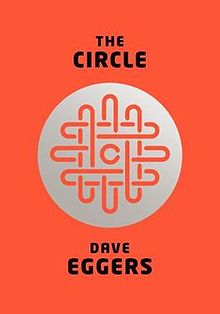
THE CIRCLE
By Dave Eggers
"Like it, post it, share it. We take random pictures on Snapchat every couple minutes, during classes, during meals. We let other people know via Facebook which event we are going to attend or at least we are interested in.
Dave Eggers tells a story of a young woman and former psychology student Maebelline Renner Holland working in a company (“The Circle”) which tries to achieve a society in which no one has any secrets to anyone else. It is based on the assumption (or illusion) that any secret is immoral and any transparency is good. The intention is that total transparency leads to total security, pure democracy, and perfect protection against any crime. Everything that everyone does is recorded, streamed, archived, and made available for anyone and everyone to see. The Circle reveals the benefits of a centralized mass data collection but also how it influence and overshadows the comforts of privacy.
Eggers wrote an easy written thought experiment which I think is worth to read and think about." - Fenja Kruse (Psychology Bachelor student)
THE CELESTINE PROPHECY
By James Redfield
Read this story to be taken on an adventure that combines conspiracy and thrills with the search for spirituality and deeper connection to life and those around us. Star Wars left viewers trying to use the force on a distant remote control or cup of, ’The Celestine Prophecy’ will have you putting your fingers together in front of your eyes and getting eyestrain from squinting at plants. In my teens, the book was passed around my spiritually minded friends as a fun piece of pop spirituality. This story beckons you to shatter the illusions of society and start your path to becoming ethereally minded. - Calum Guthrie (Psychology Bachelor student)