


Summer Reading 2017

Woah! It's almost summer already; just a couple more days until the official arrival. We're half-way through the exam period and the year really is almost over. Everyone's making plans for their holidays and dreaming of adventure, relaxation, a sandy beach, a busy new city, or a peak to climb.
Every year, we ask staff or students from our department to write about the books they love and think you will love too. These are the books that we recommend you take to your vacation this summer and, just to make sure you do, we will send them to one of you for free!
The theme this year is journey, an adventurous topic that can be described or experienced in very different ways. For many new students being at university will be another journey in their life, for some a scary journey, for others an exciting one. But whichever journey is ahead of you in the future, we will try to enlighten it with this amazing list of books!
To enter for a chance to win all seven books, all you have to do is leave a comment in this post before July 1st.
THE CONTEST IS NOW CLOSED
Maybe you want to share with us your favourite summer book, or one that comes to mind most vividly when you think of this year's theme. Even a quick hello will do! Whatever you share with us, we will pick one entry at random and send the lucky winner all six books, wherever they are in the world. The competition is open to everyone except the Mindwise editorial teams.
- The Mindwise Editorial Team
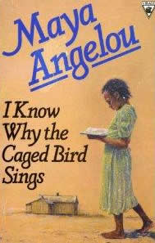
I KNOW WHY THE CAGED BIRD SINGS
By Maya Angelou
“The caged bird sings with a fearful trill,
of things unknown, but longed for still,
and his tune is heard on the distant hill,
for the caged bird sings of freedom.
The first book that popped into my head when I thought about a journey is the Harry Potter series. But I thought I could not get away with that as a librarian, who knows of the best gems in literature of course. So the book I chose to recommend to you is ‘I know why the caged bird sings’ from Maya Angelou. It is the first book in her auto-biography of seven volumes in total. In it she describes her journey of growing up as an insecure black girl in racist America in the 30s to a strong woman who has overcome racism and a trauma. It is a very inspiring to read her story and that is why I would recommend it to you. -Marieke (Bachelor student)
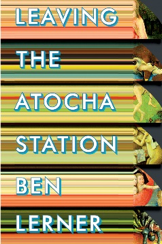
LEAVING THE ATOCHA STATION
By Ben Lerner
Good stories about a journey are rarely about the journey itself. We don’t want to just read a travel report, a comprehensive list of events and places visited. Like watching other people’s vacation photo’s, there is nothing more boring than this reduction of a journey to a sequence of things that happened.
In Leaving the Atocha Station, a young American poet named Adam spends a year in Spain on a scholarship. That is about all there is to say about the physical journey - most of the travelling happens in his interior world. Naturally Adam loses himself in all the temptations that come with being away from the place where everyone knows who you are. He invents his past as much as his new persona, spews pseudo-profound things in his broken Spanish, hoping that people will chalk it up to the language gap and mistake his inability to express himself for great intellectual depths. But despite all the days spent smoking lots of weed, drinking absurd amounts of coffee and writing very little poetry in a couple square miles around Atocha station, Adam ends up miles and miles away from where he left off. -Jesse Havinga (Philosophy Master student)
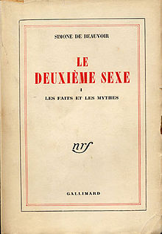
THE SECOND SEX
By Simone de Beauvoir
The Second Sex was a rather radical book for me which took me, or at least propelled me, on a rather progressive thought journey. As a male, there are a number of challenges I could imagine when being a woman in a patriarchal society. However, the Second Sex was one of the most eloquent and insightful analyses I have ever read and it took me to a new level of understanding the psychological and physical impact of being ‘The Second Sex’. Through detailed analyses of power relations and oppression, the book also radically changed the way I conceive of society and its functioning.
There is a ridiculous amount of misunderstanding about Feminism and while Simone de Beauvoir is not the spokesperson for the Feminist movement, and is also not without her critics, it is a great and accessibly written book to help develop your understanding about the topic. Her ability to see the bigger picture means she is not blaming men like so many men seem to fear about Feminism, but blames the structural and historical aspects of society that produce its respective subjects and oppressions. The way she explains Feminism makes you realise the aim of Feminism is not just about the liberation of women, but men too, and that it is in all of our interests to be Feminists. -Angus Smith (Bachelor student)
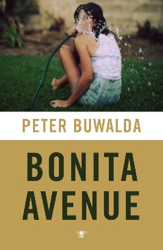
BONITA AVENUE
By Peter Buwalda
When it comes to the journey theme, I would recommend Bonita Avenue by Peter Buwalda. It is a very famous Dutch book, with a story that takes place in both The Netherlands and America. I would recommend reading it, because it contains and interesting and surprising story. It remains thrilling throughout the whole book. It is a long read, so I would say it is best to bring the book on Holiday -Jasmijn Froma (Bachelor student)
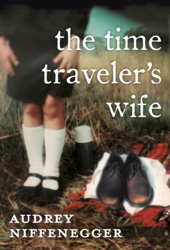
THE TIME TRAVELERS WIFE
By Audrey Niffenegger
“Love the world and yourself in it, move through it as though it offers no resistance, as though the world is your natural element.”
When this book found me – I say it found me and not the other way around because it literally fell on me – I was traveling and working on organic farms throughout the UK. I started reading in the park of Colchester, sat down next to the beautiful castle, surrounded by wild squirrels and was immediately sucked into this unusual love story and a journey through time.
Imagine you’re a little girl, playing in the garden, and you grow up meeting a man that appears and disappears randomly, at one point telling you that you’re his wife in the future. Clare grows up to love this man that shows up in different ages, in different stages of their shared life together in the future. Henry has a genetic disorder causing him to time travel uncontrollably, often triggered by stress and sometimes in the most beautiful moments when there is nothing more important to him than to stay in the present. He never knows when he leaves, where he will go and how long he will stay.
When Clare as a young woman in the present meets Henry, he does not know her although she has known him her entire life. They need to get to know and love each other on a completely different level. Waiting and worrying for him, she copes with his disappearances through art and gives life to wonderful creations that are so vividly described I could see them in front of me.
“Long ago, men went to sea, and women waited for them, standing on the edge of the water, scanning the horizon for the tiny ship. Now I wait for Henry. He vanishes unwillingly, without warning. I wait for him. Each moment that I wait feels like a year, an eternity. Each moment is as slow and transparent as glass. Through each moment I can see infinite moments lined up, waiting. Why has he gone where I cannot follow?”
Their lifelong journey through love, waiting and the struggles of their unusual circumstances took me in turn on a journey through an intense contemplation about what it means to love, how we interact with significant others, how we cope with longing for things we cannot have – and how we define ourselves. The Time Traveler’s Wife is one of my all-time favourite stories. It made me deeply think and philosophise, but it doesn’t force its way of looking at the world upon you. Instead, it gives you room to think your own thoughts.
This story is written as a metaphor about the author’s failed relationships. I prefer seeing it as a metaphor on how to learn to be happy, whole and complete on your own – a metaphor on how to learn to welcome someone in your life that is also whole on their own, to learn how be even more together. -Ebby Shirazi (Bachelor student)
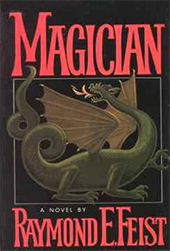
MAGICIAN
By Raymond E. Feist
Raymond Feist’s - Magician is the start of a summertime supply of fantasy reading.
If you should know a fantasy author, you should know him. Raymond Feist wrote till today multiple fantasy books, which all play in the same world of Midkemia and over several century’s. The story begins with a boy called Pug who becomes an apprentice of a Master Magician. He experienced learning problems and just can´t find his right place in the whole magical world.
I don´t want to spoiler that much, that’s why I leave it like that. The books of Raymond Feist are interesting and really addicting. Sometimes they switch from happy and friendly to dark and brutal really fast.
It is one of my favourite books because it combines real world problems with a sense of magic. The story of Pug reminds me of some many people who are really talented and creative, but didn't reach their full potential due to the way society looks on them. I learned from that book that sometimes you should switch the environment to achieve what you want to become. As I went to all the books I saw that not only the characters develop themselves, but also the author progresses in the years of writing. In the end I would really recommend this book, because it is not that only a killer of boring hours, but also a good introduction into the genre of fantasy.
-Hannes Schilling (Bachelor student)
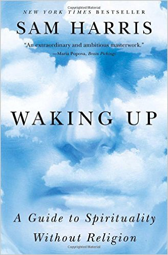
WAKING UP
By Sam Harris
In this book, Sam Harris not only eloquently describes and explains what some of the latest research in neuroscience has found out about our brains and their relation to subjective experience, but also offers a compelling philosophical framework in which to interpret these findings. This, in turn, creates an opportunity for the reader to live a life informed by these scientific advances and make sense out of the experiences that are an integral part of what it means to be human, experiences that could adequately be described as spiritual.
The reasons why I associate this book with the theme of journey are manifold.
Firstly, it has been the beginning of a journey of my own. It inspired me to discover the ever-expanding landscape of mind that had been there all along, but that I had never probed myself. Ever since I read this book I have been continuously exploring this landscape, which not only helped my understanding of the human condition, but has also brought me great pleasure in the process.
The second resemblance to a journey that this book constitutes for me is the fact that spirituality is now being discussed with intellectual honesty and free of dogma. This book represents, at least for me, one of the first steps the Western World takes on a path towards discussing this, in our society, generally disregarded dimension of human experience. The fact that spiritual experiences have, until now, mostly been used to control people, only helps to appreciate their reinterpretation and the incredible potential they bare for human flourishing even more. It’s a path that we are still at the beginning of, but a path worth walking nonetheless. -Lukas Lohr (Bachelor Student)