


Summer Reading 2016

Every year, we ask six staff or student members from our department to write about the books they love and think you will love too. These are the books that we recommend you take to your vacation this summer and, just to make sure you do, we will send them to one of you for free!
The theme this year is home and was interpreted very differently by each of our contributors. We thought it was a topical issue for many of us. For students who have applied to join the department in September, the move may mean the first time they leave their family homes; for those who are about to graduate, a new home is in the horizon too. For all of us, it is a good reminder how precious a sense of home is and how fragile that is for those who have had to abandon theirs in haste or fear.
To enter for a chance to win all six books, all you have to do is leave a comment in this post by July 1st.
Maybe you want to share with us your favourite summer book, or one that comes to mind most vividly when you think of this year's theme. Even a quick hello will do! Whatever you share with us, we will pick one entry at random and send the lucky winner all six books, wherever they are in the world. The competition is open to everyone except the Mindwise editorial teams.
- The Mindwise Editorial Team
Goodnight, Mister Tom
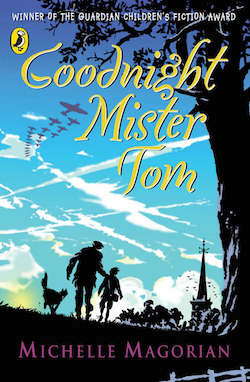
by Michelle Magorian
‘He sank into an even deeper sleep that night with the knowledge that he, Willie Beech, had survived a whole day with four other people of his own age and he had made jam.’
One's childhood should be a time for freedom, excitement and wonder. However, for almost two million children in 1939, the beauty of this period was shattered by the threat of Nazi bombings. The young evacuees, carrying no more than a suitcase, gas mask and a packed lunch were herded onto trains bound for the compulsory billeting placement in the countryside.
Although the underfed Deptford evacuee certainly needs the nourishment of good meals and a fresh country air, Willie Beech's new home placement and the slowly developing friendship with the gruff widower Mister Tom heals much more than just his thin body.
The story of Willie and Tom is equally heart-wrenching as it is heart-warming. If you are historically inclined like I am, the rich historical and social context of WW2 Britain is an extra perk. And don’t be put off by its classification as a ‘young adult’ book. It is a complex novel, well worth a few lazy summer hours, and certainly deserving of its laundry list of book awards. Unless I’m much mistaken, this artful and powerful story will stay with you long after the last page you turn. 15 years have come and gone since my first read, and yet, Goodnight, Mister Tom remains to this day one of the best fictions I’ve ever read. - Sarahanne Field (MSc student)
Robinson Crusoe
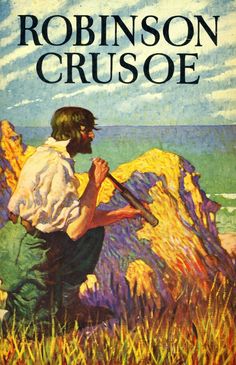
by Daniel Defoe
The ambition of a young and curious adventurer is perhaps one that many students can relate to. This classic book, written in the style of realistic fiction, focuses on the life of a somewhat wayward son who defies his parents’ wishes to become a lawyer and chooses a life at open sea. He lets his wanderlust get the best of him, and even though his first two voyages end up in disaster, he chooses to set out aimlessly into the sea yet again. Most people know of his fate – after a disaster he ends up stranded on a lonely island. He is far away from home, and has to learn how to survive on an alien land. Robinson has to figure out how to manufacture a new home for himself, and how to leave an isolated, purgatorial island-prison. After spending years there, he manages to adapt and provide a stable life and even meets a friend – a local cannibal whom he calls “Friday”. Robinson Crusoe explores Robinson’s life through the lens of the historical period he lives in, and provides a subtle commentary on British Colonialism, slavery, personhood, friendship, and of course – home. - Yavor Ivanov (Bachelor student)
The New Life
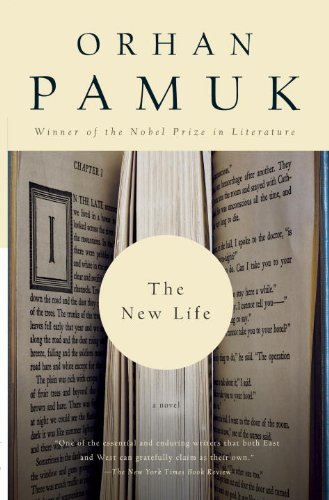
by Orhan Pamuk
Osman starts his journey in Istanbul to search for the “new life” described in a mysterious book; for an angel, and for the beautiful Canan whom he fell deeply in love with. The book changes the meaning and purpose of his life; his only relief is to enter the world described in this book. Madly in love with Canan, he follows her; Canan suffering from his one-sided love but still following their mutual goal: to reach the other world. In the following months, they travel through East Turkey – restless but still hopeful. The New Life describes Osman’s search for something different and supernatural; he wants to escape the ordinary life he had before reading the book. At the same time, the journey which leads him to the deep east of Turkey shows him the old, melancholic soul of the place he calls home. In the end, his journey is not only a search for a new life and love but also as a quest for the most important thing he tries to escape from: himself. - Pelin Diraki (Bachelor student)
The Hobbit (There and back again)
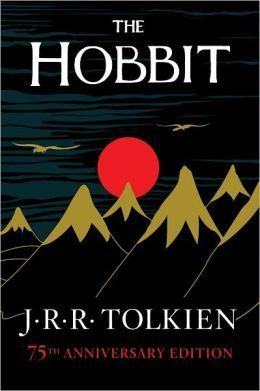
by J.R.R. Tolkien
This book is a must-read for every fantasy fan but is also a great experience for those who usually do not fantasise as much. Tolkien has a pleasant way of writing and adds bits of humour all throughout the book. The overall themes however, are more serious. Greed, courage and a search for a home blend together in this novel and keep capturing your attention. It's not only the longing for a home that drives the plot; it is also about learning to be away from your comfort zone and the power that even the smallest link in the chain can provide. Overall, it is a wonderful read and a recommendation for everyone. - Tom Jalink (Bachelor student)
The Old Man and the Sea
by Ernest Hemingway
I liked to think that my inherent place in this world was anywhere outside of it. I would run out of fingers and toes counting the times I have been questioned about that stubborn passion about leaving. Santiago's hunt in Hemingway's The Old Man and the Sea could be a useful allegory to illustrate why. It was about undomesticated pride leaning on the wounds of an identity to take one far; further than others ever dared to go. It was about a great promised return propelling the quest beyond its end; about merging into a seemingly hostile place and also about home – the fisherman’s seashore – as somewhere to come from and go back to, but not always to belong. This summer I recommend finding a sunny beach and taking some time to stroll through the old man's reflections on determination and greatness embedded in inspiring descriptions of the sea, the sun, fishing and survival skills. - Andrea Horta Herranz (Bachelor student)
Blood, Bones & Butter
by Gabrielle Hamilton
It’s a chicken-and-egg question which came first: my sense of home not being tied to a certain location or having lived in so many different places in my life. So it is, instead, that my feelings of belongingness and restfulness stem from a connection to a borderless culinary history and identity. That is to say, I feel most at home in a kitchen, or with my nose in a cookbook. Maybe that explains why my book choice for this year’s theme is a chef’s memoir, but there’s a little more to it than that. Gabrielle Hamilton’s journey, as told in the wonderfully titled Blood, Bones & Butter, is also a story about homes. What home means to a child, when her world is endless; how feelings of security and safety can be grounded (or torn apart) by relationships; and ultimately how she comes to build her own home – a restaurant, new families and new points of reference. - Tassos Sarampalis