


Summer Reading 2015
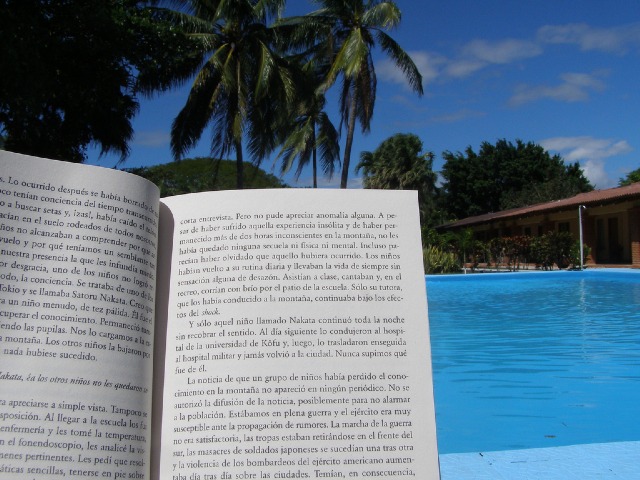
It's hard to believe it's already July and summer is finally here; exams are (mostly) over and even the sun has made its presence known. We're planning interesting things for the summer, here on Mindwise, with many student posts and maybe even some design changes, but for now, we're here to give out books!
Every year, we ask six staff or student members from our department to write about the books they love and think you will love too. These are the books that we recommend you take to your vacation this summer and, just to make sure you do, we will send them to one of you for free!
The theme this year is childhood and was interpreted very differently by each of our contributors. For some, it was about what they liked reading as children, for others, accounts of formative years by explorers of the cosmos or samurai. All of them, however, are fascinating and well-written, so waste no time in participating in our competition.
All you have to do is leave a comment in this post by July 20th. Maybe you want to share with us your favourite summer book, or one that comes to mind most vividly when you think of this year's theme. Whatever you share with us, we will pick one entry at random and send the lucky winner all six books, wherever they are in the world. The competition is open to everyone except the Mindwise editorial teams.
- The Mindwise Editorial Team

An Astronaut's Guide to Life on Earth
by Chris Hadfield
All Chris ever wanted to be when he was a child was an astronaut. Growing up in Canada, his childhood was spent dreaming about space and flying planes. He knew the chances are astronomically small. Canada didn't even have astronauts back then. But he also knew that if he wanted to be an astronaut, he would have to start training. And he'd have to make choices like an astronaut. So he started eating his veggies, did his homework, and went on to lead an amazing life on and off planet Earth. A fascinating read about dedication, making your childhood dream come true, and asking "What’s the next thing that could kill me?". - Florian Sense
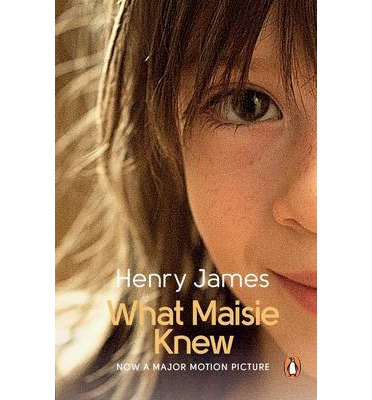
What Maisie Knew
by Henry James
Henry James (1843-1916) has been characterized as the psychologist among writers (while his brother William James is seen as the writer among psychologists). In his later novels, Henry James started to write from the point of view of his characters, in order to penetrate deeply into their consciousness and perceptions. This approach has been of a great influence on the modern – twentieth century – novel.
In What Maisie Knew, published in 1897, James reveals himself as ‘developmental psychologist’, describing experiences through the eyes of the six-year-old Maisie, a sensitive and precocious girl who is torn between her divorcing parents and their new lovers. Maisie witnesses their irresponsible and immoral behavior, but she tries to cope with the whims of her parents. For the adult reader it is easy to condemn her incompetent parents, but in her naiveté Maisie is wondering if it is all her fault: ‘I make everything bad, don’t I?’ It is only with the passing of time that Maisie, as a teenaged girl, begins to understand what is actually going on, which leads her to ultimately choose for the only reliable adult (neither of her parents) in her life.
In a preface to a later edition of the book, Henry James addressed the difficulties a writer is faced with when writing from the perspective of a child. According to James, one of the main problems is that children, as witnesses of the adult life, see so much more than they comprehend. James seemed convinced that he has met these difficulties successfully in his book, but eventually it is up to the reader to determine whether he was right. - Gerrit Breeuwsma
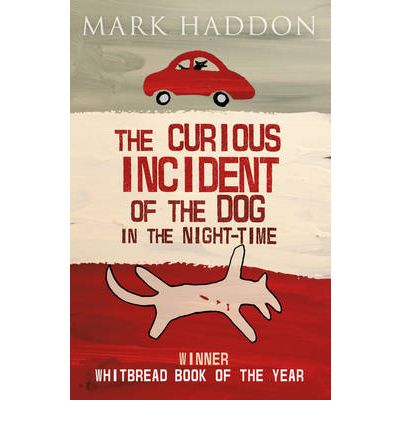
The Curious Incident of the Dog in the Night-time
by Mark Haddon
Ten years ago, I first read the ‘Curious Incident of the Dog in the Night-time’ by Mark Haddon, and was intrigued by the main character’s mind and thought patterns. I saw the rigidity of thought as well as the honest and pure open mindedness of a child who is trying, every day, to make sense of a world that does not. The book has stayed in the back of my mind ever since. So, recently I decided to read it again, this time from not only my view as psychologist. I found it endearing to see how this 15-year-old boy who appears to have a pervasive developmental disorder, tries to create order in the world around him. The very typical inability to feel or at least to interpret his own and others’ emotions, and his coping with this by analysing facial expressions, tone of voice, and other information, is depicted beautifully here. To make his world manageable, this boy holds on to rules and routines for all possible scenarios and situations. However, when his world is turned upside down when he travels to London to search for his mother, he is forced to face it full-on. The vast amount of external stimuli leaves him exhausted. Both as psychologist and as mother of a five-year-old autistic boy, this sweet and beautiful novel gives me a great insight into how the world we live in is experienced and construed by a child for whom making sense of it does not come naturally. - Francien Kok
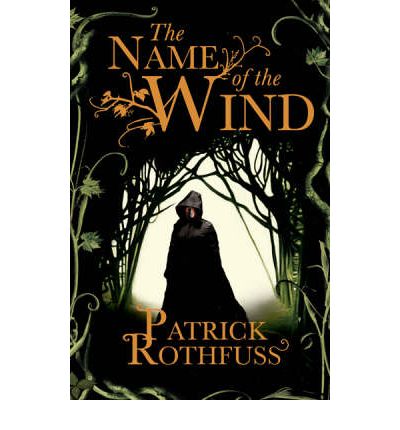
The Name of the Wind
by Patrick Rothfuss
I don’t particularly like fantasy novels—in fact, I often dislike them. But this book is an exception to the rule.
The Name of the Wind is a story within a story: the gentle innkeeper Kote is forced through circumstances to tell the story of his life—the true, unadorned story of Kvothe, the wizard, the warrior, the kingkiller, the man whom everybody has heard of, and who everybody knows for sure is dead—although nobody knows exactly how or what.
As Kote (or Kvothe) tells his story, dark clouds gather above the country: war is looming, strange monsters terrorize the roads, and everybody knows the quiet and easy days are gone. It’s not clear what Kvothe has had to do with this, although he seems to feel responsible somehow. But it’s obvious he’s not the man he once was. How did it come to this?
This first part of what will eventually be a trilogy (the third book has yet to be published) goes into Kvothe’s turbulent childhood and the beginning of his adolescence (including his entry into University, which may or may not remind you of Groningen; I won’t tell).
I have to admit that this book made me doubt whether I dislike fantasy as much as I always say I do. So what do I like about The Name of the Wind, exactly? The book is exciting, funny, well-written, and has exactly the right mix of tradition and surprise. Moreover, Kvothe doesn’t always know what he’s doing; or rather, he doesn’t always know what’s good for him. Often things turn out alright, sometimes they go terribly wrong. In other words, our hero Kvothe also is an antihero who sometimes misses the mark completely. That keeps you on your toes: you never know what’s going to happen.
All in all, highly recommended summer reading, and the same goes for the second book. Once you have finished both… the waiting for the final volume can begin. - Eric Rietzschel
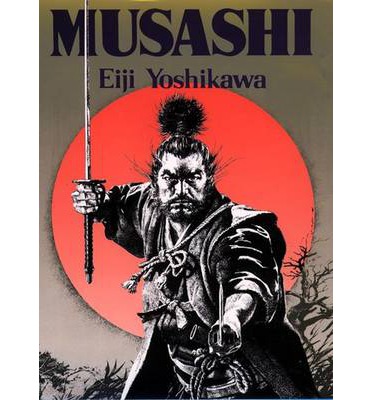
Musashi
by Eiji Yoshikawa
This is easily one of my favorite books. First published in 1935, this breathtaking historical fiction novel takes you back to 17th century Japan. At the heart of Eiji Yoshikawa’s masterpiece is the life of Miyamoto Musashi, arguably the greatest Japanese swordsman to ever roam the country. I promise that you don’t have to be a scholar of Japanese history or a martial arts fanatic in order to fall in love with Yoshikawa’s extraordinarily fascinating narration. The book follows Musashi’s spiritual ripening process in feudal Japan, at a time when the last samurais witnessed the advent of muskets. Determined to protect his ancestor’s code of living, Musashi transforms from a young violent punk, who kills his first sword duel opponent at age 13, into a masterful, yet reluctant, Buddhist hero. For me, the lessons of this book carried an awe-inspiring profundity. – Marco Schlosser
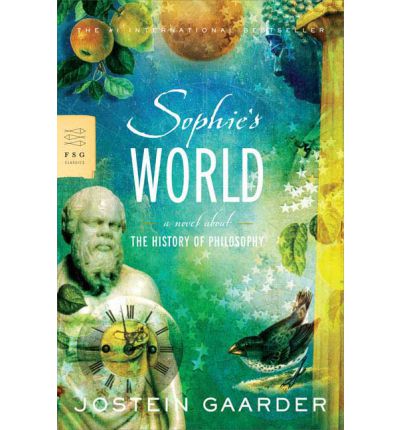
Sophie’s World: A Novel About the History of Philosophy
by Jostein Gaarder
After reading the Mindwise summer reading theme for this year, one book title immediately popped up in my mind: Sophie’s World. I was the typical girl that kept a diary including exact stories about all activities during a day. At the same time, these moments of writing were also moments to reflect on experiences by writing short poems with questions like ‘Why are things happening the way they do (does everything have a goal)?’ Thanks to their enormous capacity to be astonished, children are the best philosophers.
Sophie’s World is a book that inspired me during my early adolescent years by discussing themes that intrigued me. The book tells the story of Sophie, a fourteen-year old girl, who received a mysterious note with two questions: “Who are you?” and “Where does the world come from?” From then on, Sophie kept receiving letters from a philosopher, and learned the history of philosophy step-by-step.
In today’s fast world, I sometimes miss moments of reflection on questions that matter. I am sure that the summer could help to think as a child again. Relaxing moments with a glass of wine on a terrace and viewing beautiful mountains during holiday with awe are the perfect times to reflect on our experiences as Locke did, especially with the help of Sophie’s World. - Elise Bennik
NOTE: Image by José David Leiva, licenced under CC BY 2.0