


On Strategic Students and Getting Rid of Resit Exams
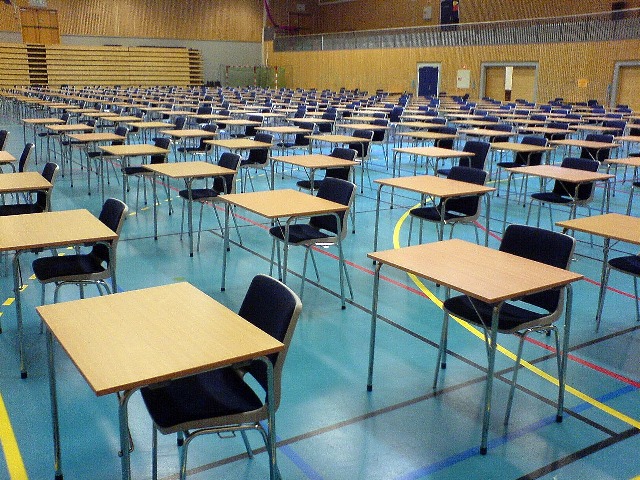
The use of resit exams in higher education is relatively unique to the Netherlands. Their use stems from the idea that all students can pass any given course, some students just need more examination chances to do so. Recently, resit exams received negative attention in the University Newspaper (UK) of the University of Groningen. A main point of critique is that resit exams prompt students to use the first exam to ‘strategically check out’ what is asked of them to pass the course [1].
it is optimal to spend less time studying for a first exam when a resit exam is available
Intuitively, this assumption of ‘strategic’ behavior seems valid, and our research supports it: it is optimal to spend less time studying for a first exam when a resit exam is available. We investigated investments of fictional study time to pass a fictional exam, given one or two chances to pass that exam. Our results showed that participants indeed invested less study time on a first exam with resit opportunity than on an exam with only a single chance to pass. We called this reduction in study time investment the resit effect [2].
Even though such ‘strategic’ exam-taking behavior is optimal, do students actually show this kind of behavior? In a UK article from January 17 2018 it was reported that only about 10% of students indicate they regularly use a first exam to ‘check it out’ [3]. If only a small percentage of students ‘abuse’ the resit system, should we even focus on getting rid of an examination policy that benefits the majority of students? In our research we found that the resit effect was reduced if access to the resit exam was restricted by, for example, requiring a non-passing grade of 4 or 5 on the first exam [2]. This suggests that students would especially ‘check out’ the first exam when resit exams are accessible for ‘free’. That is, if you can always take part in the resit. If access to the resit is restricted, this ‘strategic’ behavior should decrease and students should be prompted to study more for a first exam.
with sufficient time until the resit [...] it becomes optimal to already study sufficiently for the first exam
In more recent research we investigated another way to minimize the resit effect, namely the forgetting of course materials as a function of the time between the first exam and the resit [4]. Our results suggest that the resit effect, and thus ‘strategic’ study behavior, should decrease the more time there is between exam opportunities. The rationale behind this is as follows: if you study a little for your first exam, hoping to ‘check it out’ and pass if you’re lucky, you will have forgotten all course materials if sufficient time passes until the resit exam. If you have to re-study everything later on for the resit anyways, it would make it an inefficient endeavor to spend your time ‘checking out’ the first exam. As a result, with sufficient time until the resit, and thus forgetting, it becomes optimal to already study sufficiently for the first exam.
In conclusion, do we need to get rid of resit exams to prevent this small minority of students from ‘strategically checking out’ their exams? According to our research, no. Instead we should focus on discouraging this ‘strategic’ behavior by changing the way we provide these exams. That way we can leave the resit for what it is: an extra examination chance that the majority of students without ill intent rely on to keep their study progress on track.
Relevant Publications
[1] https://www.ukrant.nl/magazine/weg-met-herkansingen/
[2] Nijenkamp, R., Nieuwenstein, M. R., de Jong, R., & Lorist, M. M. (2016). Do Resit Exams Promote Lower Investments of Study Time? Theory and Data from a Laboratory Study. PloS one, 11(10), e0161708.
[3] https://www.ukrant.nl/magazine/tentamen-enquete/
[4] Nijenkamp, R., Nieuwenstein, M. R., De Jong, R., & Lorist, M. M. (2018). Controlling the Resit Effect by Means of Investment Depreciation. Manuscript submitted for publication.