
Valentin Mang wins REmagine PhD Award 2026
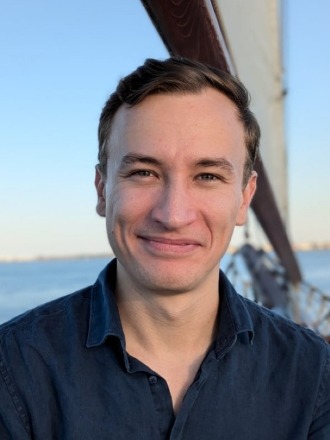
The Faculty of Economics and Business (FEB) is proud to announce that Valentin Mang has been awarded the REmagine PhD Award in Business Administration/ Management for his PhD dissertation titled ‘Beyond Truth: Evaluative and Epistemic Perspectives on the Psychological Influence of Misinformation and Conspiracy Theories’. This new award, an initiative of the Dutch Council of Deans in Economics and Business (DEB), recognizes outstanding doctoral research in economics and business that pays attention to the Human Centred Economy (HCE).
Valentin Mang recently obtained his PhD at FEB. His award-winning dissertation was supervised by Professor Bob Fennis (FEB) and Associate Professor Kai Epstude (Faculty of Behavioural and Social Sciences, UG). Mang’s dissertation contributes to the understanding of the psychological influence of misinformation, conspiracy theories, and other types of misleading information. Where previous research on misleading information has so far focused on whether people judge this information as true or false (via believing processes), Mang’s research also examines whether such information and related issues are deemed good or bad (via liking processes).
His dissertation shows that examining both believing and liking processes can better explain the psychological influence of misleading information and how it can be tackled than either perspective alone. Combining these perspectives, Mang’s research explains the psychological influence of various types of misleading information (conspiracy theories, fake news, deceptive advertising) about various topics (vaccination, climate change, politics) and assesses what can be done about it. His dissertation includes studies on how belief in conspiracy theories about climate change and vaccination influences related behavioural intentions (for example, pro-environmental behaviour, and vaccination intentions). It also examines people’s trust in experts and other epistemic authorities and institutions, how people engage with different types of information they may encounter online, and the role of social media in what people think about conspiracy theories.
Societal impact
Misinformation and deceptive advertising pose significant threats to public health, social cohesion, and democratic discourse. Mang’s findings provide actionable insights into how reflective thinking can reduce engagement with conspiracy theories and misinformation, which pose a risk to the credibility and legitimacy of policy-making and governing institutions. Moreover, the tested interventions to curb the uptake of conspiracy theories and misinformation, help to empower individuals to make better-informed decisions, both offline and online.
Mang’s work has already had a tangible societal impact: his research has been cited in policy reports (for example Edinburgh University’s Evidence Summary for Policy and Practice), demonstrating its relevance to policymakers striving to protect public health and social stability. Futhermore, Mang is is currently collaborating with the Irish Media Commission (Coimisiún na Meán) on a project to monitor levels of media literacy and resilience to online disinformation in the Irish public, which directly builds on his dissertation research.
The REmagine Awards
The REmagine Awards are organised by the 14 Dutch faculties of economics and business, which are represented by the Council of Deans in Economics and Business (DEB). The Master and PhD awards are made possible by the Goldschmeding Foundation. This year, the PhD award was launched, with two winners honoured: one in Business/Management and one in Economics, each receiving €5,000. Sander de Vries (Vrije Universiteit Amsterdam) won this year's economics category. The PhD Award offers recently graduated researchers a fitting national distinction, celebrating doctoral work that combines disciplinary rigour with evidence of value creation for societal transitions.
For the previous two years, the REmagine Awards focused solely on master's theses, rewarding innovative work in five categories: Institutional Adaptability, Future Health and Healthcare, Responsible Digital Transformation, Broad Perspective on Welfare and Sustainable Economy. Each category had several nominees and one winner. Five FEB graduates were nominated for the 2026 Master's Thesis Awards. This year, the scope of the REmagine Awards has broadened to include the PhD Award and the Senior Faculty Impact Award. The latter award was won by FEB professor Evrim Ursavas.
More news
-
07 September 2026
Why entrepreneurship thrives in specific regions
-
11 August 2026
InnoLaunch: Get your startup ready for takeoff in 8 weeks
-