
NWO XS Grants for six FEB researchers
The Faculty of Economics and Business (FEB) is happy to announce that six FEB-researchers have each received a grant from the Dutch Research Council (NWO). Swarnodeep Homroy, Lingwei Kong, Mikolaj Malinowski, Christiaan vd Kwaak, Ahmed Skali, and Yingjie Yuan received a NWO Social Sciences and Humanities grant of 50,000 euro. The awarded projects focus on a wide range of topics, from free speech protection, the impact of climate policy, misperceptions of democracy to human leadership of multi-AI teams.
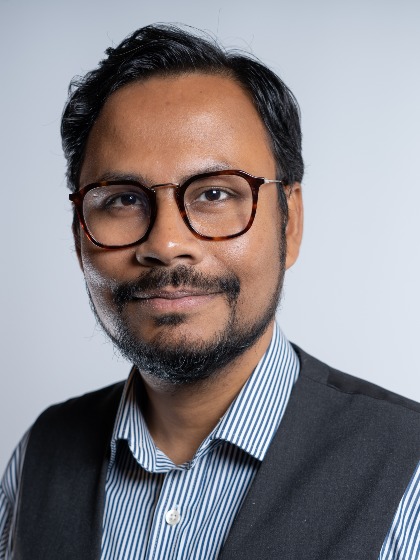
Does Free Speech Protection Foster Innovation?
Associate Professor Swarnodeep Homroy received the grant for his project on free speech protection. Cross-country evidence links free speech to higher innovation and economic growth. Yet the micro-level mechanisms behind this macro pattern remain poorly understood. Micro-frictions, such as the threat of litigation, can restrict free speech even in countries with strong constitutional safeguards. Strategic Lawsuits Against Public Participation (SLAPPs) are costly, often meritless suits filed to silence critics, journalists, and whistleblowers for criticizing the negative effects of firms’ technology choices. This project exploits anti-SLAPP statutes adopted at different times across U.S. states to provide the first causal evidence on the effects of legal protection of free speech on litigation threats and corporate innovation.

Projecting It Out: Controlling Look-Ahead Bias Without Retraining
Assistant Professor Lingwei Kong's project proposes a sensitivity analysis framework for text analysis using language models: when researchers use modern language tools to transform texts into numerical data, those tools may transfer “known” information from the "future". This can make results look more accurate or convincing than they truly are. The project will develop practical ways to detect and mitigate this problem. In doing so, the project will support better evidence in the social sciences and help researchers use these LLM-based tools more responsibly.
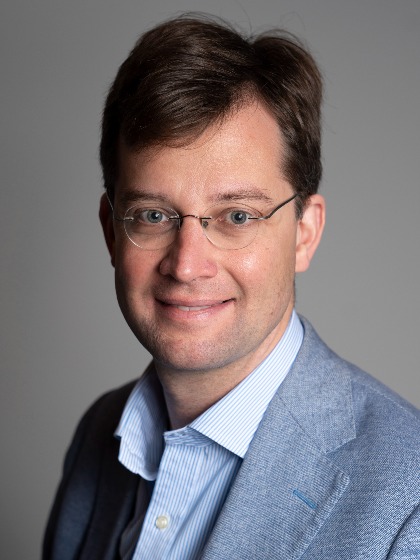
Climate Policy, Sovereign Risk, and the Green Transition: Debt, Banks, and Macroeconomic Policy
The project of Associate Professor Christiaan van der Kwaak will develop a macroeconomic model to study the impact of climate policy in an environment where a) governments rely on green subsidies and public investment, b) public debt is high, and sovereign default is possible, and c) banks hold substantial amounts of government bonds. This fits several high-debt Eurozone economies. Together with high existing debt, ambitious climate policy may trigger financial crises. The goal of this project is to investigate how fiscal and monetary policies can support the green transition and prevent fiscal and financial crises.
Power Concentration and Parliamentary Gridlock
Assistant Professor Mikołaj MalinowskiI received the grant to look into why some parliaments continue to function despite conflict while others become blocked
Using the Polish-Lithuanian Commonwealth, a major parliamentary state in early modern Europe, the project studies how the concentration of power in a small elite affected political cooperation. It focuses on three factors: elite's openness to newcomers, the distribution of state-backed economic rewards, and family ties among powerful groups. The goal is to explain how these factors shaped trust, cooperation, gridlock, and long-term political stability, and to show more broadly how elite power can strengthen or weaken representative government.
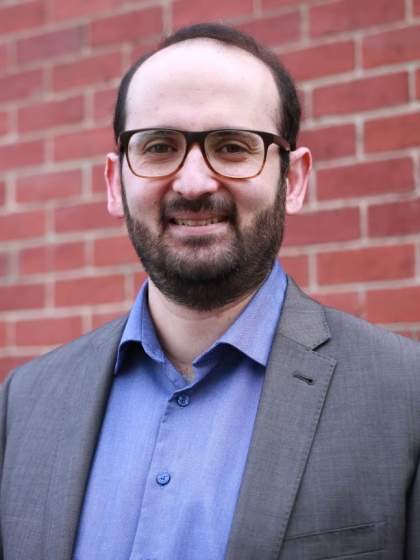
The devil you don’t know: understanding and addressing misperceptions of democracy
Assistant Professor Ahmed Skali received the grant for his project about the falling suport for democracy. Democracy matters for our living standards, personal freedoms, and academic freedom. Economic and cultural factors have been proposed as explanations, but could a more fundamental factor be at play: do citizens of democracies misperceive what democracy and autocracy actually deliver? This possibility has remained unexplored. Using a large-scale survey experiment in 15 consolidated democracies, this project investigates whether democratic misperceptions exist, whether providing corrective information improves attitudes towards democracy, and whether competing explanations, such as declining willingness to compromise, also contribute to democratic erosion.

Human leadership of Multi-Agent AI teams for Creative Problem-Solving
Assistant Professor Yingjie Yuan received the grant for her project about human leadership of multi-agent AI teams. How we work with AI is changing fast. Most people still experience AI as single chatbots, but a new paradigm is emerging: multiple specialized agents collaborating as a team. Leading AI teams is rapidly becoming a critical workplace skill. Yet science has barely begun to study it. This project conducts the first controlled experiment on human leadership of multi-agent AI teams in a creative task. Drawing on creative leadership theory, we test which creative leadership functions (directing, facilitating, and integrating) improve creative performance, and under what circumstances. Findings will help individuals and organizations develop effective strategies for human-AI collaboration.
More news
-
07 September 2026
Why entrepreneurship thrives in specific regions
-
11 August 2026
InnoLaunch: Get your startup ready for takeoff in 8 weeks
-