
NWO L grants for three projects by FEB researchers
The Faculty of Economics and Business (FEB) is happy to announce that three projects by FEB-researchers have each received a grant of about € 800,000 from the Dutch Research Council (NWO). Carsten de Dreu, Zsombor Méder, Floor Rink, Janka Stoker, Michelle Ryan, Aico van Vuuren and Gerard van den Berg are involved in these projects. The projects focus on cooperation across group-boundaries, leadership in times of inclusion and resistance and the impact of policies on inequality.
Driving cross group cooperation
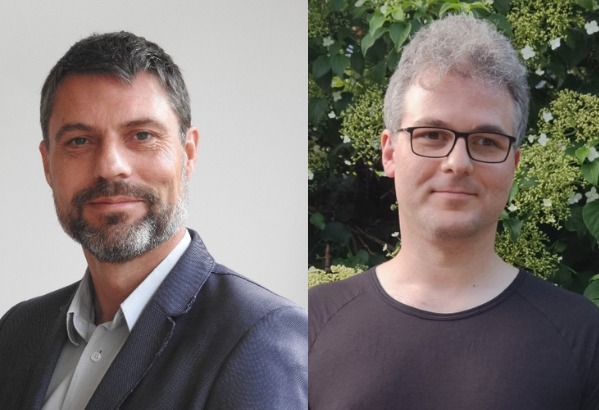
Carsten de Dreu and Zsombor Méder received the grant for their project titled ‘What drives cooperation across group-boundaries’. De Dreu is a Professor of Foundations of Cooperation and Social Organization. affiliated with both UG’s Faculty of Behavioural and Social Sciences and FEB. Méder is an assistant professor at FEB’s Department of Economics, Econometrics and Finance. De Dreu and Méder recognise the increased need for cooperation between (members of) different groups, departments, and even entire societies. Yet, people tend to limit cooperation to their own groups and organizational departments. In their project, De Dreu and Méder examine when, how, and why cooperation between groups emerges and develops. Next to new insights into the psychological and economic foundations of human cooperation, their project will result in potential implications for policy aimed at conflict prevention and making groups, organizations and societies more resilient.
How inclusion policies and resistance shape leaders’ career paths

Floor Rink, Janka Stoker and Michelle Ryan received the grant for their project titled ‘Leadership in a time of inclusion and resistance’. Rink is Professor of Organizational Behavior at FEB, Stoker is Professor of Leadership and Organizational Change at FEB, and Ryan is Professor of Social and Organisational Psychology at the Australian National University (ANU) and was previously affliated with FEB. In previous research, Rink and co-authors linked longitudinal data showing that more women are securing top positions in recent years, to other datasets monitoring when top directors leave their job and where they work afterwards. They concluded that women are reaching top leadership roles faster than ever, yet inequality persists. In this new project, they will examine the careers of men and women leaders over time to learn what happens after entry: who leaves leadership and who returns? In their project, Rink, Stoker and Ryan will study how the presence of governmental inclusion policies, amid growing societal resistance, shapes these career paths.

Studying the impact of policies on inequality
Aico van Vuuren and Gerard van den Berg received the grant for their project titled ‘How policy shapes inequality—and how we measure it’. Van Vuuren and Van den Berg are both professor at FEB’s Department of Economics, Econometrics and Finance. They see rising inequality as one of today’s most urgent challenges, yet note that most research focuses only on average effects, missing how policies affect different groups. In their project, they develop new statistical methods to study the full impact of policies on inequality. Their tools can examine multiple outcomes at once, account for policies introduced at different moments, and use machine learning to identify key factors. Van Vuuren and Van den Berg apply these methods to real-world questions in labor and health economics, helping policymakers understand how interventions affect people differently and enabling them to design fairer, more effective policies.
More news
-
07 September 2026
Why entrepreneurship thrives in specific regions
-
11 August 2026
InnoLaunch: Get your startup ready for takeoff in 8 weeks
-