
Grant of 3.5 million euro for research on effectiveness of sanctions
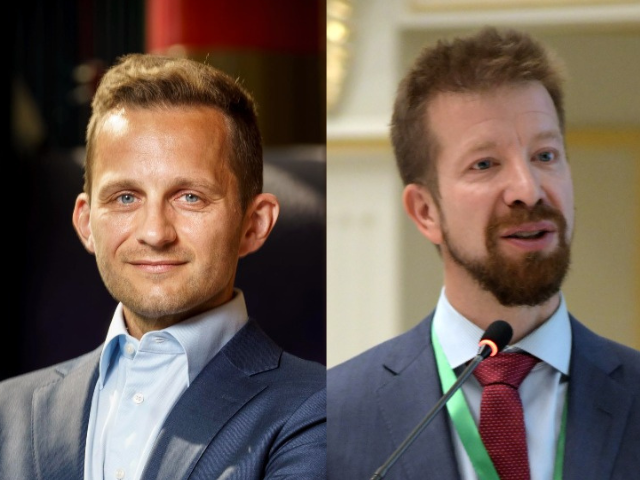
In the current volatile geopolitical situation, sanctions are regularly imposed on countries. Through sanctions, countries demonstrate that they are politically serious. But do sanctions really work? A major research project funded by the European Commission aims to clarify this. Researchers from the faculties of Arts and Economics and Business (FEB) received a Marie Curie Doctoral Network 2025 grant for their project on the effectiveness of sanctions.
The project Sanctions Effectiveness Network for Scholarship and Evaluation through Interdisciplinarity (SENSEI) responds to the gap in knowledge about the effectiveness of sanctions. Project leaders Francesco Giumelli (Arts) and Tristan Kohl (FEB) point out that there is a disparity between theory, which often concludes that sanctions do not work, and practice, where sanctions are used more frequently than ever. The heated discussions regarding the effectiveness of the sanctions against Russia following the invasion of Ukraine show that not everyone is impressed by this political pressure tool.
Practical tools for policymakers
The SENSEI project aims to develop a coherent interdisciplinary framework for analyzing sanctions, creating practical tools that support evidence-based policymaking, and training a new generation of specialists who are capable of evaluating sanctions. In their research they will incorporate legal, political and economic perspectives and this will contribute to the understanding of how sanctions function across the entire policy cycle.
These objectives will be achieved through the coordinated training of 12 Doctoral Candidates, including 1 PhD position at the Faculty of Arts and 1 PhD position at FEB. They will work across universities and think tanks specialized in international affairs. Their work will contribute to two shared outputs: an EU Sanctions Toolkit for policymakers and firms and a Sanctions Theory Handbook that will inform the academic debate about sanctions and can be used by researchers and students.
The project consortium
In total, the research consortium receives 3.5 million euros for this large multidisciplinary project which is led by the University of Groningen. The project involves 8 other European universities and 7 research institutes, in countries such as France, Belgium, Spain, Italy, Germany, Estonia, Finland, Slovakia, and the Czech Republic.
The SENSEI Doctoral Network will be central to the EU’s evolving foreign policy landscape. Sanctions have expanded in scope and complexity, now targeting individuals, firms, and sectors with significant economic, political, and humanitarian implications. This transformation calls for new analytical approaches and, crucially, new expertise. Responding to this challenge, SENSEI will establish the first ever sanctions-focused network within the EU’s Marie Curie Doctoral Network framework. By training a new generation of interdisciplinary specialists, SENSEI directly addresses the EU’s strategic need for professionals capable of assessing sanctions as complex, crosssectoral instruments of policy.
Overcoming differences through interdisciplinary collaboration
Francesco Giumelli (associate professor in International Relations) and Tristan Kohl (associate professor in International Economics) are delighted to receive funding for their project. In the view of both researchers, the project reflects both the urgency and the centrality of the challenges we face when assessing the effectiveness of sanctions in today’s geopolitical landscape. Giumelli: ‘What makes this initiative particularly valuable is the richness of perspectives brought together—from law, political science, economics, and beyond—creating a truly interdisciplinary network. At a time when cooperation across borders can seem increasingly difficult, it is especially meaningful that scholars and experts from across the EU have come together around such an important and timely topic.’
They stress that working on an issue as politically sensitive as sanctions is a stimulating challenge, but one that shows how differences can be overcome through dialogue and shared purpose.Giumelli: ‘We are particularly excited to work closely with this outstanding network and to support the next generation of PhD researchers who will shape the future of sanctions research.’
Kohl: ‘We are honoured to receive this grant. It enables us to advance our interdisciplinary research on sanctions to a truly European level. We would like to acknowledge the importance of (inter-)university initiatives aimed at stimulating interdisciplinary collaboration, such as our Sanctions Group (within the Rudolf Agricola School for Sustainable Development) and partnership with Ghent University (MINOS), which served as stepping-stones to bring this consortium together.’
The Marie Skłodowska-Curie Actions
Marie Skłodowska-Curie Actions (MSCA) are part of Horizon Europe. Horizon Europe, is the Framework Programme of the European Commission. Horizon Europe aims to strengthen the connection between scientific and technological innovation, while tackling key societal challenges set out in the Sustainable Development Goals.
The MSCA are the European Union’s flagship funding programme for the development of excellent doctoral and postdoctoral training programmes and collaborative research projects worldwide. By investing in the long-term careers of excellent researchers, the MSCA help build Europe’s capacity for research and innovation. The Commission will fund a total of 141 doctoral programmes with €617,18 million to train around 2.115 doctoral candidates in and outside academia. Among them are the 12 doctoral candidates who will be trained within the SENSEI project.
Questions? Please contact Francesco Giumelli or Tristan Kohl.
More news
-
-
14 September 2026
Dementia in migrants: does care in the native language help?
-
14 September 2026
Cesspits reveal what the Dutch ate centuries ago