Every farmer has a business, but not every farmer is being entrepreneurial
For years, farmers have experienced standstill in their businesses because of changeable and unpredictable government policy, the National Ombudsman concluded in early November. Plans for sustainability and innovation remain on the shelf, and investments are postponed to prevent the business from getting into trouble later on. 'Agricultural entrepreneurs need to know where they stand,' responded Agriculture Minister Van Essen. A good response, but it also raises once again the question that has been debated in the sector over recent months: are farmers actually entrepreneurs?
Jort Kelder thought not. On Goedenavond Nederland in late August, he claimed that farmers were more like subsidised civil servants than entrepreneurs. If the state were to withdraw the taxpayers’ money paid out as subsidies, farmers would no longer be able to survive. The sector pushed back, however, saying that every farmer is an entrepreneur. As a business-administration PhD researcher in the agricultural sector, I can understand both sides, but in my view both draw the wrong conclusion. In science, entrepreneurship is behaviour, not possession. Entrepreneurship is more than merely owning a business. The economist Joseph Schumpeter saw entrepreneurs as innovators and drivers of innovation who create new combinations: new products, methods and markets. Israel Kirzner pointed instead to the entrepreneur’s alertness, the ability to see opportunities that others miss. Frank Knight, in his view, emphasised entrepreneurial risk: bearing uncertainty that cannot be insured against.
Kelder overlooks that every farmer does indeed run a business and thereby bears risk. A failed harvest, plant and animal diseases or a price collapse are all at the entrepreneur’s own risk. Bearing risk, however, is only one side of entrepreneurship. A farmer who does the same thing within the same frameworks every year does bear risk, but does not seize new opportunities and does not innovate. A farmer’s entrepreneurship therefore only emerges where Knight, Schumpeter and Kirzner come together: bearing uncertainty in order to try something new. To do that successfully, farmers need room to manoeuvre.
Unfortunately, entrepreneurship in the Dutch agricultural system cannot be separated from the government policy that, in the post-war period, made entrepreneurship almost redundant. The promise of “never hungry again” led to guaranteed minimum prices and government purchases of production surpluses. This approach deprived farmers of the entrepreneurial risk that, in Knight’s words, is central to entrepreneurship. Optimising the business within the frameworks paid off more than innovating outside them. If we reproach farmers for leaning on subsidies, we are reproaching them for having gone along for years and done exactly what society asked of them.
"Perhaps we should turn the question around. Not: are farmers entrepreneurs? But: how much entrepreneurship do we allow in the agricultural sector?
Perhaps we should turn the question around. Not: are farmers entrepreneurs? But: how much entrepreneurship do we allow in the agricultural sector?
In my own research on business (model) transitions towards regenerative arable farming, I see that entrepreneurship has not disappeared entirely from the sector. The farmers and advisers I speak with show that businesses can change despite the system they are part of. They have done so without knowing whether the policy of the future will reward their choices. Here we see the ideas of Schumpeter, Kirzner and Knight come back: innovating, seeing and seizing opportunities, and bearing uncertainty. Not thanks to the system, but despite the system.
The difficulty is that these sustainable entrepreneurs are not economically rewarded by the market for their contribution to ecological and social sustainability. It is precisely with public goods that the market fails: nobody wants to pay at the checkout for healthy soil or an extra meadow bird, even though society is now asking for exactly this. Anyone who asks more entrepreneurship of farmers must therefore also be open to changing the playing field. That requires not only a chain that collaborates and farmers who embrace their entrepreneurship, but also a government that steers towards goals that run longer than a single cabinet term. The nitrogen letter of 3 November is a bright spot in this respect: Minister Van Essen wants to enshrine the emission targets in law and let farmers choose for themselves how to achieve them. A fixed goal with freedom in the route is precisely the playing field in which entrepreneurship can grow again.
So before we as a society dismiss farmers as civil servants again, we must first look at whether we have given them the room to actually be entrepreneurial, and we must start encouraging entrepreneurship again. Only then will entrepreneurship truly flourish.
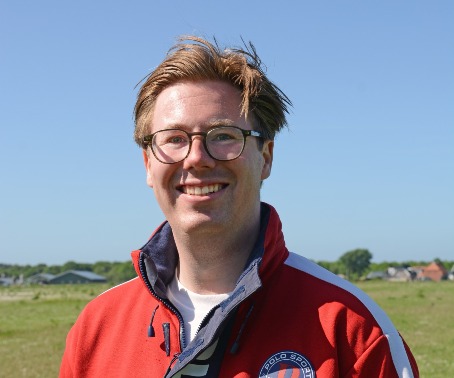
This opinion piece was written by Thom Dijkstra, PhD researcher at CDLT. He researches how arable farms can make the transition to regenerative agriculture.
Sources
Kirzner, I. M. (1973). Competition and entrepreneurship. University of Chicago Press.
Knight, F. H. (1921). Risk, uncertainty and profit. Houghton Mifflin.
Ministerie van Landbouw, Visserij, Voedselzekerheid en Natuur. (2026, 3 november). Ontwerpprogramma Landbouw, Natuur en Stikstof en Wetsvoorstel voor vastlegging van de emissiedoelen [Kamerbrief, 2026Z23902]. Tweede Kamer der Staten-Generaal. https://www.tweedekamer.nl/kamerstukken/brieven_regering/detail?id=2026Z23902&did=2026D551952
Nationale ombudsman. (2026). Een boer met kiespijn lacht niet: Ervaringen van boeren met veranderlijk overheidsbeleid (Rapport 2026/120). https://www.nationaleombudsman.nl/publicaties/onderzoeken/een-boer-met-kiespijn-lacht-niet
NOS. (2026, 4 november). Overheid was onbetrouwbaar voor boeren, zegt Nationale ombudsman. https://nos.nl/artikel/2637945-overheid-was-onbetrouwbaar-voor-boeren-zegt-nationale-ombudsman
Schumpeter, J. A. (1934). The theory of economic development (R. Opie, Trans.). Harvard University Press.
WNL. (2026, 21 augustus). Jort Kelder vindt dat boeren niet zo zielig moeten doen: ‘Vorm van terrorisme’. https://wnl.tv/2026/08/21/jort-kelder-vindt-dat-boeren-niet-zo-zielig-moeten-doen-vorm-van-terrorisme