
Diversity for Future-Proof Agriculture
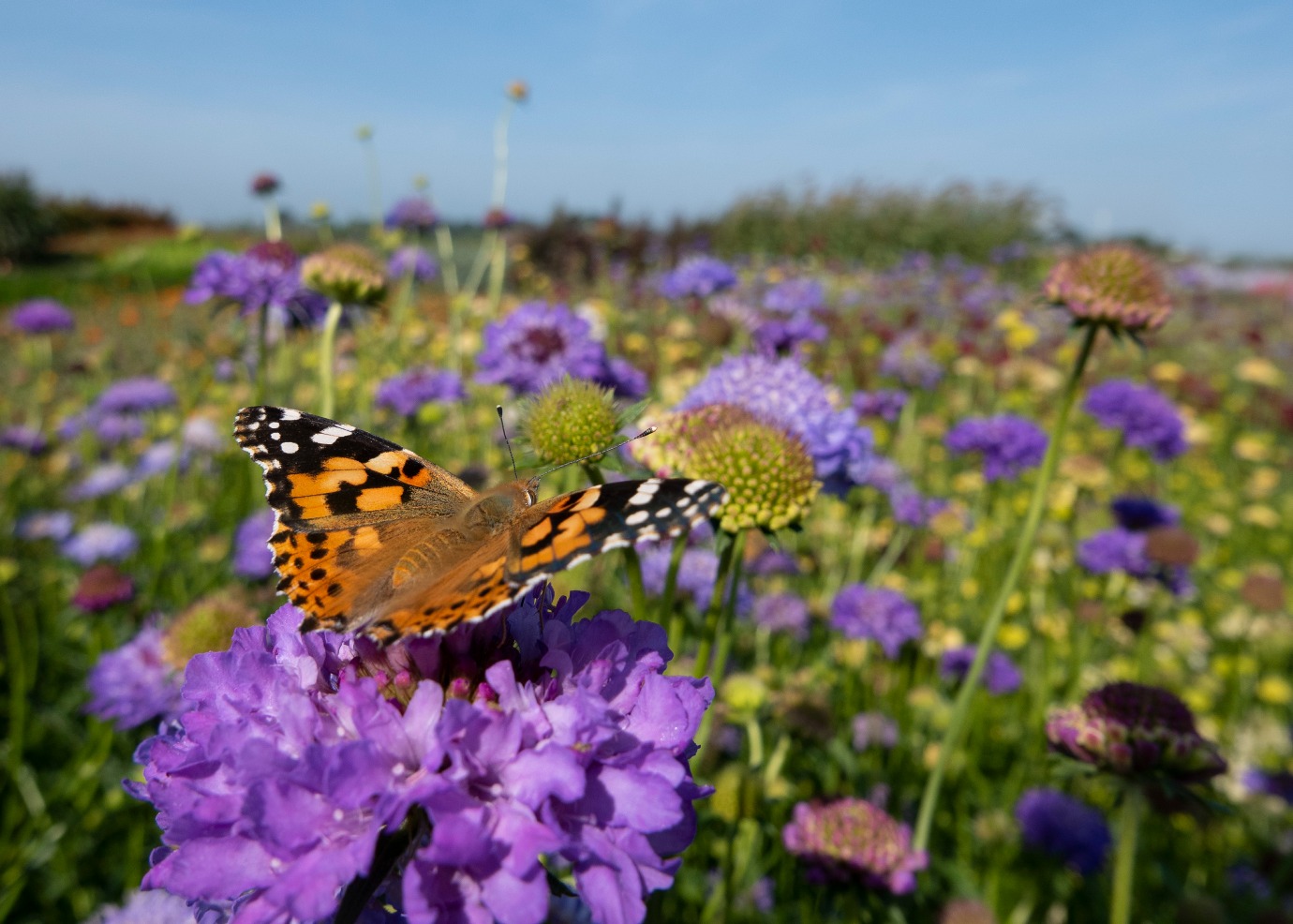
May 22 is International Day for Biological Diversity, a great opportunity to highlight the importance of biodiversity and to explore how we can work together to address it.
What is biodiversity?
When we think of biodiversity, we usually think of species diversity (for example, a field margin with cornflowers, yellow ragwort, various clover species, and caraway). But you can also think of the variation in genetic material within a species or population (for example, different eye colors in humans) or the variation in landscapes and ecosystems. High diversity means there is a lot of variation; in a place with low diversity, for example, only a few species are present.
Why is high biodiversity important?
Biodiversity contributes to the resilience of an ecosystem. All the different components of this system together form a food web. Consider the potato plant, which has an aphid on it, which can be eaten by a ladybug, which in turn can be eaten by a titmouse, and which is then eaten by a sparrowhawk.
If one species disappears, other species can take over its role in the ecosystem. But if too many components disappear, the system collapses. The resilience of an ecosystem is becoming increasingly important due to more extreme weather events resulting from climate change or the spread of diseases. High biodiversity is therefore also crucial for a future-proof farm.
Biodiversity and Agriculture
Agriculture used to play an important role in promoting biodiversity, but in recent decades it has actually contributed to a decline in biodiversity. This is due, among other things, to the use of pesticides and synthetic fertilizers, and the cultivation of a single crop (monoculture). This has a negative effect on soil diversity (as well as water quality and health), but also on above-ground diversity (insects, birds, etc.). Another example is Phytophthora; this fungus can easily spread across large areas of potato monocultures. Greater crop rotation, such as growing straw crops, can reduce this risk.
How do we ensure greater biodiversity?
Greater biodiversity—both above and below ground—is essential for the future of nature and sustainable food production. Healthy soil leads to healthy crops and, consequently, healthy agricultural products. By using methods such as straw cultivation, flower-rich field margins, natural pest control, and crop rotation, you can work toward greater biodiversity on farmland. For example, by sowing specific plants rich in nectar and pollen and providing hiding places, you attract more ladybugs and don’t need pesticides against aphids (which also kill other organisms, such as ladybugs).
However, the responsibility for increasing biodiversity naturally does not lie solely with farmers; here, too, we need to look at the bigger picture. Diversity is once again the key word, but this time across our entire agricultural system. Think of diversity in farms, technologies, investments, methods, seeds, knowledge, and sources of income, but also in policies that are not primarily focused on production.
To truly make progress toward more sustainable agriculture and greater biodiversity, a systemic change is needed. This means not only changes in agricultural practices, but also in the surrounding structures, such as policy, knowledge production, and monitoring. Consider, for example, the way we monitor biodiversity: what details and specific context do you miss when expressing this in general figures? Knowledge infrastructures also play an important role here, because they determine which forms of knowledge are considered relevant and useful in research, policy, and practice.
From this perspective, Marina Bool (researcher at CDLT) is investigating the role of knowledge and knowledge diversity in the current agricultural system and how inclusive knowledge infrastructures can support the transition to more sustainable agriculture. It is precisely these diverse perspectives and experiences that are relevant to this research. If you have examples, insights, or ideas that align with this, please contact Marina.
More news
-
-
03 September 2026
Ming Cao reappointed as scientific director of the Jantina Tammes School
-
01 September 2026
Evrim Ursavas appointed scientific director Wubbo Ockels School