
Learning EU Politics by Doing: Stijn at Eurosim 2026
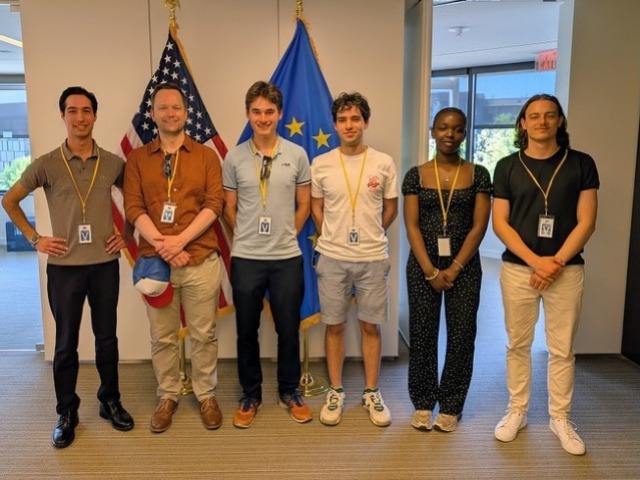
This spring, students and staff from Campus Fryslân travelled to Virginia Tech in the United States to participate in Eurosim 2026, an annual simulation organised by the Trans-Atlantic Consortium for European Union Simulations and Studies. Bringing together more than one hundred participants from different countries and academic backgrounds, the programme combines intensive EU legislative negotiations with academic exchange, diplomacy, and cultural learning.
Among the participants was Stijn Geersing, a second year Global Responsibility and Leadership student majoring in Politics, Philosophy and Economics (PPE). For Stijn, Eurosim offered the opportunity to move beyond studying political processes in the classroom and experience them in practice.
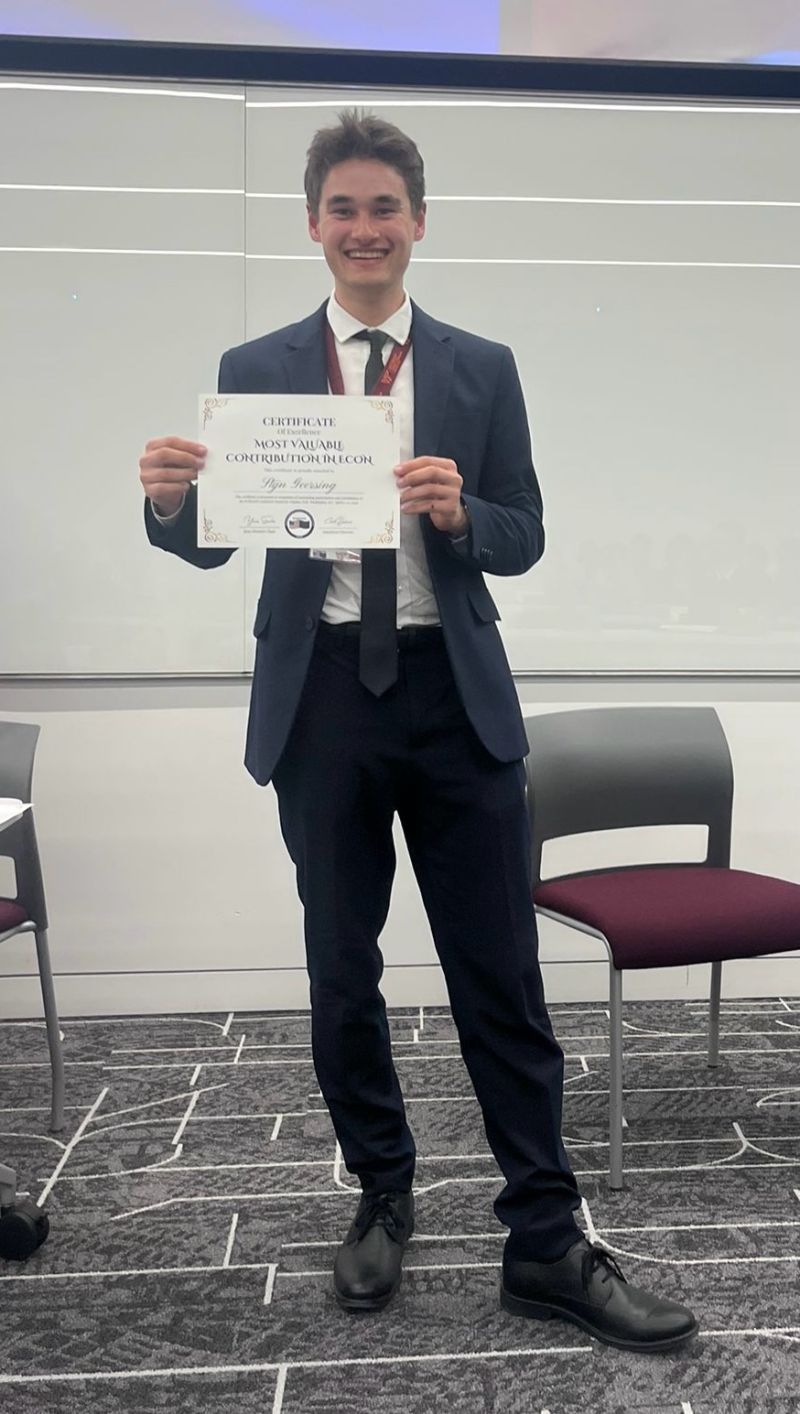
"I decided to participate in this event since it would allow me to gain first hand experience in policymaking within the European Union legislative process. Since the conference was in Washington DC it also gave me the chance to explore the Transatlantic relationship, not just from the headlines in the news, but from the perspective of the everyday people working in international diplomacy."
The experience connected closely to his studies at Campus Fryslân.
"In Global Responsibility and Leadership we explore problems from carbon emissions to global inequality, for us in the Netherlands the EU provides a political stage to try to tackle these problems. Perhaps one day I will be able to make a positive contribution, but to do that I will need to understand how decisions are made."
Preparation for the simulation began long before arriving in the United States. Participants were assigned institutional roles and political positions that required extensive coordination and strategic planning. Stijn represented a Member of the European Parliament, which meant working closely with colleagues from other universities and preparing amendments in advance.
"Beforehand I prepared quite well with my group members from other universities. In my role as a member of parliament I had to closely coordinate my plans with my political group beforehand and propose amendments that would be in our favour."
One of the most valuable aspects of the simulation was being pushed to think from a perspective different from his own. Participants were expected to represent political actors and positions assigned to them, regardless of their personal views.
"What was both the most challenging and useful was learning how to argue from a perspective different from my own. I, and everyone else at the event, had to take somebody else's perspective and defend it as if it were my own."
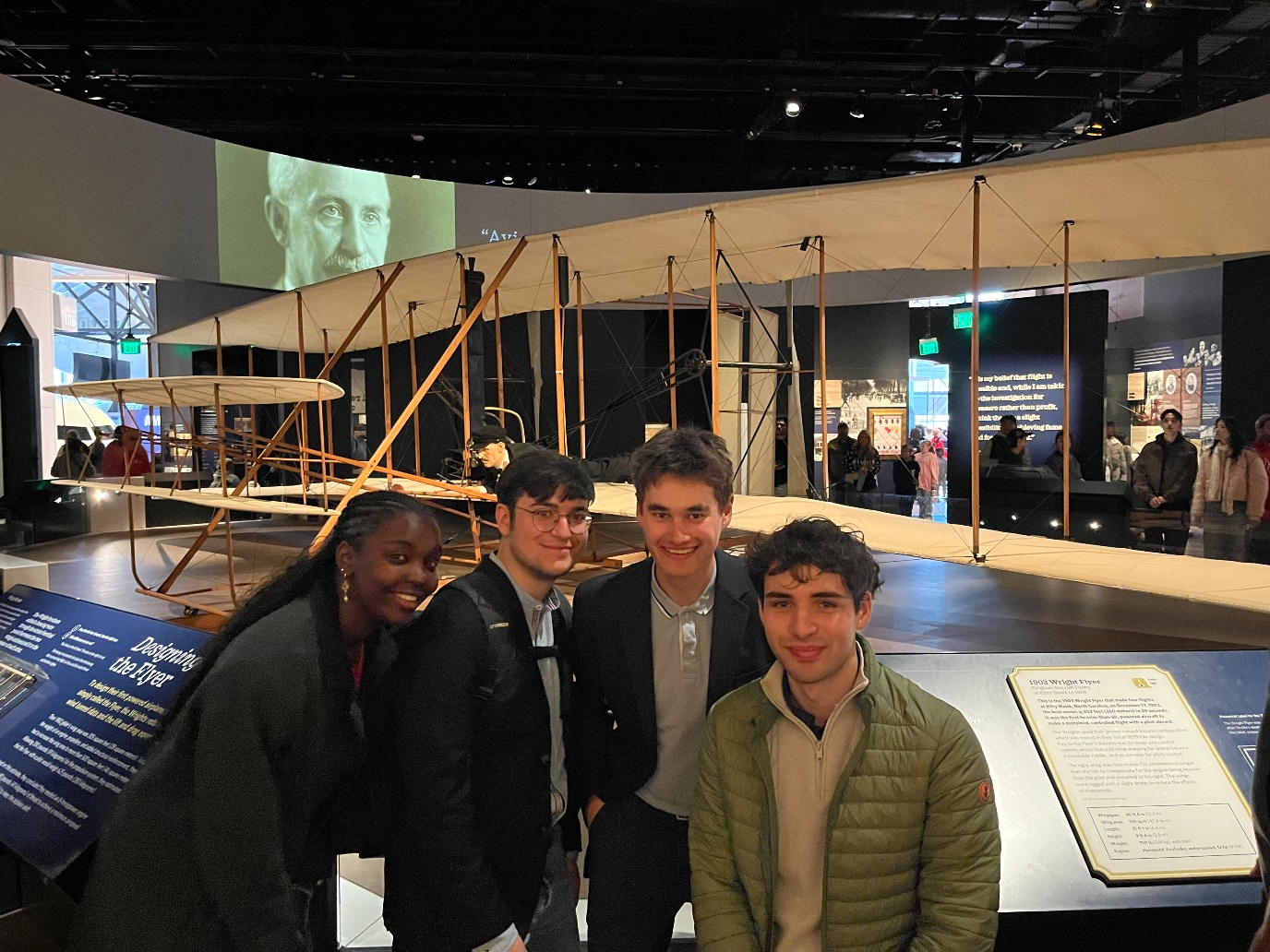
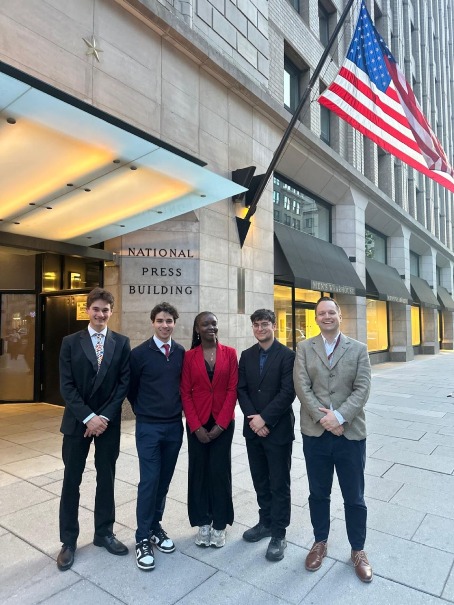
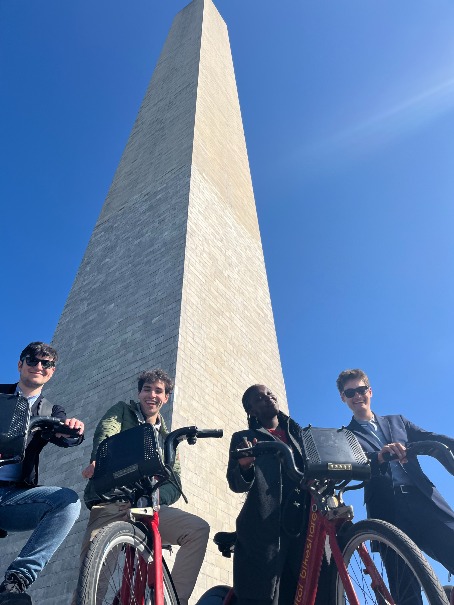
Outside the simulation rooms, participants followed an intensive programme across Washington DC, including visits to the Smithsonian museums, political lectures, and exploring the dark past of slavery and how its effects are still visible today.
For Stijn, some of the most memorable visits were those that allowed him to see diplomacy in action.
"I was also very interested by our visits to the EU Delegation and Dutch Embassy, this really gave me insight into the practical diplomacy that shape international relations."
The negotiations themselves focused on the European Commission's Omnibus I proposal, a topic that is currently being debated in real European institutions. Participants were tasked with finding compromises between competing priorities and political interests.
"We discussed the so called Omnibus 1 proposal of the European Commission, just as in real life the EU had to negotiate a balance between cutting red tape for companies, while keeping their green goals intact."
Throughout the week, Stijn came to appreciate that policymaking often depends as much on relationships and trust as it does on speeches delivered in formal sessions.
"This experience really enhanced my enthusiasm for EU policymaking and showed me how much is possible in politics if you listen to the people around you and work together on a compromise. Often the real decisions don't get made during a structured debate but rather during the lunchbreak with a member of an opposing group."
By the end of the simulation, he had helped build a broad coalition capable of reaching an agreement.
"In the end I managed to form a broad coalition to form an agreement, this showed me how genuine collaboration with others leads to better results than just seeing each other as rivals."
But, indeed, what Stijn brought with himself the most after returning to the Netherlands, is something distinct from the policy making itself:
"I will positively remember this experience forever, and it wouldn't be the same without all the people that experienced it with me, nor the ones I met on the way."
As Campus Fryslân welcomes students and staff back from Virginia Tech, experiences like Eurosim continue to show how learning can extend far beyond the classroom, creating opportunities to engage with real world challenges, build international connections, and better understand the processes that shape our societies.
About the author
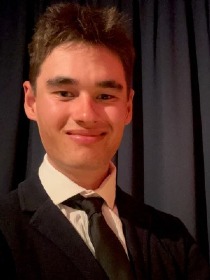
Stijn is currently a second-year BSc Global Responsibility & Leadership student at Campus Fryslân, majoring in Politics, Philosophy and Economics.