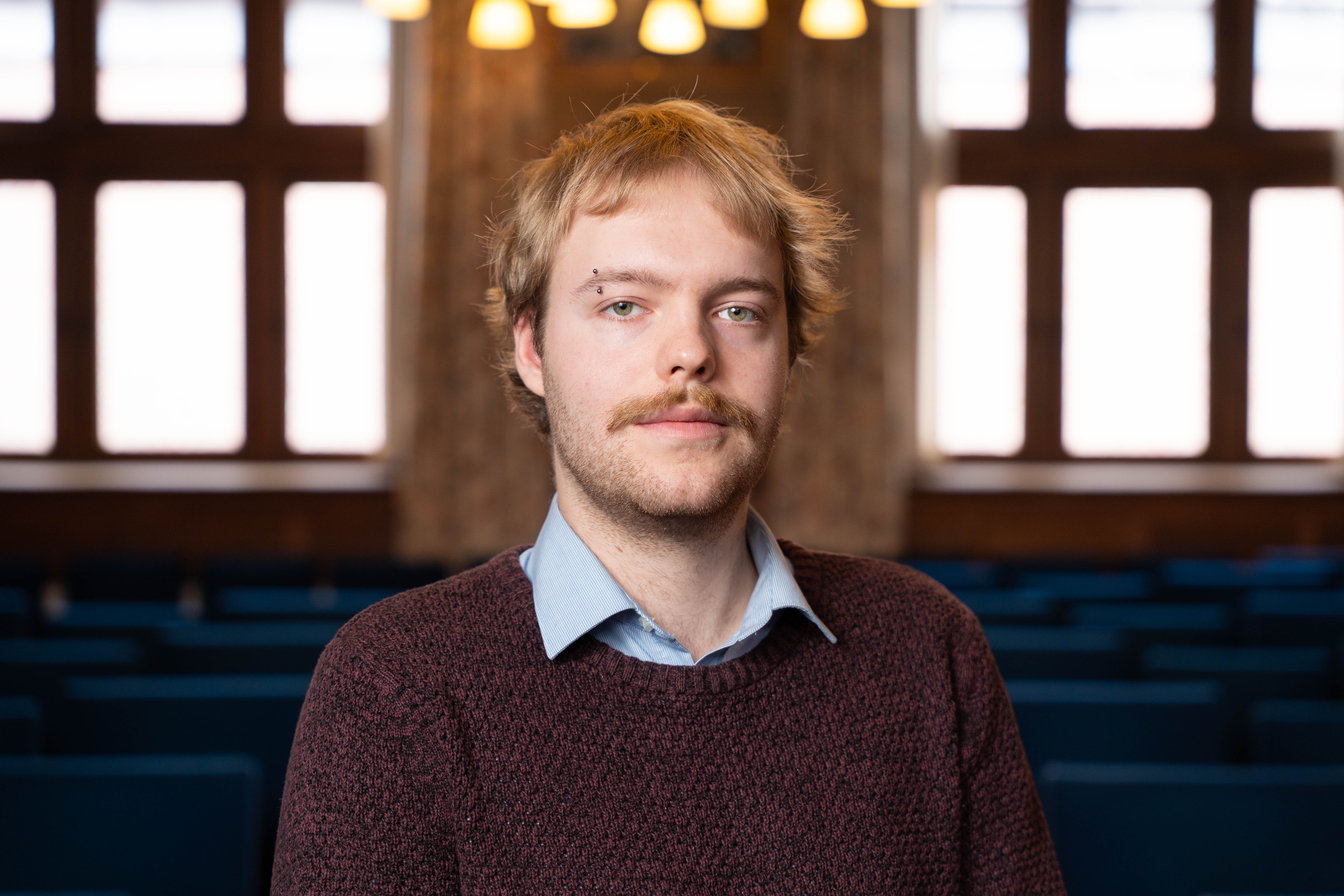
Tobias Postma
Tobias Postma heeft zijn Bachelor Filosofie cum laude behaald (gemiddeld cijfer: 8,6) en is nu op zeer goede wijze bezig met zijn Research Master Filosofie. Voordat hij tot deze mooie resultaten kwam, heeft hij een lange weg doorlopen. Eerst twee jaar VWO, dan HAVO, gevolgd door één jaar Toegepast Recht aan De Hanzehogeschool. Na het behalen van zijn propedeuse op de Hanze, mag hij overstappen naar de universiteit, waar hij zijn ‘intellectuele roeping vindt’ (quote uit de brief van de faculteit), als hij start met de studie Filosofie. Filosofie studeren heeft hij al heel lang, eigenlijk al als kind, gewild en hij doet het dan ook, zoals zijn cijfers en de positieve aanbeveling van de facultaire commissie laat zien, meteen uitstekend. Naast het behalen van fraaie cijfers in zijn studie, is Tobias op verschillende andere vlakken actief. Zo is hij onderwijsassistent, is hij actief onderdeel van de STUdievereniging van de Faculteit Filosofie (STUFF) waar hij verschillende rollen vervult, zoals binnen de Filosofiecommissie: interne zaken, secretaris en penningmeester en binnen de Reiscommissie: secretaris. Tobias is ook lid van de Faculteitsraad, heeft bijgedragen aan een Leeswijzer Frankfurter Schule voor de Stichting Senia, in samenwerking met het Kenniscentrum Filosofie, was vrijwilliger bij het organiseren van een conferentie in Groningen van de European Philosophy of Science Association (EPSA25) en heeft deelgenomen aan zowel de Winter School van de masteropleiding Philosophy, Politics and Economics (PPE) over ‘Climate Change and the Long-term Future’ als de Summer School van de universiteit getiteld ‘Two is One’. Op de Nacht van de Filosofie Groningen was hij in 2025 een van de sprekers. Hij was participant en organisator van de ‘Critical Spinoza Reading Group’ en was medeorganisator van een Spinoza Workshop binnen het ‘Spinoza Fest’ van de faculteit en was daarbij ook een van de sprekers. Dat Tobias door Spinoza geïnspireerd wordt, bleek niet alleen uit zijn uitgebreide motivatiebrief, maar ook uit zijn pitch waar hij reflecteerde op de rol die Spinoza’s filosofie zou kunnen spelen bij het begrijpen en verbeteren van onze huidige democratie.