
The NextGenOffshore Project is One of the ENLIGHT 2025 Call Winners!
We are excited to announce that the NextGenOffshore Project, coordinated by a team at the UG, has been selected as one of the 2025 ENLIGHT Call winners! This project aims to promote interdisciplinary education and research in offshore renewable energy. Find out more about NextGenOffshore and the people behind it below!
What is the main goal of the project? Who are your collaborative partners?
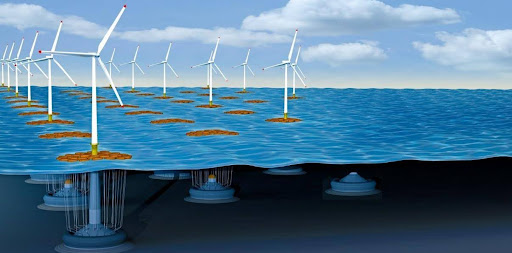
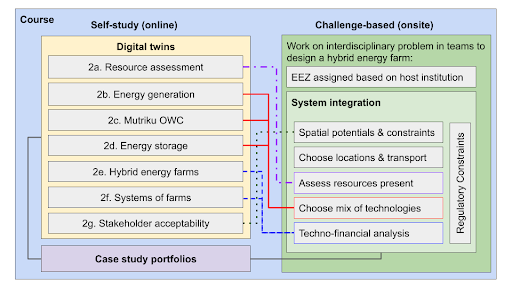
NextGenOffshore aims to promote interdisciplinary education and research in offshore renewable energy, namely wave energy devices and offshore wind turbines, together with energy storage systems, the management of energy assets, and hybrid energy farms. In addition to the technical aspects, the education and research also include relevant policymaking, legal, social acceptance, economics, environmental, spatial and multi-use considerations. To achieve this, our team will develop a course comprising online self-study and onsite challenge-based learning for students from Groningen, Ghent, Basque Country and Uppsala to earn credits with the use of specialized digital twins: virtual representations of the various technologies and systems.
What inspired this project idea?
I have been leading research on hybrid offshore energy generation and storage for more than a decade. Until recently, our team pursued the energy storage part as a standalone solution via a spin-off company. In the process of commercialization and projects such as DOSTA (Developing Offshore Storage and Transport Alternatives), it became clear that such technological solutions cannot be realized by considering engineering alone. Techno-financial analyses, environmental assessments, planning and policy all intersect and can make or break a proposed technology. At the same time, the potential combination of technologies into hybrid devices seems to be gaining traction in academia.
Why is this international collaboration essential to your work?
While many of the necessary disciplines exist in Groningen (from economics to spatial planning), the engineering of offshore renewables and wave energy in particular do not have critical mass here: mine is the only group with the relevant profile. Hence, collaborating with leaders in the field is necessary to improve the state-of-the-art. Our colleagues from Ghent and Uppsala, for example, are world-leading in performing experiments and developing models for dense WEC arrays, while the University of Basque Country is involved in the design and operation of the Mutriku oscillating water column plant, one of very few grid-connected wave energy technologies.
How did the collaboration come together?
Over the years, I did make international connections within the wave energy and community and establish a number of internal and national collaborations on energy storage; however, the new connections with Ghent, Basque Country and Uppsala came about because of the ENLIGHT program. For this I am thankful to ENLIGHT.
What impact do you expect the project will have for the University of Groningen and the ENLIGHT network?
Beyond the course development for ENLIGHT, our joint proposal applications will lead to increased visibility and output for Groningen. We have already submitted one application with our consortium partners that would lead to stronger research collaborations and the intention is there to submit further proposals. This has also enabled me to bring in more internal partners to work on relevant topics not covered explicitly within NextGenOffshore such as machine learning for the development of surrogate models and predictive maintenance for wave devices. This can only further strengthen the presence of Groningen in the field and lead to even more collaborations.
As the Program Director of the Master in Industrial Engineering and Management (IEM), I have been involved in many curriculum revisions and course development activities. Our new course will end up increasing the visibility of select programs –it can be offered as a free elective for IEM, Mechanical Engineering, Energy and Environmental Sciences and other Master programs –and potentially attract more students to Groningen. Beyond this, my research lines can be further expanded with these strategic collaborations and may result in the relaunching of our energy storage spinoff or the development and founding of new ones along the way.
What's next?
There are many things on my to-do list involving our ENLIGHT consortium: the first priority is to pursue further research projects on wave energy and energy storage, but we can afford to expand the scope beyond engineering topics under the initiative and leadership of other colleagues within the consortium to techno-financial analyses, environmental impact and societal assessments, as well as taking further the development of more digital twins with the use of machine learning and AI agents.
The team at the UG:
-
Prof. Antonis Vakis, Full Professor, Faculty of Science and Engineering
-
Dr. Marzia Nuzzolo, Faculty of Science and Engineering
-
Prof. Lorenzo Squintani, Professor of Energy Law, Director of Energy and Climate School, Faculty of Law
-
Dr. Ceciel Nieuwenhout, Assistant Professor, Faculty of Law
-
Prof. Evrim Ursavas, Professor of Energy Logistics, Faculty of Economics and Business
-
Prof. Christian Zuidema, Associate Professor Spatial Planning, Faculty of Spatial Sciences
-
Prof. Lucy Avraamidou, Professor Science Education, Director of the Center for Learning and Teaching, Faculty of Science and Engineering
-
Dr. Agata Szperl, Educational Developer, Centre for Learning and Teaching, Faculty of Science and Engineering
-
Dr. Sofie van den Eynde, Educational developer and head of professional development (PIE) | Centre for Learning and Teaching, Faculty of Science and Engineering
-
Dr. Gabriel Muiños Trujillo, Assistant Professor, Faculty of Behavioural and Social Sciences
-
Dr. Jiapan Guo, Tenure Track Assistant Professor with education profile, Faculty of Science and Engineering
-
Diego Bernal Camacho, PhD Student, Faculty of Science and Engineering
We are happy for the NextGenOffshore team and are excited for the outcomes of this project!
More news
-
-
03 September 2026
Ming Cao reappointed as scientific director of the Jantina Tammes School
-
01 September 2026
Evrim Ursavas appointed scientific director Wubbo Ockels School