
Living with wildlife in East-Africa
How can wildlife, people, and livestock thrive in the iconic ecosystems of East-Africa? This question is at the core of CoCoST, an international research programme co-funded by the Ubbo Emmius Foundation. Researcher Yuhong Li focused on how livestock and wildlife can coexist, while Michael Kimaro studied the effectiveness of a fence that protects crops from elephants. They both are defending their PhD theses at the UG on 9 June.
Text: Nienke Beintema
Straddling the border of Kenya and Tanzania, the Greater Serengeti-Mara Ecosystem harbours the landscapes we know from East-African wildlife documentaries. At its heart lies Serengeti National Park, where a vast savanna supports huge herds of zebras and wildebeest, giraffes browsing the tops of acacia trees, and antelopes keeping a wary eye on the horizon.
Yet the ecosystem extends far beyond its protected core. Beyond the boundaries of Serengeti National Park, people, livestock and wildlife interact daily. For generations, pastoralist communities have shared these landscapes with wild animals, moving their livestock in search of fresh grazing and water. Today, however, that coexistence is under growing pressure with increasing human populations, accelerating land-use changes, and climate change.
Addressing challenges in conjunction
The result is a delicate balancing act. Livestock and wildlife often rely on the same grasslands. Elephants can damage crops. Predators such as lions and hyenas occasionally attack livestock, threatening livelihoods that are already vulnerable. At the same time, many of these wild species are themselves under pressure from habitat loss, climate change and poaching. Protecting nature, supporting local communities and adapting to a changing climate have become inseparable challenges. The CoCoST programme (see text box) aims to address these challenges in conjunction.
‘Together, we aim to answer the question: how can one of the world’s most celebrated landscapes remain a place where both wildlife and people can thrive?’, says Michael Kimaro, founder and managing director of the Tanzania Research and Conservation Organization. He is also one of the PhD researchers in the CoCoST programme. Kimaro came to Groningen from Tanzania in 2019 to pursue a masters in Ecology and Evolution at the RUG, supported by the Eric Bleumink Fellowship, an initiative under the Ubbo Emmius Foundation.
‘During my masters in Groningen, I met professor Han Olff’, says Kimaro. ‘I mentioned to him that I wanted to learn more about advanced monitoring techniques and data management for conservation. He said: How about joining me in Serengeti?’ Another PhD researcher on CoCoST is Yuhong Li. After studying in Shandong (China) and Uppsala (Sweden), she obtained the same master’s in Groningen. ‘I came to Groningen because of Han Olff’ , she says with a broad smile. ‘It’s always been my dream to work with large mammals in Africa.’
More nutritious grass
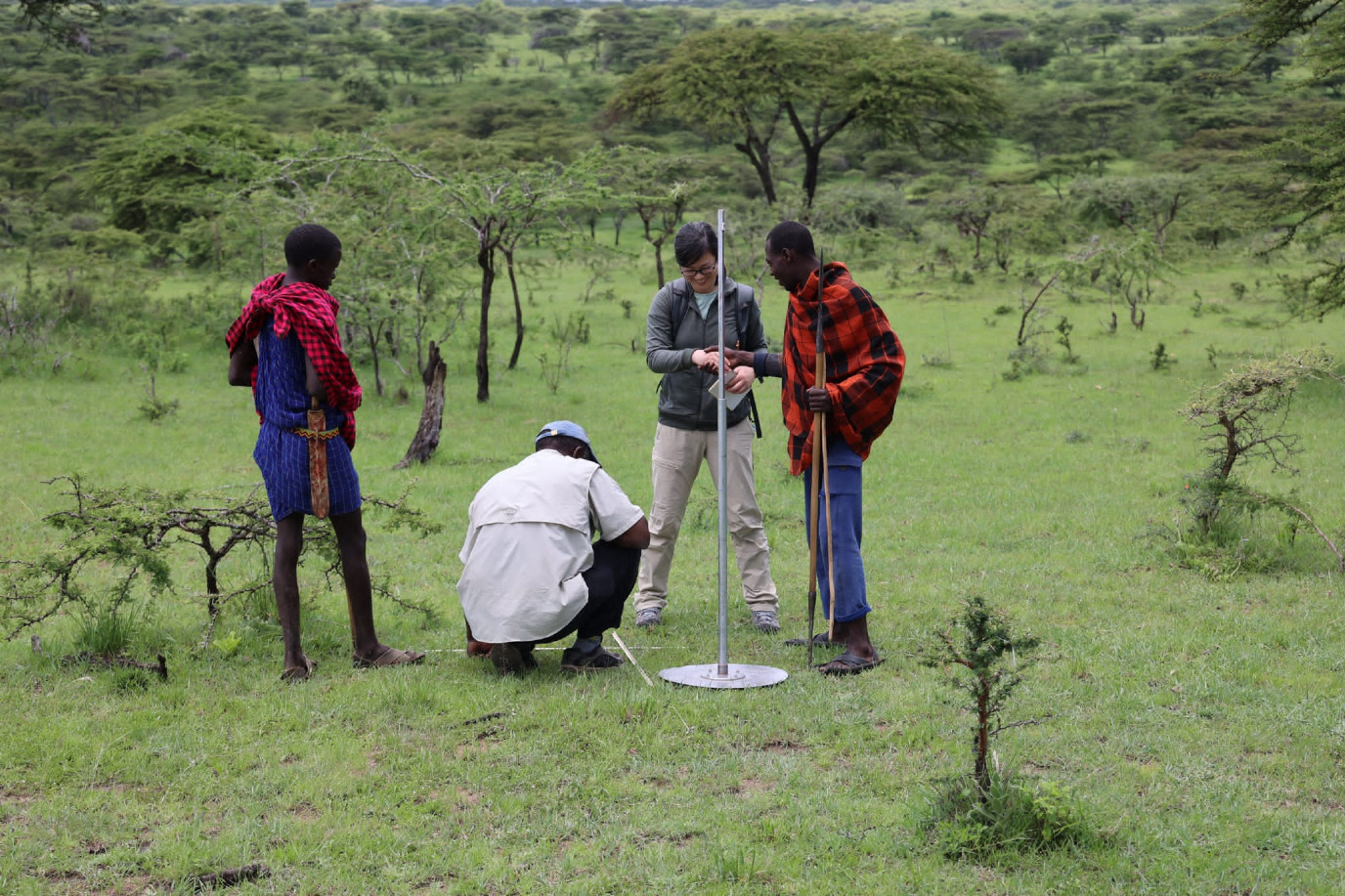
Kimaro proceeds to explain some of the challenges facing the region. ‘Tanzania is one of the top-5 African countries with a high abundance of wildlife’ , he says. ‘We also have about 70 million people and more than 30 million livestock. These animals need food. In many cases, the pastoralists have no choice but to go into the protected areas to find pasture.’ Li adds: ‘And the other way around: large herds of animals like zebras and wildebeest also graze outside of the reserves on what we call the rangelands: the savanna landscapes surrounding the core protected areas that are also used by local pastoralists. In my research, in the eastern part of the region, I study how livestock grazing changes the vegetation on the rangelands, and how this in turn affects the wild herbivores that also rely on them.’
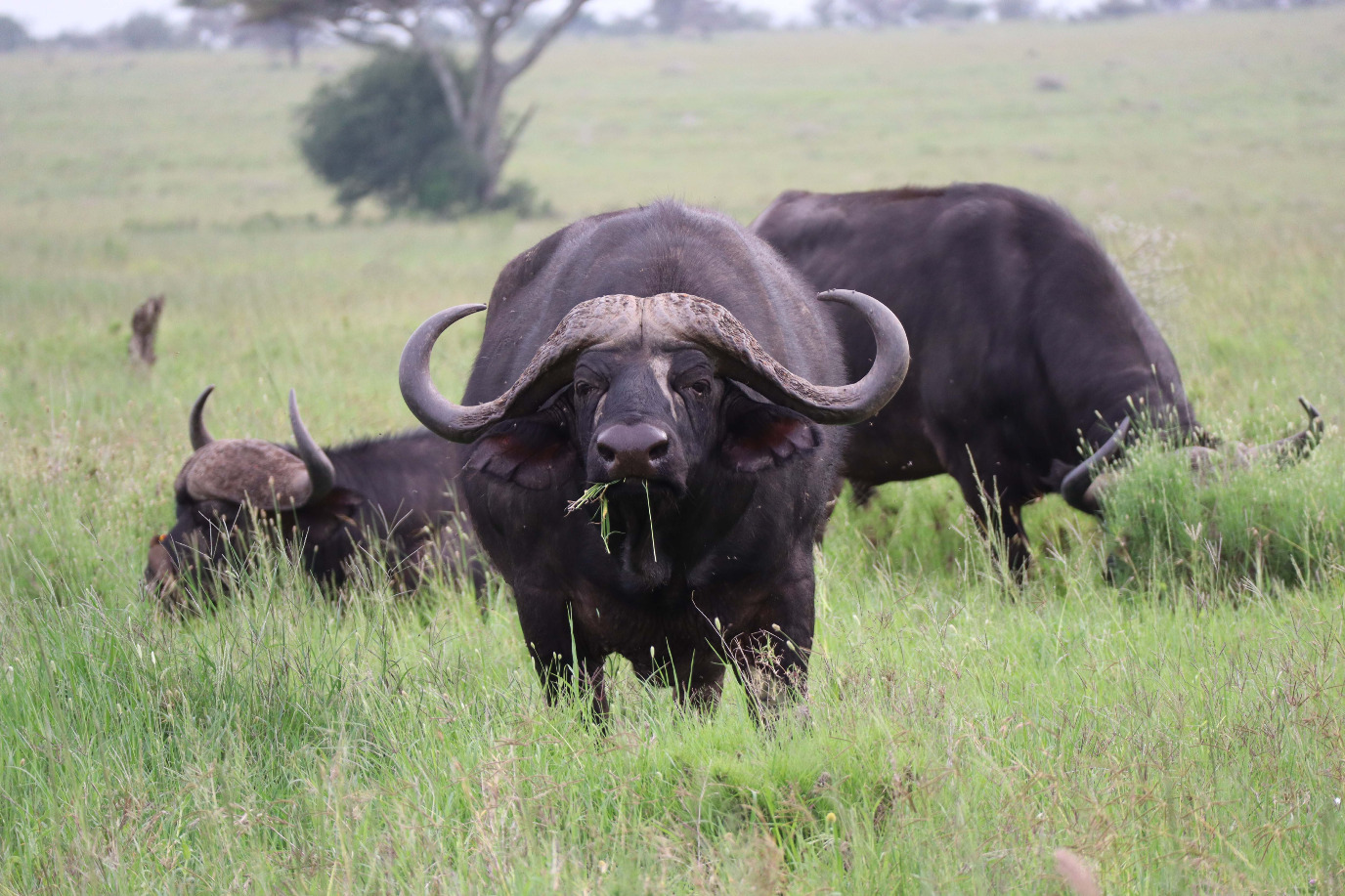
It has often been assumed that cattle grazing degrades the rangelands, Li explains, but in fact it is more nuanced. ‘I found that the local plant species diversity is actually higher than in the protected areas’ , she says. ‘In addition, due to livestock grazing, the grass remains shorter, younger, and more nutritious, compared to the taller, more fibrous grasses in the national park. This affects the herbivore species composition. This more-grazed rangeland favours smaller herbivores like gazelles, while displacing buffalo.’
Happy with the fence
Kimaro’s research area is the western part of the ecosystem. Here, the predominant land use form is crop farming, specifically maize. ‘The croplands are right at the edge of a protected area’, says Kimaro. ‘Here, a 30 km-long electrified fence was put in place, as a pilot measure, to keep elephants from going into the croplands. I studied the effectiveness and side effects of the fence.’ Fences can reduce crop damage, but they may also block migration routes and harm wildlife. ‘ Whether or not to use a fence, and where to place it exactly, is a complex puzzle’ , says Kimaro. ‘ I studied how people reacted to this fence, and how it affected animals and vegetation.’
The fence was very effective in keeping elephants from entering the croplands, as Kimaro found. ‘ People were very happy with the fence’ , he says. ‘ Before, they spent a lot of time protecting their crops. Now, they could spend this time elsewhere. This had a positive effect on family cohesion.’ Reversely, the fence also prohibited livestock from going into the nature reserve. While this was positive for the protected area, it meant that people had to take their cattle elsewhere, into the rangelands that are already degraded. Kimaro: ‘In fact, the fence shifted the problem to nearby unfenced sites. So, the fence calls for advanced land-use planning, restoration of rangelands, and long-term monitoring.’
Not universally better or worse
As for the potential drawbacks of the fence: Kimaro found very few cases of wildlife entanglement or electrocution and concluded that wild animal migration routes were not significantly affected. ‘However, within the fenced area, tall grasses were more abundant, which will likely affect the distribution of wildlife.’ Following his research, Kimaro wrote a policy brief with key findings and recommendations. Li also distilled clear conclusions from her research. ‘If managed carefully, there’s definitely room for both wildlife and cattle on the rangelands’ , she says. ‘Livestock-grazed rangeland is not universally better or worse than the national park. I see a role for rotational grazing and rotational fires in the rangeland to maintain grass resources for pastoralism.’
Building capacity
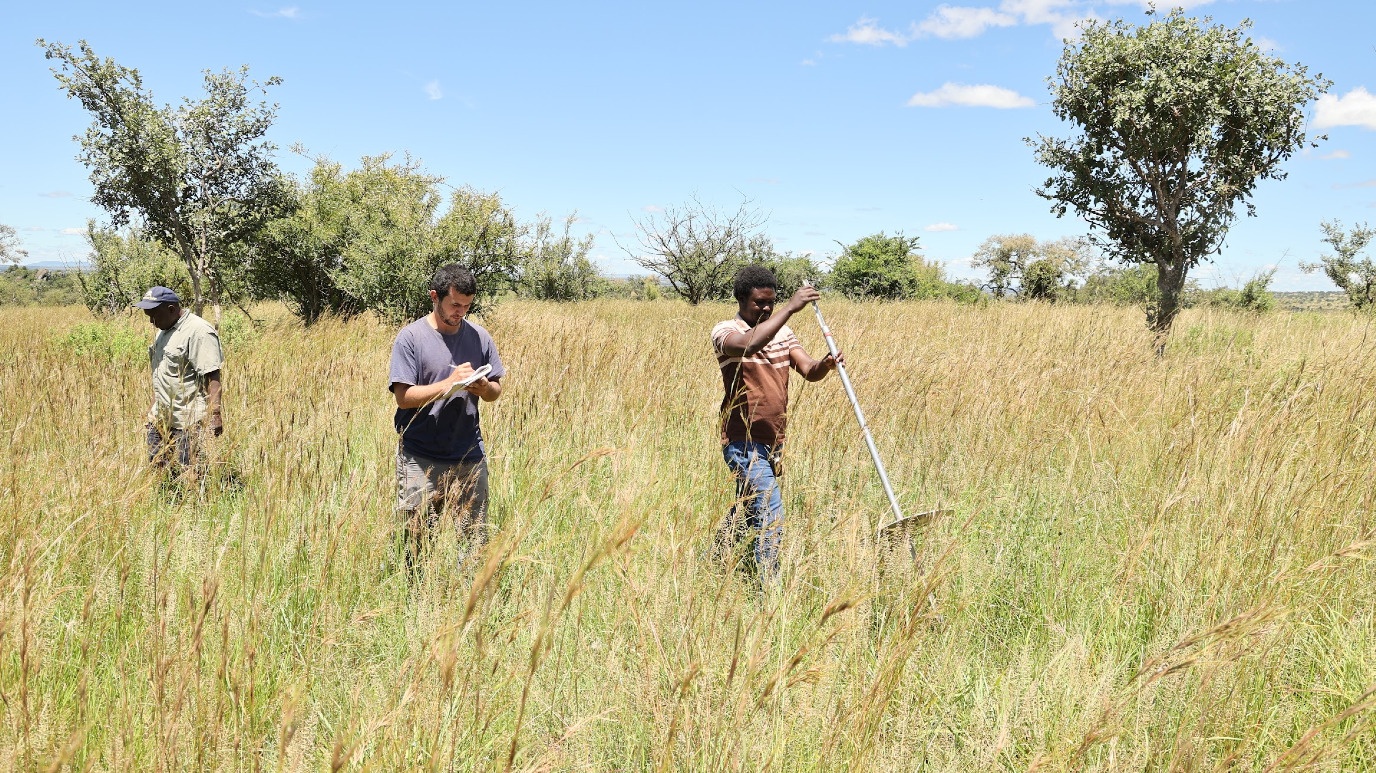
For all projects in CoCoST, it’s not just science that’s the aim. ‘All research is associated with training of local ecologists’, explains Kimaro. ‘This way, we collect data, design monitoring and conservation strategies, and build capacity at the same time. Both Yuhong and I participated in some of these training sessions.’ As next steps, Kimaro aims to pursue a postdoc position to gain further experience in securing research grants. ‘This will be necessary to advance the work of the NGO that I founded. I hope to become an active lecturer at one of the Tanzanian universities like professor Han Olff.’ Li’s plans are less concrete. ‘I would like to continue in research’, she says, ‘but I don’t know yet in which capacity. I would like to develop more programming skills. But I also really like the fieldwork.’ In any case, it is the context of nature conservation that she’s drawn to. ‘Because it’s important. And also really, really interesting.’
CoCost: four closely linked themes
The CoCoST programme – short for Corridors, Coexistence, Synergies, Transitions, and Training – brings together researchers from Kenya, Tanzania, China, and the Netherlands to study the Greater Serengeti-Mara Ecosystem. CoCoST was designed by international ecosystem expert Han Olff, professor of Community and Conservation Ecology at the University of Groningen (UG). The programme is funded by UG’s Ubbo Emmius Foundation together with the Dutch foundation DOB Ecology, Grumeti Fund, and several local NGOs. The work focuses on four closely linked themes: maintaining wildlife corridors, understanding how people and wildlife can coexist, identifying synergies between conservation and local livelihoods, and supporting the social and ecological transitions needed to secure the ecosystem’s future.
More news
-
17 September 2026
NWO-KIC funding for new route to sustainable biocatalysts
-
15 September 2026
Enzymes break down textile fibres into useful resources
-
10 September 2026
Searching for the first generation of stars