
Tinkering with smart healthcare
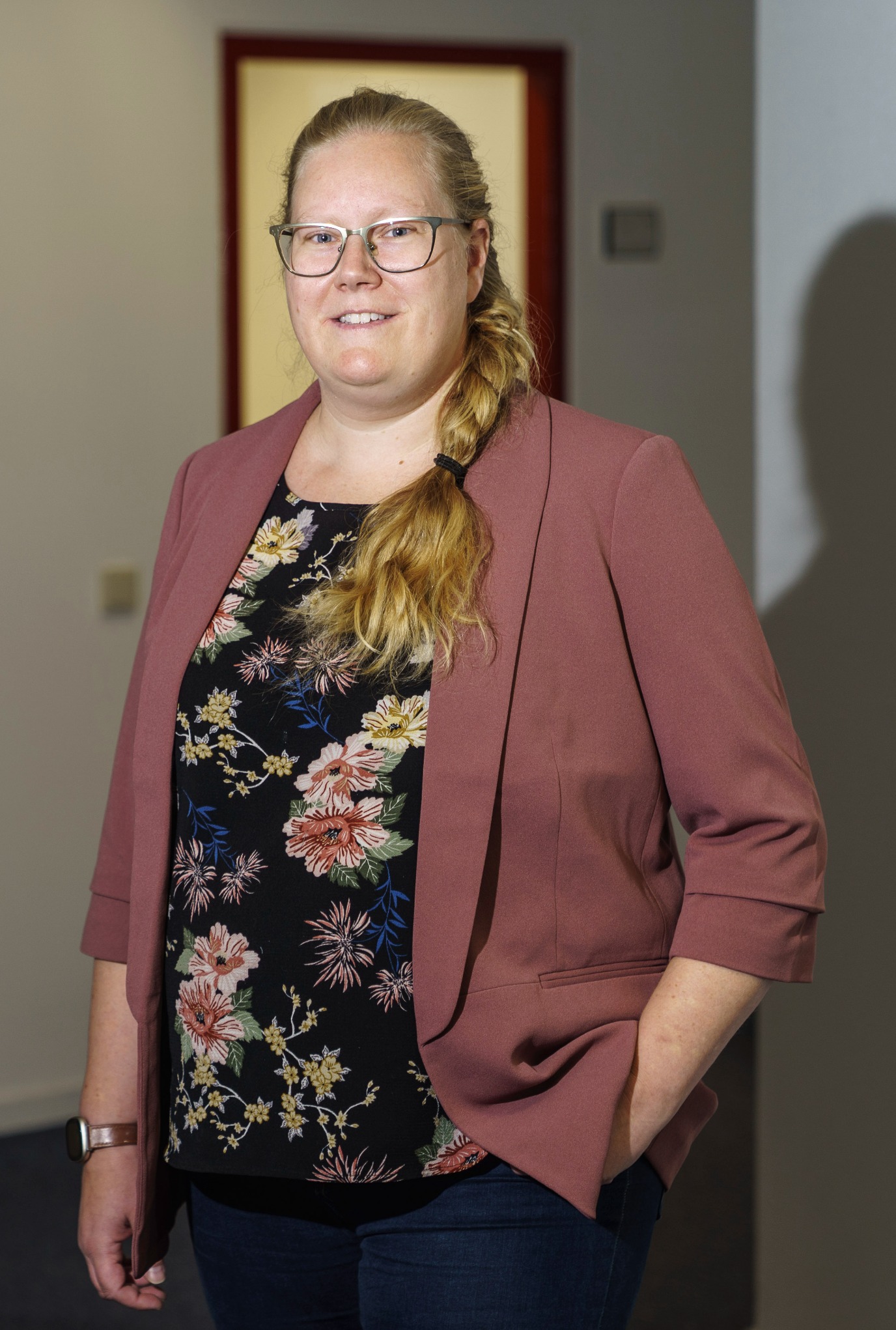
We are living longer, but not always in good health. This is leading to a growing demand for healthcare and rising costs, coupled with an increasing shortage of staff. Solutions often look to AI, prevention, and home-based care, as well as technological innovations—the research domain of Charissa Roossien.
Text: Eelco Salverda, Corporate Communication, University of Groningen / Photos: Reyer Boxem
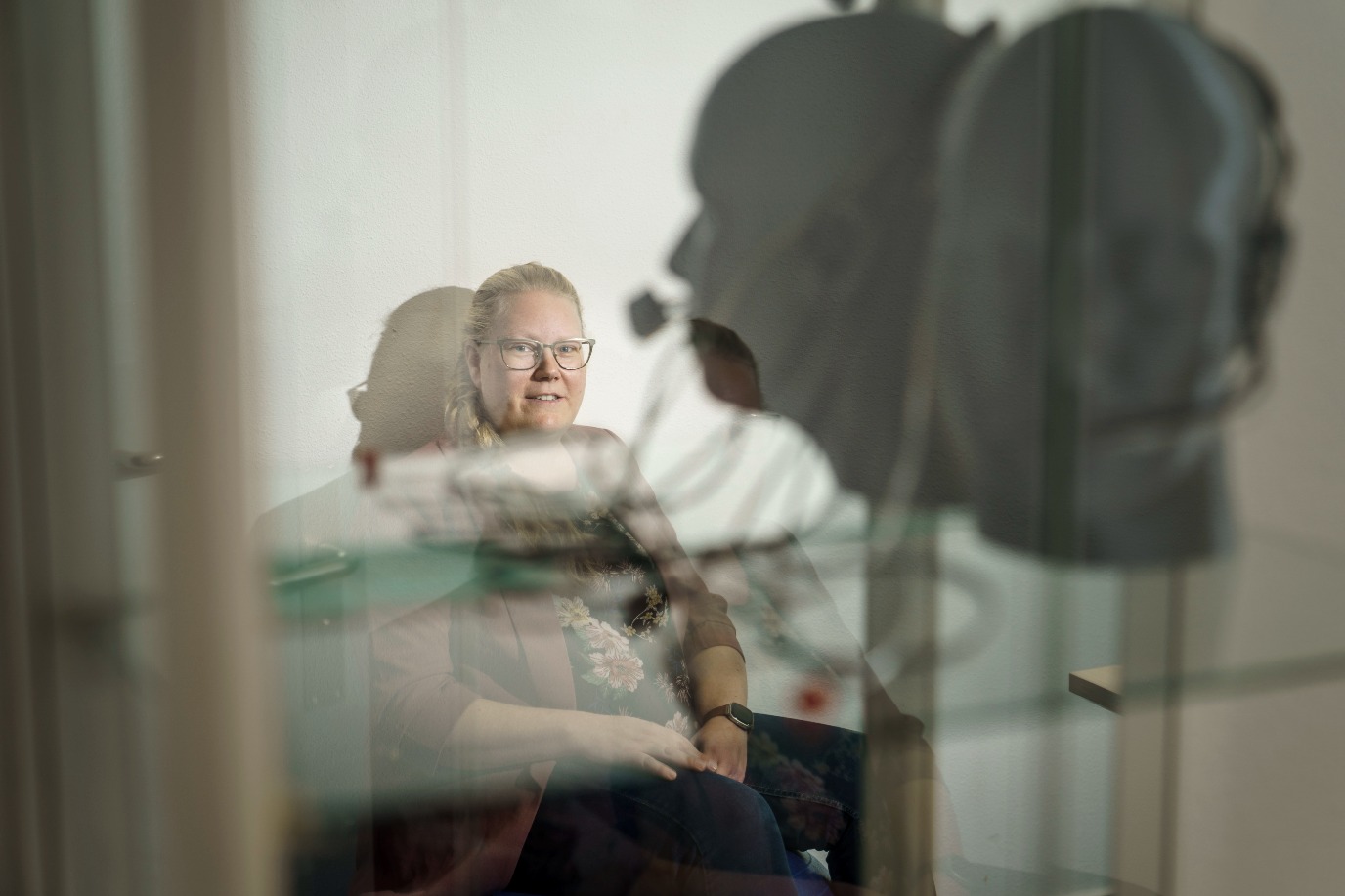
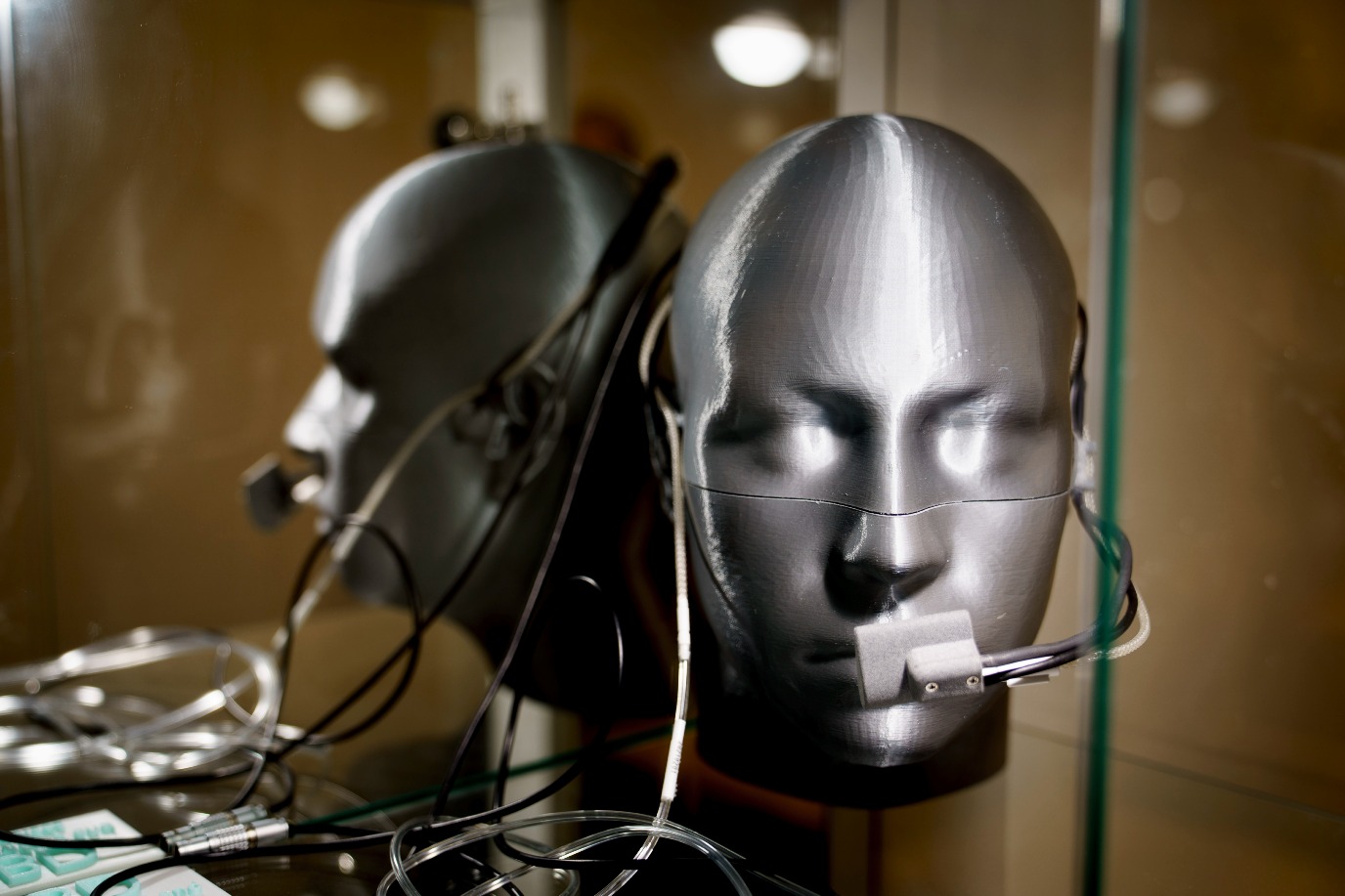
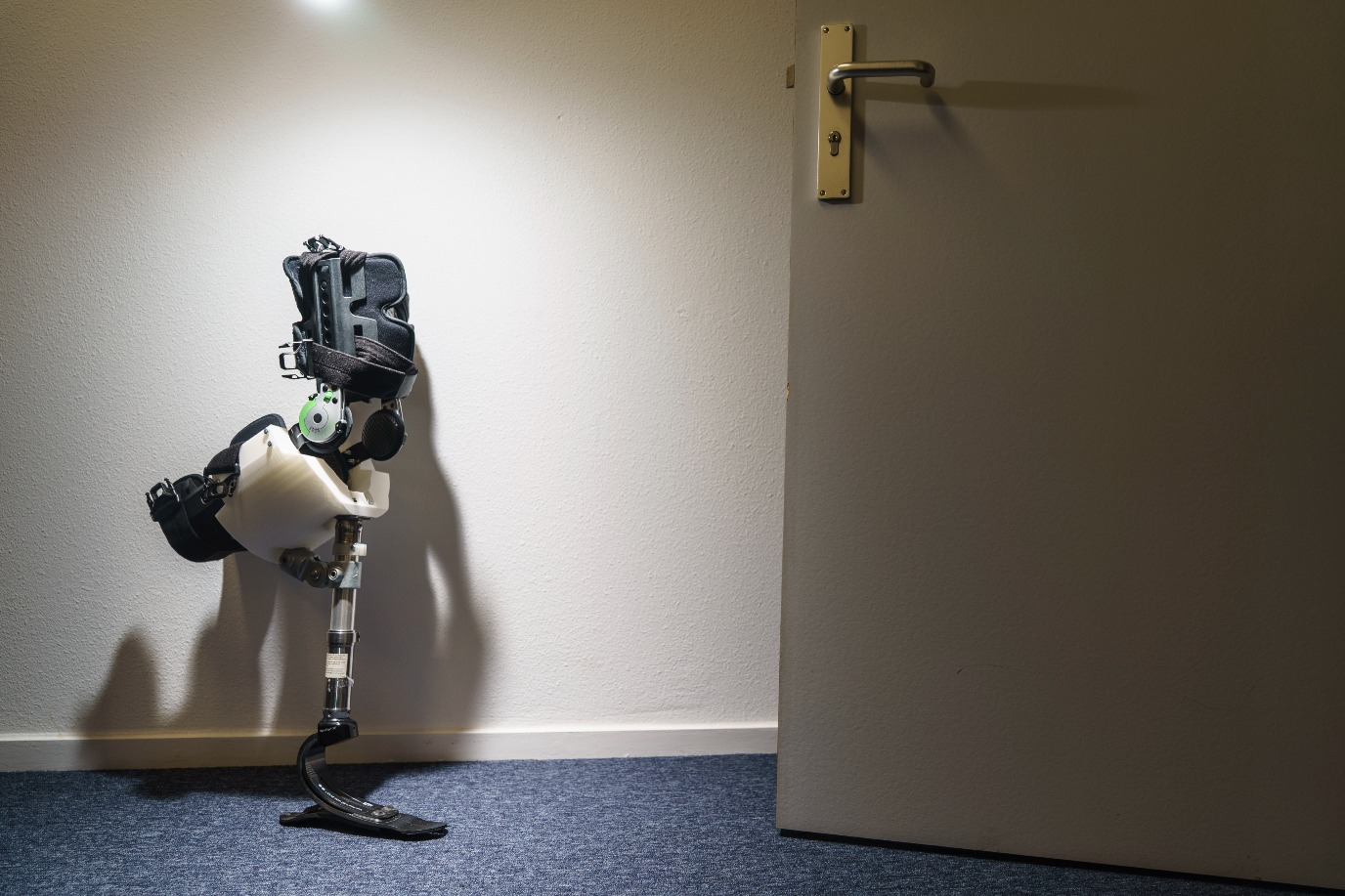
A pessary, a headset that measures exertion, a leg prosthesis. Models and prototypes in and beside display cases in her office quickly clarify Charissa Roossien’s field of work. Here, the focus is on health and improving healthcare. The familiar articulated wooden mannequin, a model of the human body for artists, indicates that Roossien’s work is not limited to one part of the body.
Beyond snapshots
At a time when the university is increasingly focusing on the practical applications of research, and healthcare urgently needs smart solutions for challenges like aging populations and high workloads, Roossien’s work offers a glimpse into the future. She describes her research as developing personalized healthcare, where measurements taken by sensors provide a comprehensive, long-term view. “So, not just current snapshots. Take blood pressure measurement, for example. This can also be done differently, using a sensor sticker on the skin. This provides data throughout the day, showing when blood pressure rises or falls. This tells us far more than a single measurement during a doctor’s visit."
Preventing unnecessary surgeries
Roossien underscores her argument for measurement with an example. "Smart implants can help detect problems earlier or more accurately. If you have sensors in a knee or hip prosthesis, you can see signs of wear, inflammation, or rejection by the body sooner. This allows you to take action without immediately resorting to another surgery. Currently, revision surgeries are sometimes performed unnecessarily. These are avoidable healthcare costs. Moreover, such revision surgeries can only be done once, which is why prostheses are often not recommended for patients under 50."
Designing with purpose
Trained as a mechanical engineer, Roossien initially worked as a technical draughtsman. "But I’m not very materialistic, and I didn’t see myself spending the rest of my life bringing yet another product to market." She wanted to contribute differently to society and found her place in biomedical technology. "At one point, I worked on a development for people who had their larynx removed due to throat cancer. The standard method for enabling speech gives patients a very robotic voice. We developed a prototype that patients were extremely happy with. ‘This is so wonderful, can I take it home?’ they asked. That’s when you’re truly improving quality of life. That’s what makes me happy."
Collaboration at the table
Her background undoubtedly influences Roossien’s approach: broad, practical, and considerate of various interests. She focuses on practical, quickly implementable applications while paying attention to the needs of all stakeholders—patients, users, and industry. "Did you know that about 70% of technologically developed products never make it to market? That’s far too many. If you thoroughly investigate the problem and involve all stakeholders and industry early on, the chances of your product actually reaching the market are much higher." This is one reason why much of her research is conducted in collaboration with multiple parties, including users, medical specialists, and industry. "If you involve all stakeholders from the start, your product will be better."
From research to application
As a generalist, Roossien has knowledge of the entire chain from research to application, covering the nine so-called Technology Readiness Levels (TRLs). "I act as a bridge between fundamental research (TRL 1-2) and application and use (higher TRL levels). For example, my colleagues develop sensors, such as cortisol sensors and tattoo electrodes. I’m the one who looks at potential applications, the integration of this technology, and making it suitable for and testing it in practical fields, such as prosthetics and implants, but also in the workplace."
Unused exoskeletons
Roossien’s research extends beyond development. To gain a clear understanding of the value of a new product or technology, knowledge of its use is also essential. "Take exoskeletons. There are two basic types: medical exoskeletons help people who have difficulty walking, while industrial exoskeletons support or alleviate specific tasks—for example, a plasterer working overhead or a surgeon performing prolonged, precise work. But they are not always used. Why? Is it user discomfort? Or because they’re designed too much for Western men? Sometimes, the market is already saturated—what’s the added value of a new product then? I think it’s important to understand these factors before developing something new."
Smarter healthcare
What is Roossien’s ideal vision for the future? She doesn’t need to think long about it. "I’d like us to receive more and earlier signals from the field and to be able to address challenges quickly and efficiently. Working with multiple parties to ensure new products become available for use. Monitoring what’s happening inside the body to provide feedback and prevent health problems. We’re aging, healthcare costs are rising, and the pressure on healthcare is increasing. To address this, we need personalized, sustainable wearables—medical applications that can be worn.” In a world where everything is increasingly interconnected and solutions often require input from multiple disciplines, Roossien has the answer: healthcare doesn’t benefit from ‘more,’ but from ‘smarter’ and more affordable solutions. And this works best in an environment where researchers, users, and industry come together.
More information
More news
-
-
-
22 October 2026
Seven UG and UMCG researchers awarded Vidi grant