
How a swarm of mini-robots could save our infrastructure

The Dutch infrastructure is showing its age: many bridges, viaducts and roads are in need of maintenance or replacement. But where to start? University of Groningen researcher and JTS Scholar Bahar Haghighat is developing small-scale, autonomous robots that move across steel structures as a swarm and carry out detailed inspections.
Text: Jelle Posthuma / Photos: Henk Veenstra
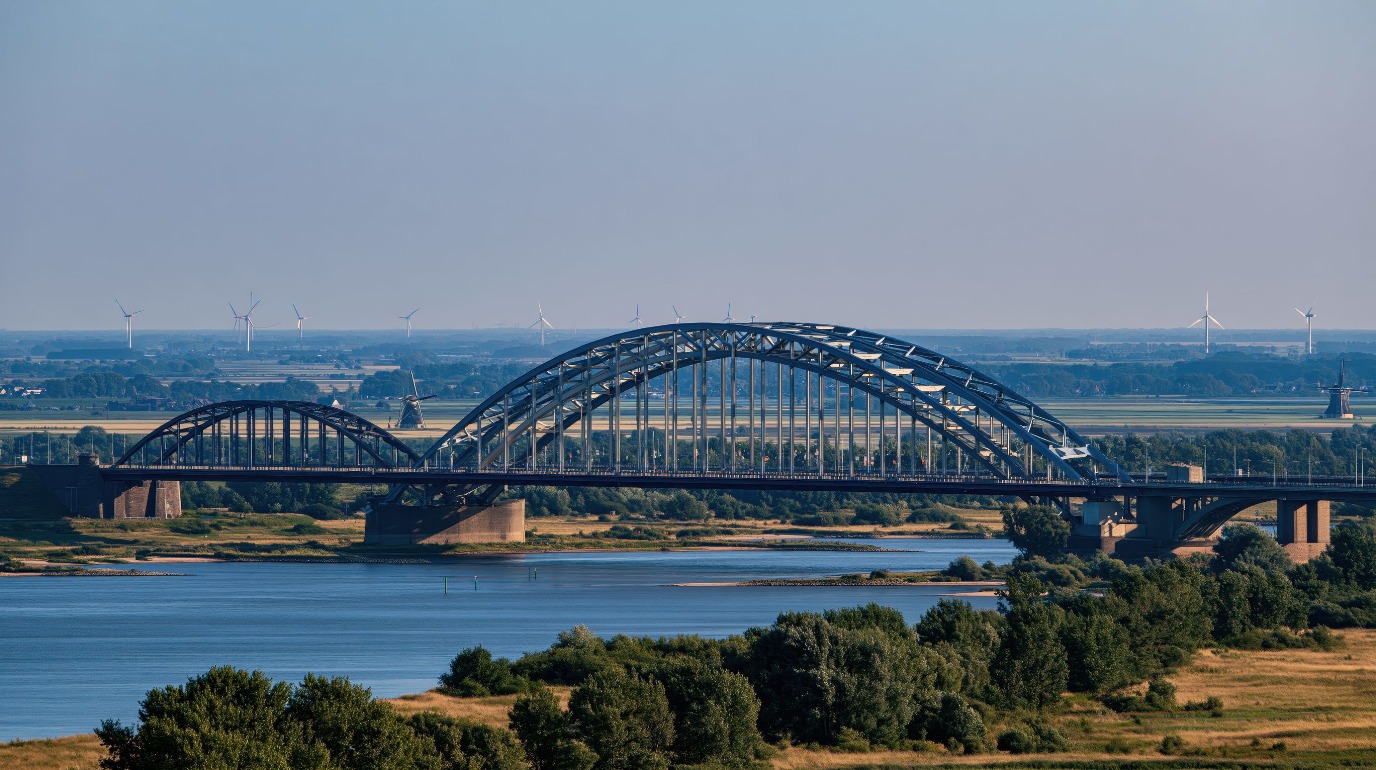
A large part of the Netherlands’ infrastructure was built in the decades following the Second World War and is now approaching the end of its lifespan. Maintenance and replacement are therefore becoming increasingly urgent. But a fundamental question remains: where should we start? Which bridges require intervention first, and which can safely wait?
Answering these questions requires much richer information about the condition of individual structures. Current monitoring systems rely largely on static sensors that provide measurements at only a limited number of locations. Haghighat: ‘I was intrigued: this seemed like a perfect problem for my small-scale robots to work on.’
Fascinating
Haghighat’s field of research is swarm robotics. This area of robotics involves (typically small-scale) robots that perform relatively simple tasks individually but solve complex problems as a group – or rather, as a swarm. Swarm robotics is strongly inspired by nature, explains the researcher. The examples from nature are countless and fascinating: think of a shoal of fish, a flock of birds or insects such as termites and ants. They can carry out complex group tasks without central control and, in doing so, seem to operate as a single organism.
Scientists have put forward various hypotheses about these biological processes. Pheromones and sensing vibrations, for example, play a role in insects. ‘It is incredibly difficult to fully understand these biological processes. What fascinates me is how relatively simple local interactions can eventually give rise to coordinated behaviour at the level of the entire group. There is no central controller telling every individual what to do,’ says Haghighat. ‘It’s very different from humans, where a supervisor generally coordinates the group.’
From understanding to application
The field of swarm robotics began some 35 years ago as swarm intelligence. Researchers sought to understand and mimic natural swarms. Using computer simulations, they began to replicate swarm behaviour. Swarm robotics emerged around twenty years ago. The introduction of smartphones sparked a rapid development of small, powerful hardware. From then on, it became increasingly common to build small-scale swarm robots, such as drones and underwater robots. ‘We can now demonstrate some really cool things. Thirty years ago, we were trying to understand it; twenty years ago, we started building; and now we really want to make an impact with the applications.’
Haghighat sees it as her mission to develop robot swarms for sensing and inspection applications: groups of mobile robots that can collectively gather information about the physical world. The major advantage of a robot swarm is its scalability, she explains. ‘Instead of a single sensor, we use a multitude of sensors. If one of the sensors fails, another robot can take over.’ This makes swarm robots particularly suitable for hazardous or hard-to-reach environments, she explains.
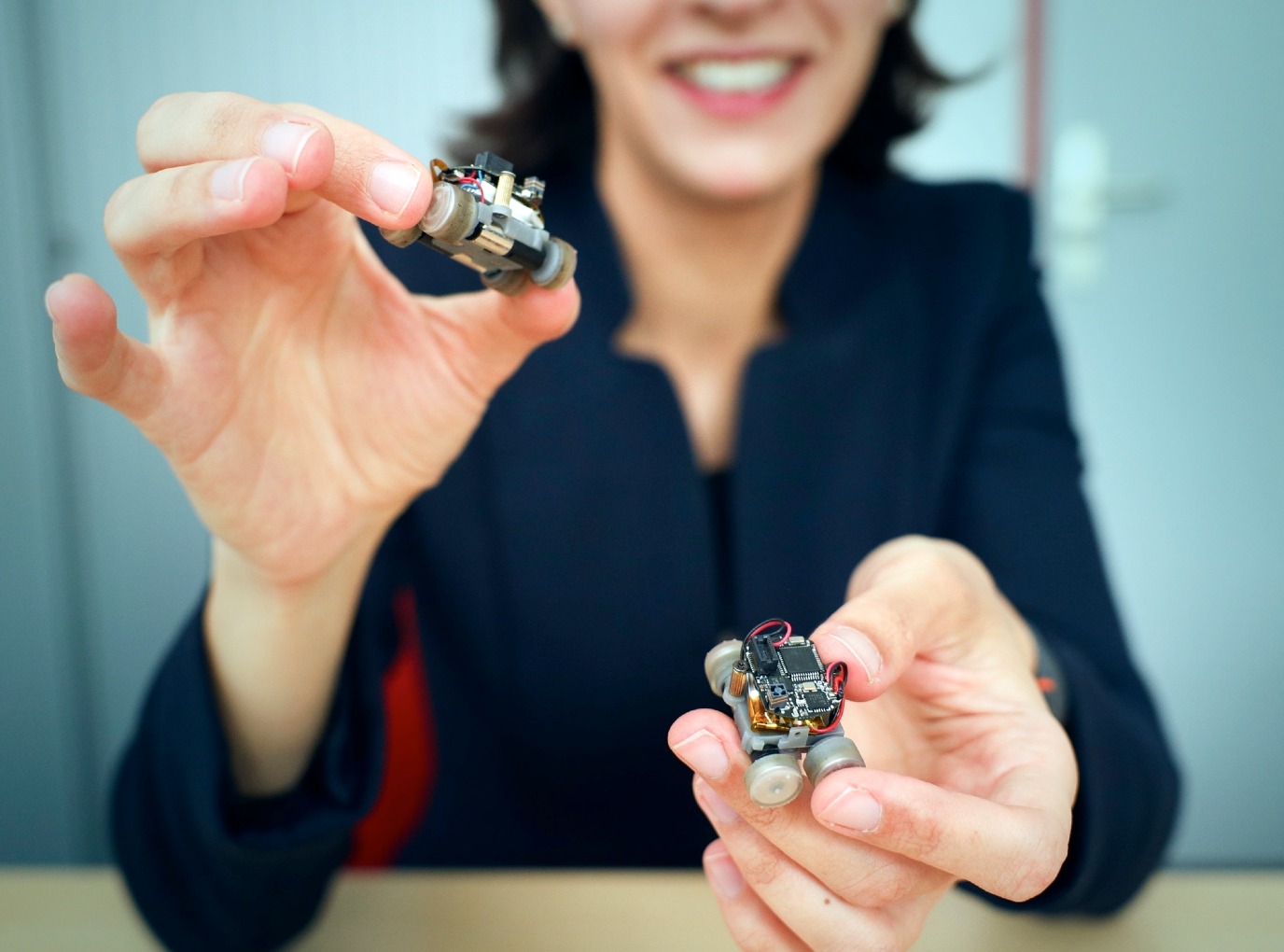
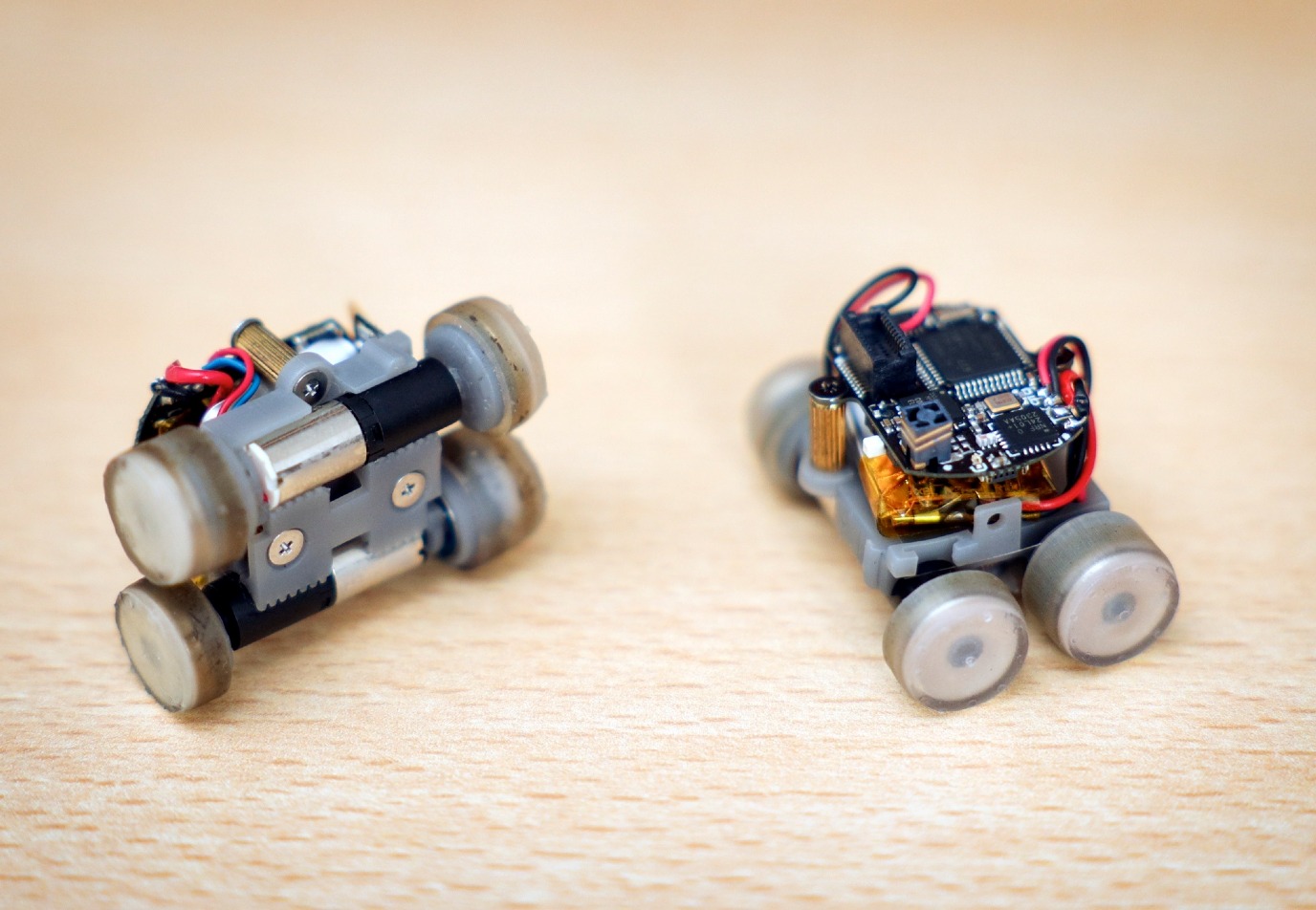
The small-scale robots designed by Haghighat are essentially small vehicles that can carry various sensors. The robots are no more than a few centimetres in size and move, for example, across a steel bridge using magnetic wheels, measuring the ‘health’ of the structure at various points. ‘This enables us to determine whether the structure is still in good condition or whether it contains cracks or other structural damage.’
In 2025, Haghighat received a Vidi grant to accelerate the development of autonomous robots for structural inspection. ‘The Vidi gives us the opportunity to tackle some of the fundamental challenges that currently prevent these systems from operating autonomously in the real world. I don’t expect our robots to be inspecting every bridge in the Netherlands in five years. But I do hope we can demonstrate that this approach works and lay the foundation for the technology to be developed further, whether through future research, industry collaboration or even a start-up led by one of my students.’
Just getting started
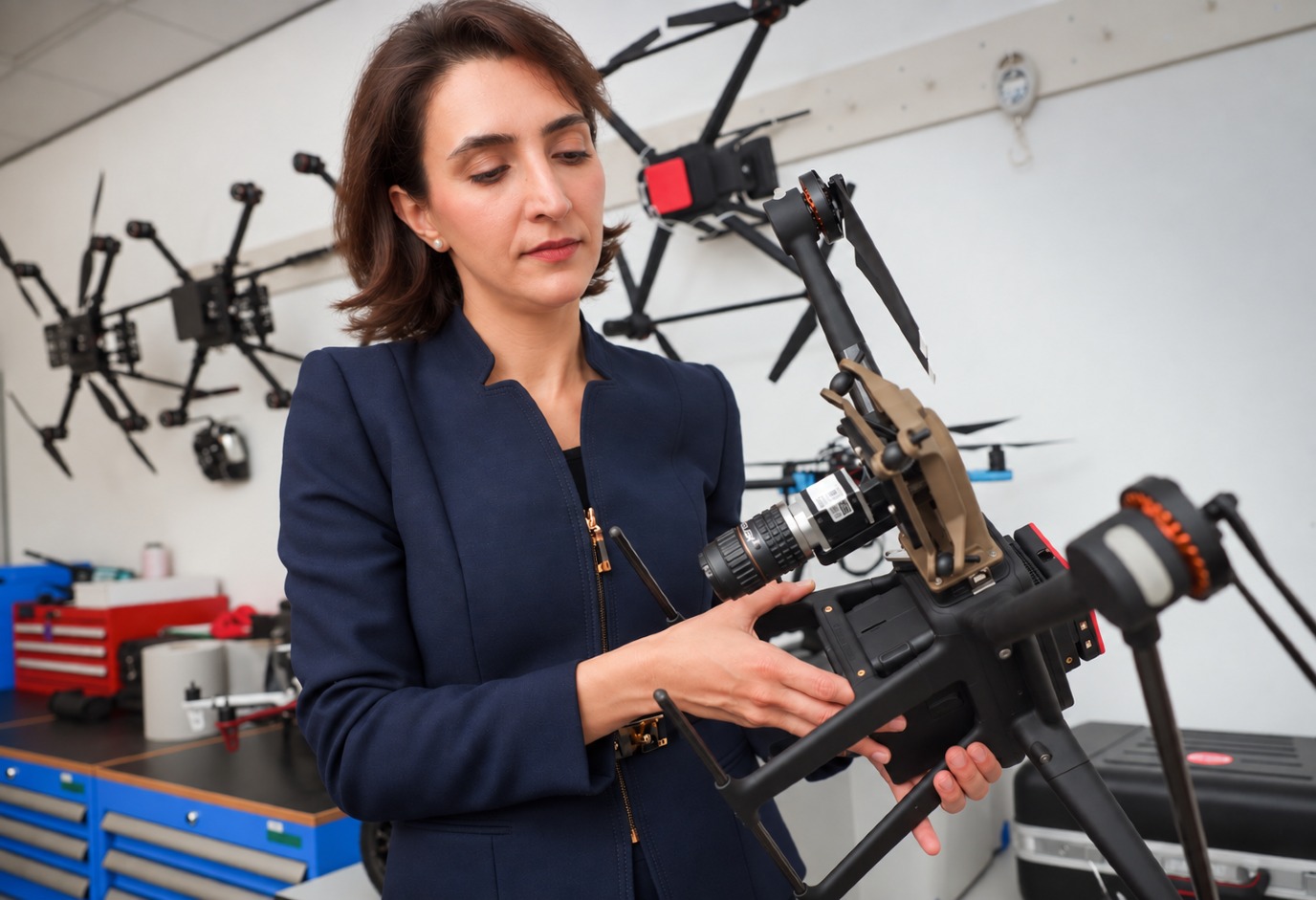
Although the use of a robot swarm shows great potential, Haghighat emphasizes the many challenges. The autonomy of the individual robots, in particular, is difficult to achieve. ‘The robots need to decide where to go, use their limited energy efficiently, understand where they are and coordinate with one another. This is particularly complicated with small robots because the available resources – such as battery power, communication and computing power – are, by definition, limited.’
The key to solving these challenges may ultimately lie in understanding and mimicking nature. Yet, as Haghighat emphasizes, we are still a long way from being able to reproduce the efficiency and adaptability of biological systems. ‘Engineering lags far behind natural systems. There are major challenges we still need to overcome. But at the same time, we’ve only been at this for a few decades. In fact, we’ve only just begun.’
Bringing disciplines together
Haghighat knows that the application of swarm robotics requires collaboration between different disciplines. It is no coincidence that, as a JTS Scholar, she is affiliated with the Jantina Tammes School – one of the four Schools that, as network organisations, promote interdisciplinary collaboration within the University of Groningen. According to the researcher, deploying a swarm of robots on existing infrastructure could, for example, raise numerous legal and safety issues. Haghighat therefore intends to use her JTS Scholarship to forge links between the various disciplines.
In education as well, Haghighat bridges disciplines. She drives several student teams at the University of Groningen and the newly founded GEARS study association, which brings together students from different faculties and degree programmes. As a coordinator, she is actively involved with the Mars Rover Team, where students from diverse programmes collaborate to build a Martian rover robot. ‘It was completely unexpected, but we won the remote category of the international European Rover Challenge on our very first attempt. A nice side effect was that this brought extra attention to the educational concept behind the student teams: namely, challenge-based learning.’
Challenge-based learning is all about education based on real-world challenges, she explains. In 2026, Haghighat also received a Comenius Teaching Fellows grant to further develop this approach in robotics education. ‘We present students with a challenge that they try to solve, and as lecturers we offer support wherever necessary. In this way, studying is not one-way traffic, with the lecturer simply transferring knowledge to the students, but rather an interaction between student and lecturer.’ And that is exactly the future of education, concludes Haghighat.
More information
More news
-
01 October 2026
10 years of the Nobel Prize Ben Feringa
-
01 October 2026
Making stardust in the lab
-
25 September 2026
NASA selects infrared space telescope PRIMA featuring Dutch technology