
Why entrepreneurship thrives in specific regions
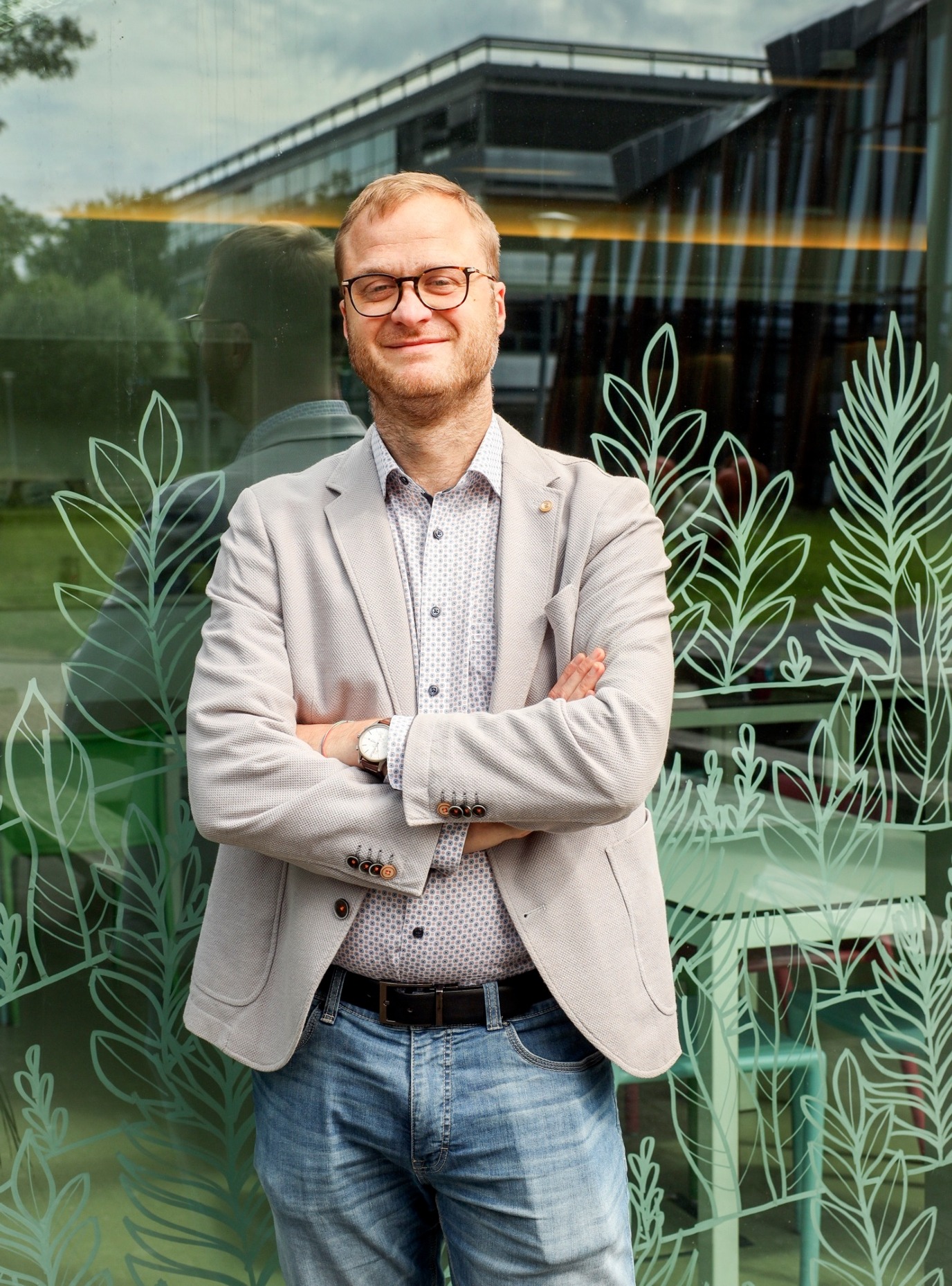
Was the area where you currently live part of the Roman Empire? If so, your region likely has a stronger entrepreneurial spirit than other regions. Professor of Entrepreneurship and Regional Development Michael Wyrwich studies this phenomenon using an interdisciplinary approach. ‘Entrepreneurship is a deeply embedded regional resource that can persist for very long periods.’ According to him, universities play a central role in promoting entrepreneurship.
Text: Thomas Vos, Corporate Communication, UG / Photos: Henk Veenstra
9 November 1989: the Berlin Wall comes down and brings about the collapse of the German Democratic Republic (GDR). Many East Germans hoped it would bring them the prosperity they saw in West Germany. By the late 1990s, this hope had turned into disillusionment. Michael Wyrwich: ‘I was an Eastern German high school student during this period. There was very high unemployment and the labour market prospects were low. It triggered something in me: how does this work? And how can we reduce unemployment?’
Suppression of entrepreneurial spirit
Wyrwich decided to do a study in Economics, during which he sought to answer these questions from a unique perspective: that of entrepreneurship. Wyrwich: ‘Entrepreneurship is an underdeveloped theme in the field of economics, but its interdisciplinary nature makes it fascinating. Researchers in the fields of management, psychology, history, and geography study the phenomenon. I wondered if the fact that the former parts of the GDR had such high unemployment rates possibly had to do with the suppression of entrepreneurial spirit during socialist rule. Starting with my PhD, I decided to research it in depth.’
Providing advice on entrepreneurship
Wyrwich is Professor of Entrepreneurship and Regional Development at the UG Faculty of Economics and Business, where he began in 2018 as an associate professor. Entrepreneurship, a relatively new field within economics research, is the core of his research where he examines the driving factors through historical data. His research has proven valuable for different purposes, be it for local companies trying to expand their business or national governments.
The case of East Germany
Back to East Germany. Was socialist suppression of entrepreneurial spirit a key factor in the high, post-socialist unemployment rates? Wyrwich: ‘What I found is that there were lingering entrepreneurial traditions in the region from the pre-socialist era. These resembled pre-World War II and pre-division differences. To me, this was interesting, because it could indicate that there is something deeply embedded in the region. At the same time, the socialist period did leave an imprint. Especially people in post-socialist East Germany aged 40 and above were unlikely to be self-employed. Typically, people become entrepreneurs around this age, as they have more experience, accumulated wealth, and stability. However, this was not the case for East Germans because of the socialist rule under which they grew up.’
Not black and white
This does not mean that there were no entrepreneurs in the former East Germany — or that there are none today. Wyrwich: ‘Back then, and also nowadays, the rate of self-employment even is higher in East Germany. This stems from the transition period after the socialist system collapsed, during which the state economy was privatized. This led to many small and medium-sized enterprises that still exist today. However, these businesses are usually not as financially stable as their Western counterparts, and there seems to be a lack of entrepreneurial spirit among Eastern Germans, such as in expanding their business.’

Roman Empire
In other research, Wyrwich and colleagues went even further back in time, to the Roman Empire. ‘We investigated whether regional German differences in entrepreneurship and innovation could be traced back to Roman rule. Indeed, we found that areas that were under Roman rule do have a higher level of entrepreneurship and innovation. Interregional social and economic exchange in the Roman Empire is one of the reasons for this,’ Wyrwich explains. ‘It really shows that entrepreneurship is a deeply embedded regional resource.’
How to boost entrepreneurship
What does this mean for regions seeking to attract more entrepreneurs? Wyrwich: ‘Regions must invest in an entrepreneurial ecosystem and an entrepreneurial culture. This is a long-term task that goes beyond political cycles, so it is important to establish an entrepreneurship foundation with an independent budget. This foundation can help build infrastructure, such as spaces to develop ideas or to rent equipment. And you need people who have lived in the region for a while and see its potential. They are then more likely to start a business there.’
The role of universities
Having a (technical) university nearby is almost essential, Wyrwich says. ‘Universities play a dominant role in boosting entrepreneurship, such as by providing lab capacities and skilled staff. Therefore, it would be pivotal that the UG is actively involved in the AI Factory to make this a successful home base to many startups. The AI Factory will provide important infrastructure for entrepreneurs, in addition to the support for startups that the university offers. However, it takes time before this leads to visible results and ripple effects across the region. Currently, entrepreneurs may still prefer to move to other parts of the country to establish their businesses.’
Korea
Wyrwich believes his research should have an impact: ‘I try to share my knowledge with small and medium enterprises. Some of them are very open to our findings, while others are not. But it is our responsibility to share the knowledge. And it goes beyond these enterprises. Recently, I was in South Korea for German-Korean government consultations. In South Korea there is still a wish to eventually reunite with North Korea. I was able to share my knowledge on how reunification affects innovation and entrepreneurship, using the example of German reunification. In case of a possible reunification of the Koreas, this could be useful knowledge.’
More information
More news
-
11 August 2026
InnoLaunch: Get your startup ready for takeoff in 8 weeks
-
-
24 April 2026
Royal Decoration awarded to Jakob de Haan