
Public space belongs to everyone
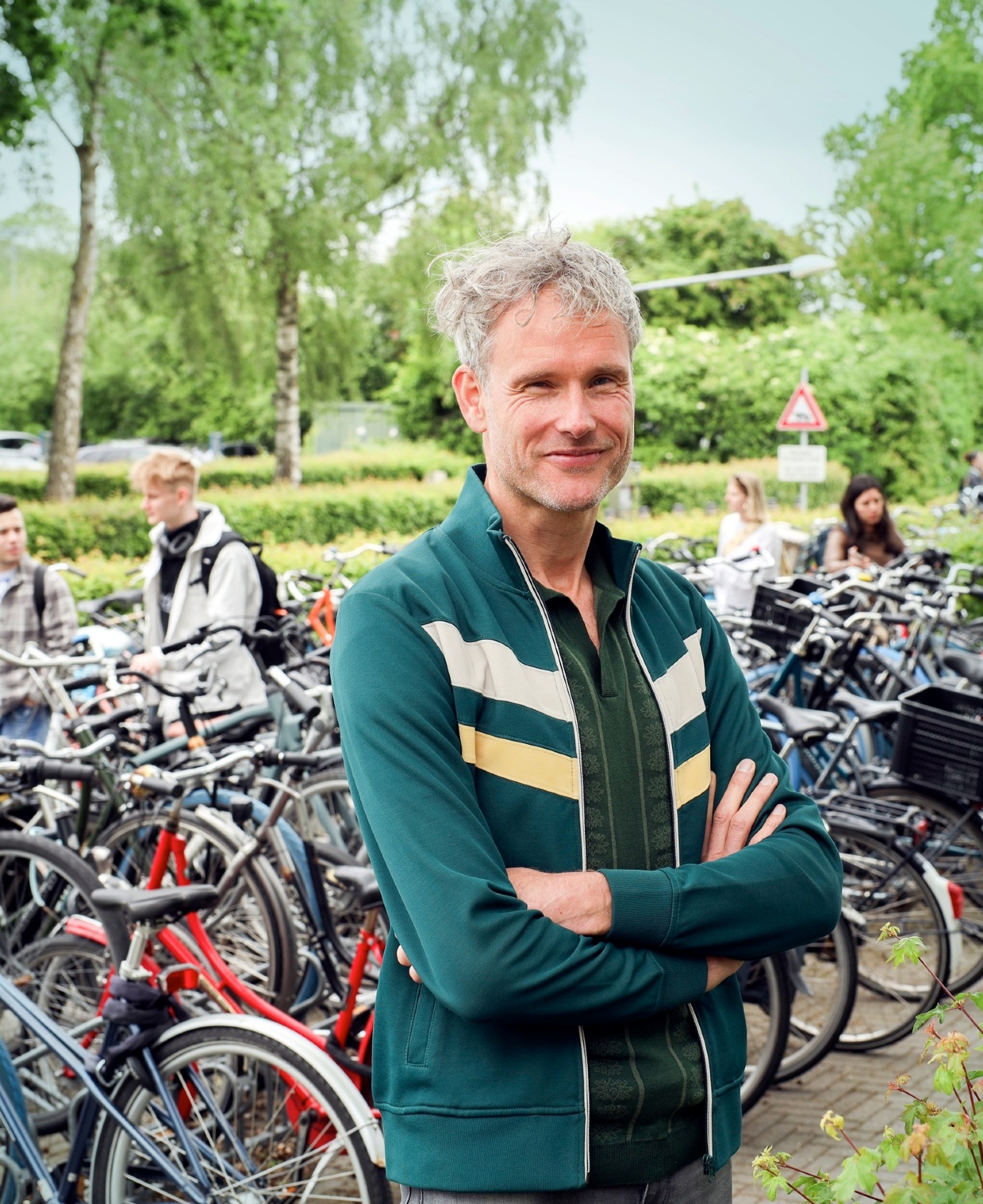
How can public space be designed in such a way that it is safe, accessible, and inviting for everyone? Geographer Gerd Weitkamp studies how people move through their living environment, but also how they experience it. In particular, he examines what this means for their health, well-being, and social participation. ‘If you make an environment safe, for example for an eight-year-old child, or accessible for older adults, then it becomes safer and more accessible for everyone.’
Text: Gert Gritter, Corporate Communication UG / Photos: Henk Veenstra
Activity Space
An important concept in his work is activity space, says Weitkamp, associate professor at the Faculty of Spatial Sciences. ‘This refers to all places a person visits in daily life: home, the supermarket, the general practitioner, a park, family visits, or a sports club. Such an activity space reveals a great deal about someone’s quality of life. The more accessible that space is, the more opportunities a person has to participate in society. We are talking about how easily older adults can reach the supermarket, or the effect of a busy intersection on safety. The design of a city determines whether people remain active and socially engaged. But that space is not the same for everyone. Inequality exists, for example, in the area of mobility, especially for people in vulnerable situations, such as older adults with dementia and people with disabilities. Where are they being left behind? Ultimately, our focus is on the opportunities — or freedoms — people have to lead a life that suits them. Mobility is not an end in itself, but a condition for participation and well-being. If the design of the environment also takes vulnerable groups into account, you naturally create a more inclusive society.’
Proximity of facilities
‘Scale also plays an important role in my research. The question of how space influences health operates simultaneously at very different levels. At the street corner, where an elderly resident hesitates to cross the road. In the neighborhood, where the difference between having or not having a supermarket nearby can be measured. In the region, where rural areas and cities are functionally connected — or not. And ultimately on a national and international scale, where the distribution of healthcare facilities determines whether people have access to the care they need.’ Together with colleagues, Weitkamp investigated how the proximity of everyday facilities relates to health among older adults. The research used data from more than seven thousand participants in the LifeLines study. The results were striking. Older adults living closer to healthcare facilities often rated their health more positively. However, the relationship with supermarkets proved less straightforward: people living farther away from a supermarket sometimes reported better health. This shows that health does not simply depend on distance alone. Income, education, employment, social connections, and the quality of the living environment also play an important role.
GPS tracking
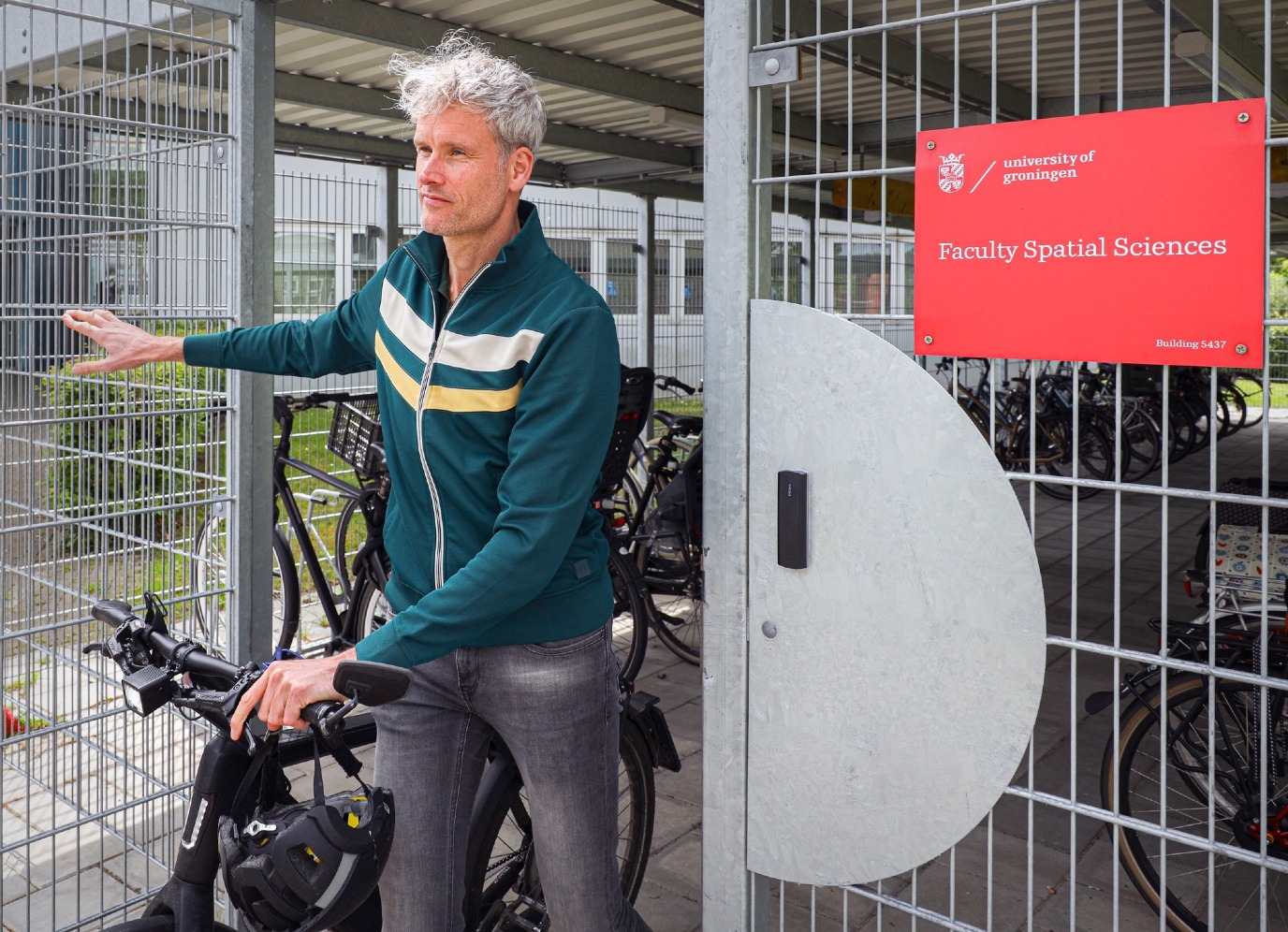
Weitkamp and his colleagues make extensive use of geospatial technology, such as GIS (Geographic Information Systems). Much of the data comes from study participants equipped with devices such as pedometers, GPS trackers, and mobile phone apps to map mobility patterns. An important concept here is ‘collateral mobilities’: a combination of spatial and physical movement. It is not only the distance someone travels that matters, but also what they do along the way and at various locations, including the moments of rest in between. For example, the research showed that people with a large activity space are sometimes actually less physically active. Someone may travel long distances by car while moving very little. At the same time, much physical activity takes place in locations where people spend extended periods of time, such as while shopping, gardening, or socializing. According to Weitkamp, mobility is therefore much more than simply moving from one place to another: it concerns the way people experience and use their environment.
Speed Pedelec
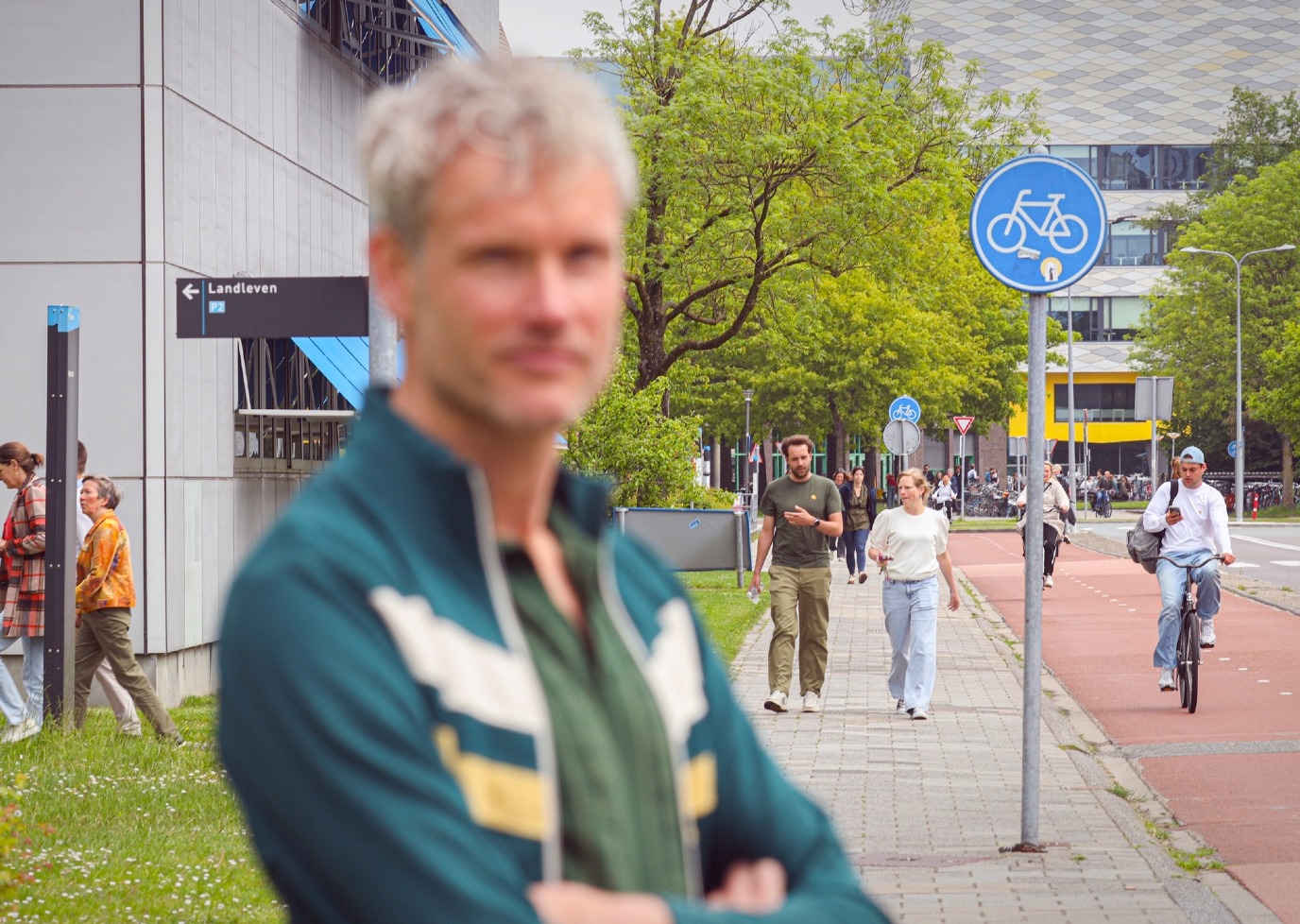
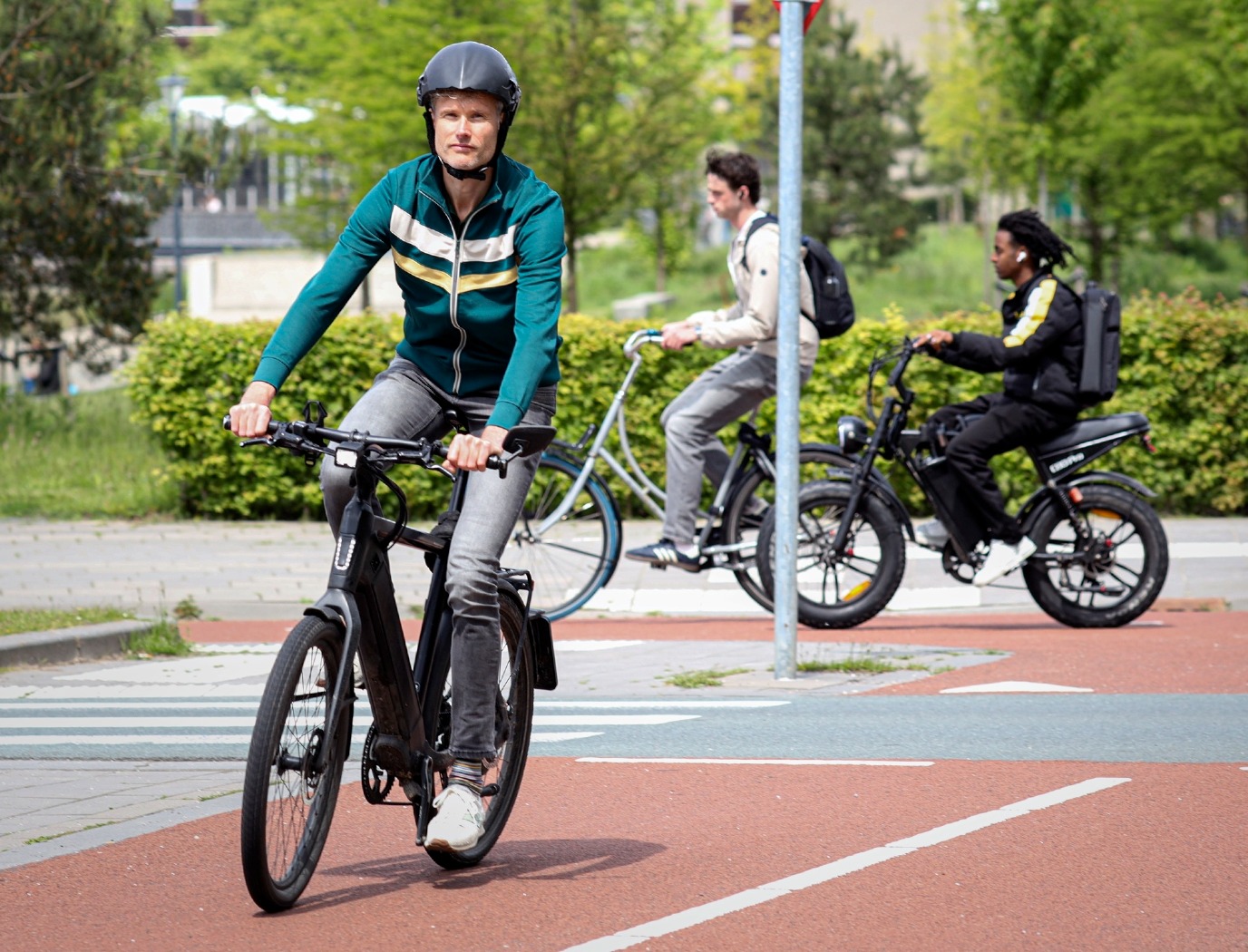
Quantitative data never tells the whole story. ‘For some people, connections to suburban areas, such as bicycle tunnels, are simply convenient routes. But they are places women prefer to avoid at night. Situations may be harmless for most road users, while at the same time being unsafe for children, older adults, and wheelchair users. Sometimes these involve only small numbers of people, but their concerns cannot simply be dismissed. Everyone should be able to feel safe.’ For Weitkamp himself, moving to the countryside was an eye-opener. ‘We moved outside the city of Groningen, but not so far that I could no longer cycle to work within half an hour, so I would not become dependent on a car. We succeeded, and I now use a speed pedelec. But living in the countryside helped me see things through other people’s eyes and realize that cycling is not a realistic option for everyone. Some people genuinely cannot or do not want to do without their car because, for example, they work shifts, have physical limitations, or find alternative transport neither pleasant nor safe.’
Photography
Besides being a geographer, Weitkamp is also active as a photographer. ‘As a photographer, I am also interested in the ways people are connected to their environment and how places and people influence one another. My favorite places are public outdoor spaces where you can encounter anyone: streets, squares, parks, or for example a bus station. As a photographer, I capture the interaction between people and their surroundings, exploring the boundaries between spaces, such as the interplay between public and personal space. For my photographs, I often carefully choose the locations and the timing. Once I have selected the place and moment, I wait patiently and allow myself to be surprised by what and whom I encounter, in order to capture that one brief moment. As a photographer, I observe differently than as a geographer. You need to take more time, and different things begin to stand out. Through my way of photographing, I become a participant in the situation, whereas as a scientist I must maintain distance. As a photographer, I have the freedom to shape reality according to my own vision. I can direct the outcome and then let it go. Science works rather differently...’
Information
More news
-
08 September 2026
Verhuizing supermarkt Koudum gevolgen voor dorpshart
-
08 September 2026
Groningen residents want mobility hubs with shops and meeting points
-
07 September 2026
Can building on water help combat the housing shortage?