
Impact |Gender equity in the circular construction sector in Friesland
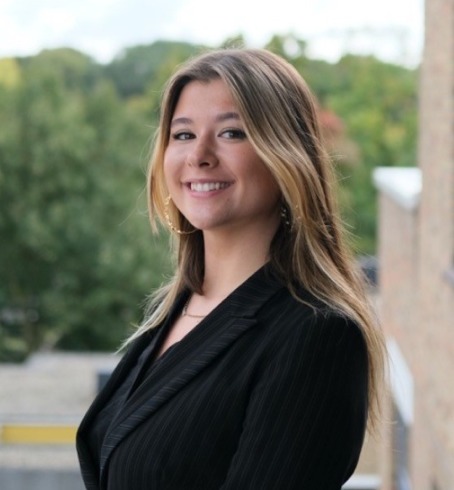
In the coming weeks, the nominees for the Ben Feringa Impact Award 2026 will introduce themselves and their impactful research or project. The winners will be announced on 9 June. This week: Maruna Manthe with the research on gender equity in the circular construction sector in Friesland.
Who are you?
My name is Maruna. I’m of Irish, Korean, and American descent, and I graduated from the MSc Sustainable Entrepreneurship programme in August 2025. I also did my BA in International Relations and International Organizations at the UG.
I completed my master's degree at Campus Fryslân, and my BA at the Faculty of Arts.
Can you explain what your research was about?
This initiative examines gender equity in circular construction in Friesland, the Netherlands, a region recognized as a global circular economy (CE) frontrunner, with construction as a key target sector. Construction contributes approximately 9% of the EU's GDP and supports over 18 million jobs, yet women make up only an estimated 10% of its workforce.
Set against Friesland's ongoing CE transition, this study asks: how do the women working in this industry actually experience it? By investigating their perceived access, participation, and the barriers they face, the research equips future policymakers and industry professionals with the evidence needed to build a more inclusive sector, and challenges the CE to look beyond environmental and economic gains, toward the communities and people at its heart.
What made the research impactful?
What makes this initiative truly special is that it is the first of its kind. While the CE has rightly been celebrated for its environmental and economic promise, its social dimension has remained critically underexplored, and this research changes that. But beyond filling an academic gap, this initiative speaks to something far more fundamental: the opportunity to build a fairer world.
Women have historically been sidelined across industries, and construction is no exception. CE practices represent a rare and powerful moment, a chance to hit reset. Rather than allowing a transformative movement to replicate the inequalities of the past, this research makes the case for embedding inclusion from the ground up. By translating women's lived experiences into concrete policy recommendations, it offers policymakers and industry leaders the tools to ensure that the CE works for everyone, because a truly circular society is one that leaves no one behind.
What was your personal motivation to conduct this research?
I have always been passionate about gender equality and social justice, and growing up with a father in construction gave me an early window into that world. When I discovered that construction accounts for approximately 40% of global greenhouse gas emissions, it became clear this was a sector that urgently needed to change, and I wanted to be part of that conversation. This project sits at the intersection of a sector I knew, causes I cared about, and a gap nobody had yet explored.
I am also deeply grateful to have spoken with such insightful women, all deeply passionate about their work. The most humbling lesson is that there is so much more unknown than known, and that is precisely what makes working in understudied fields so vital. Every voice we include brings us one step closer to a CE that is not only sustainable, but genuinely just.
More news
-
02 June 2026
Impact | The Grounding AI Map
-
31 March 2026
Islands as testing grounds for a sustainable society
-
24 March 2026
A secure, resilient society starts at the local level