
Science for Society | Detecting fake faces with camera fingerprints
Scientists work day by day on solutions to a variety of problems. From new drugs to smart farming techniques, our research helps society move forward. But this is not always immediately visible. In the Science for Society series, we use stories about impactful innovations, products and ideas to show that science works!
Text: Marrit Wouda, Corporate Communicatie UG
How do you know a face is a real face? For people on dating apps, this has often been a question: Can we trust what we see? Or have make-up, trickery with light and angles, or even some photoshopping, deceived us? But the problem now is bigger than that. With the emergence of generative AI, photos of non-existent faces can be created at the touch of a button. And if these photos are used in official documents, such as ID cards, passports or driver licences, it will be possible to create fake identities, bypass facial recognition and commit all kinds of fraud.
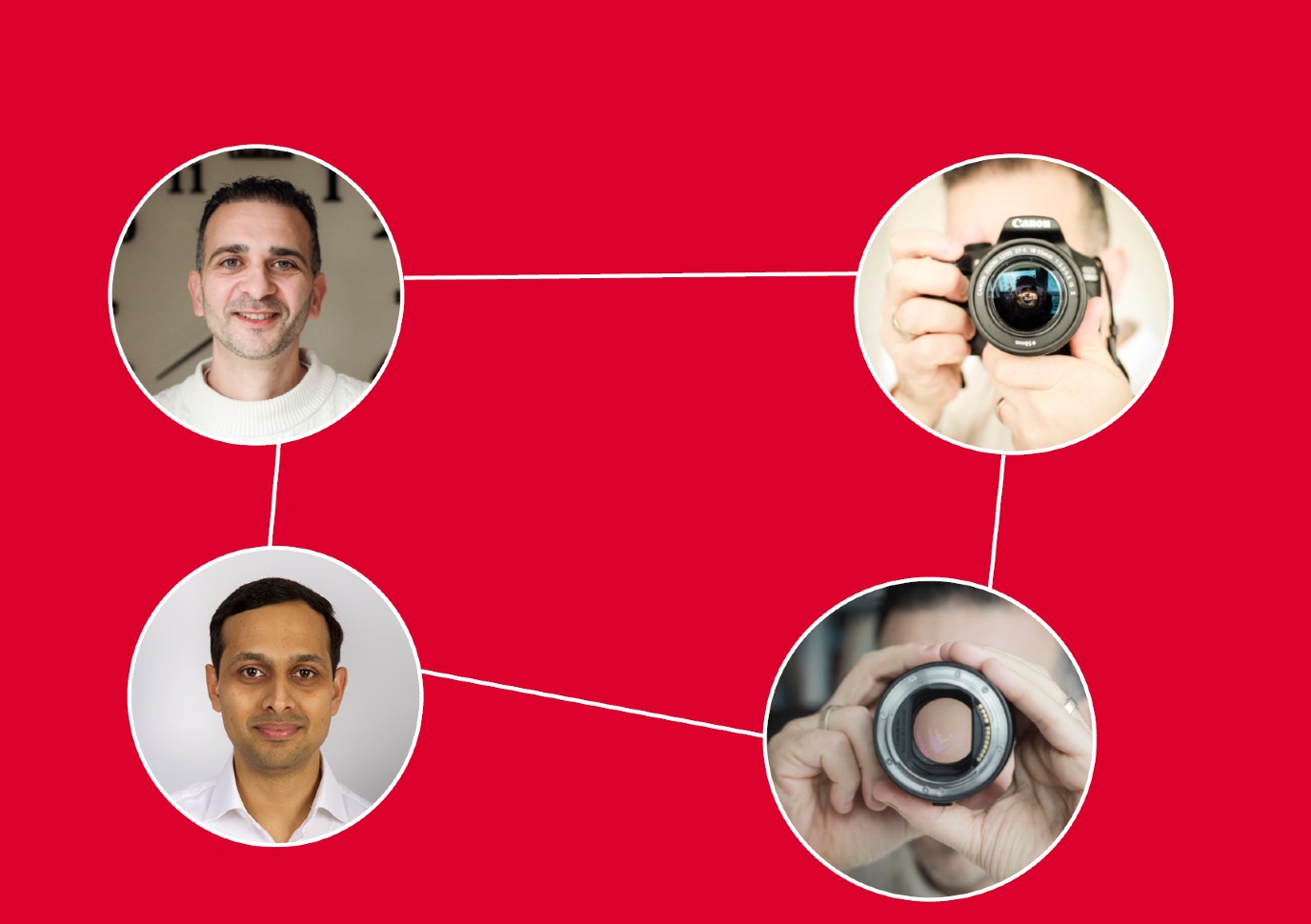
Luckily, George Azzopardi and Guru Swaroop Bennabhaktula have created a way to confirm the authenticity of photos by looking at the unique fingerprint of cameras. Working with the RDW, the Netherlands Vehicle Authority, they will use their technology to combat what are called face morphing attacks.
Genuine documents, fake faces
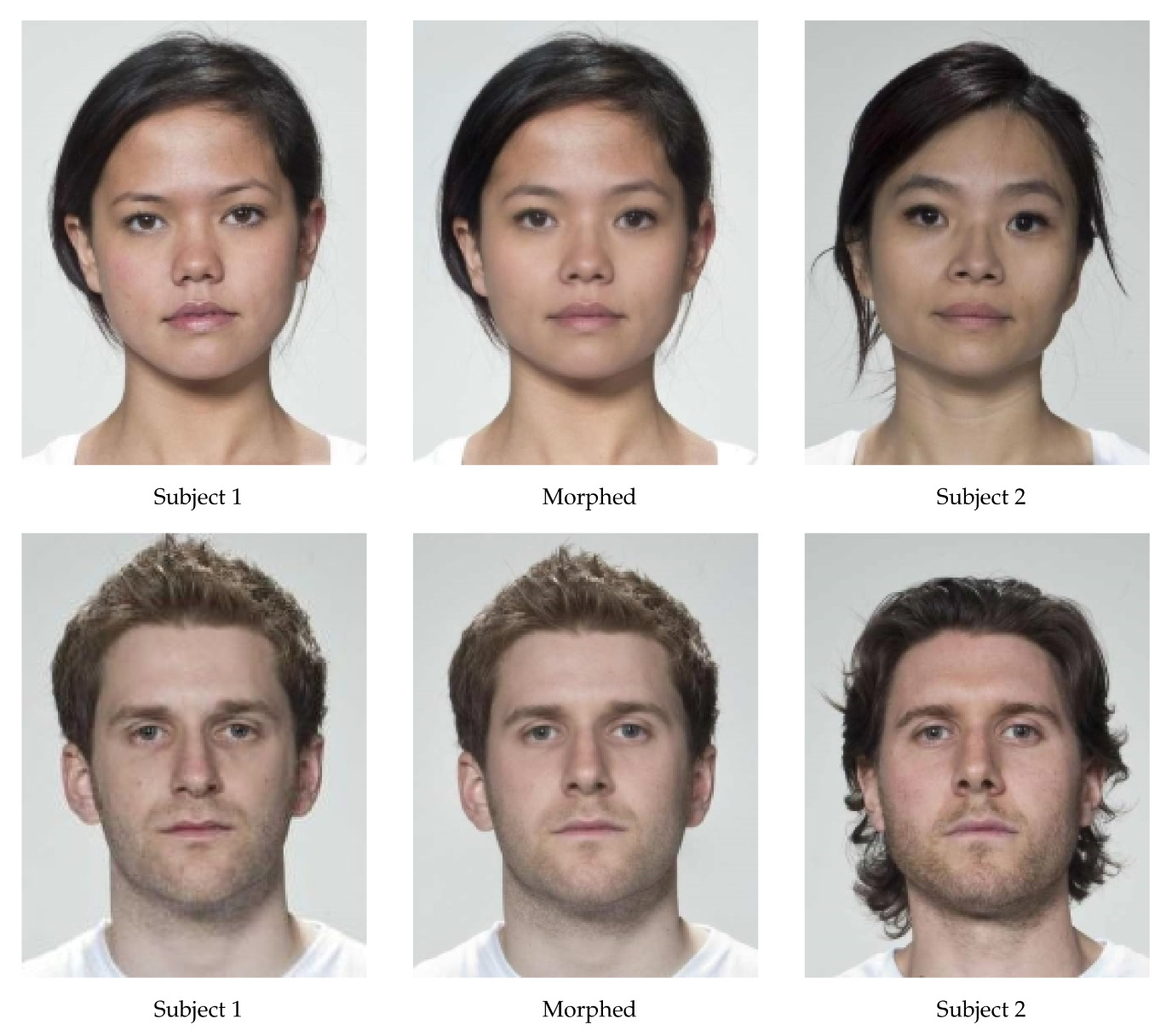
Face morphing attacks are used to fool facial recognition systems and create genuine passports with fake photos. Azzopardi explains: ‘Every face has certain landmarks: the distance between the eyes, the distance between the lips and the nose, etc. Facial recognition software, like ones used in airport security, use this biometric data to verify the person in front of them matches the picture on their passport.’ He continues: ‘With AI, it’s possible to take photos of two faces and create one new face that is somewhere in the middle of the two. As long as you take pictures of two people that look similar, this new face will look like both of them. And, if a state-of-the-art AI model is used, it will also preserve the biometric features of both genuine faces.’ These fake photos can then be used to create an official document that matches the face of two people. ‘With that, it becomes easier to open a bank account, apply for a residence permit and craft a fake identity.’
Camera fingerprints
Because driver licences can be used as IDs in the Netherlands, this a challenge for the organization responsible for issuing them: the RDW. The RDW contacted Azzopardi and Bennabhaktula after RTL Nieuws wrote about their work using ‘camera fingerprints’ to help catch criminals. Every camera sensor has slight imperfections that are traceable in every picture taken. These are invisible to the naked eye, but detectable with the system developed by Azzopardi and Bennabhaktula. ‘Like ballistic research, where they compare grooves on a bullet to prove it was fired from a specific gun, we can demonstrate a photo was taken with a specific camera,’ Azzopardi explains.
New workflow
There are around 1300 accredited photographers and around 400 photobooths that take photos for the RDW and send these pictures directly to it. The only additional thing the new system needs is the fingerprint of the camera, which is easily done by taking a few pictures and processing them through the system. These fingerprints are then stored in a database, and when a photographer sends a new picture, it can be compared to the stored fingerprint to confirm that the picture was indeed taken by the licensed photographer. ‘This way we know for sure that this is a genuine, real picture, and not an image made with AI,’ Azzopardi adds.
Further use
There are, of course, a lot more uses for this technology, according to Azzopardi. He and Bennabhaktula are launching their own company, ForensifAI, to further develop the system: ‘Of course, when it comes to other official documents, but also in journalism or in insurance claims, it’s important to be able to prove a certain picture was taken with a specific camera to prove authenticity and hence credibility.’
Read more
Do you want to know more about Science for Society? Check out the overview page for the previous editions.
More news
-
-
03 September 2026
Ming Cao reappointed as scientific director of the Jantina Tammes School
-
01 September 2026
Evrim Ursavas appointed scientific director Wubbo Ockels School