
How music is helping to revive the Gronings dialect
We underestimate the value of minority languages and dialects, says Aurélie Joubert, assistant professor of Language and Society. The Frenchwoman is intrigued by the Gronings dialect and whether music in this dialect is changing people’s attitudes towards each other and their regional language.
Text: Lieke van den Krommenacker
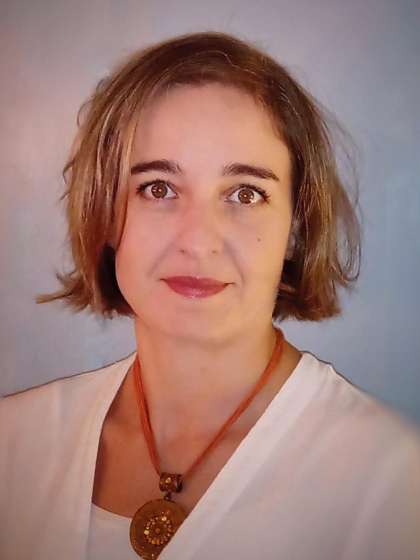
Aurélie Joubert, assistant professor of Language and Society, grew up in Normandy, in a family where only French was spoken. She learned Spanish, Italian, and Latin at school, studied English and later sociolinguistics, and now conducts research into, among other things, the impact of music in the Gronings dialect on community spirit. Joubert is an expert in the field of minority languages, language endangerment, and the revitalization of languages.
Incredibly socially relevant
‘My English studies took me to Manchester and Northern Ireland, where I discovered that there are many more languages that I wanted to learn more about,’ explains Joubert. ‘For example, in my own country – France – I discovered small languages that I knew nothing about and did not understand: Catalan, Basque, and Occitan. These are languages that people in the north know very little about. National policy in France does not provide much support for these regional languages either. That sparked my interest in minority languages.’
Joubert conducted her PhD research on Occitan and Catalan in France and Spain. This journey, plus years of teaching in England and Northern Ireland, confirmed her assumption that minority languages are incredibly socially relevant, and that it is important to pay attention to these small languages and dialects. Governments would do well to recognize them, because the language you speak is so inextricably linked to who you are.
Identity of a place
In 2019, just before the coronavirus pandemic broke out, Joubert moved from Belfast to Groningen, where she started working as a lecturer in the European Languages and Cultures programme. As a specialist in French sociolinguistics, she looks at the influence of language on society, with an emphasis on European minority languages. She also developed a special interest in the Gronings dialect: ‘I believe that, to understand the place where you live, you need to know more about its identity. I am, of course, an outsider, so the least I can do is show an interest in the language or languages spoken here.’
Regional language band concert
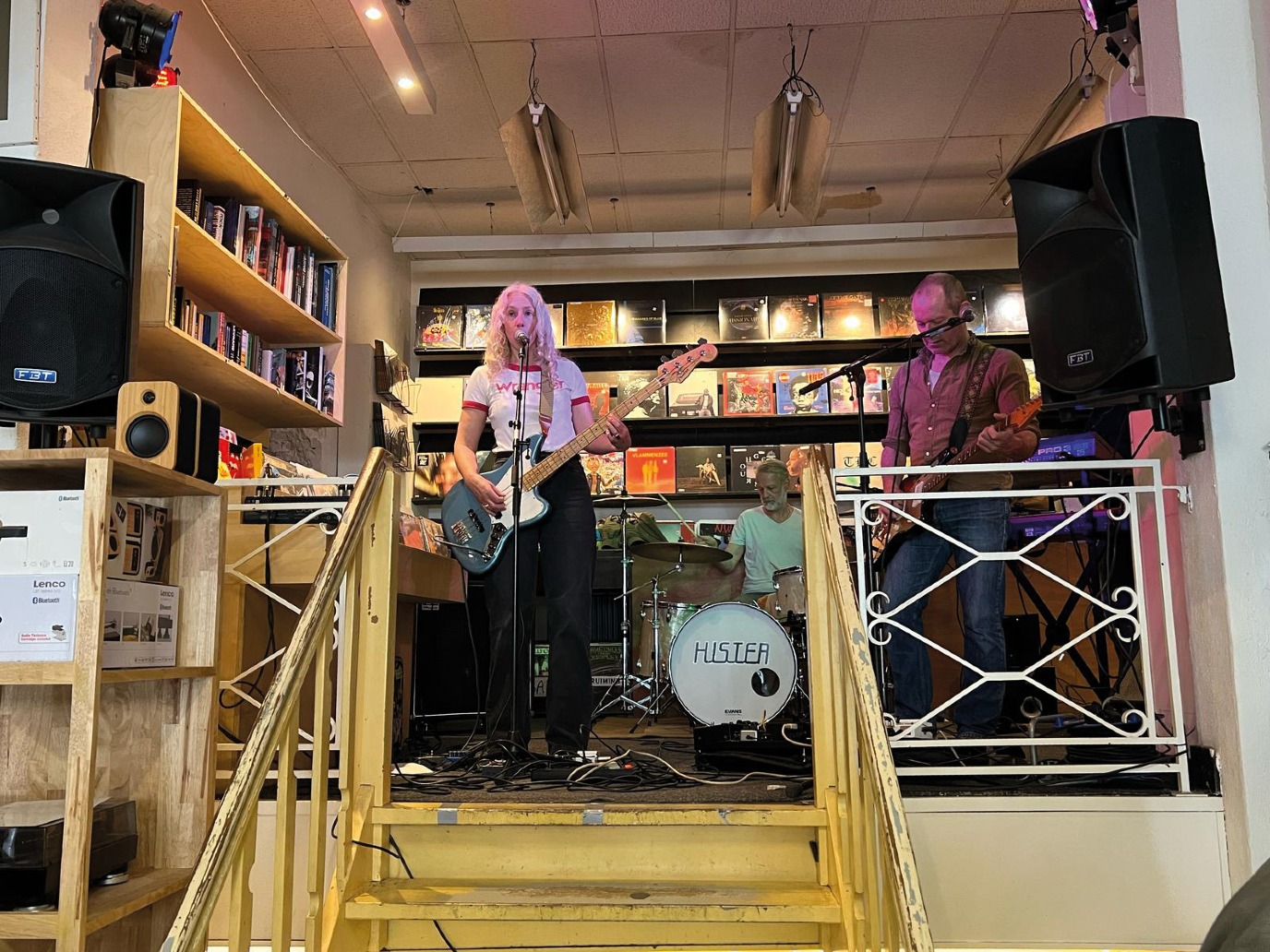
Her first encounter with the Gronings dialect was at a concert, which she was taken to by a friend. Joubert laughs: ‘I didn’t know about it beforehand, so I like to believe that the Gronings dialect found me rather than the other way around.’ This concert, by the regional language bands VanDeStraat and Hister, led to an unexpected turn in her work, as Joubert decided to set up a research project with a research master’s student focusing on Gronings music in relation to how people feel about their language and environment.
‘We interviewed concertgoers and asked them to fill out a survey before and after the concert. The questions were about their knowledge of the language, but we also wanted to know whether the concert encouraged people to learn Gronings, or learn more, and whether they thought we should use more Gronings.’ Around 80 concertgoers were surveyed, spread over three concerts: in a church in Haren, a community centre in the Lewenborg district, and in the Plato record shop.
According to Joubert, music can make a real contribution to the revival of a language. We underestimate the value of local languages and dialects. Press play and be surprised by a Spotify playlist full of songs in unique dialects and regional languages from around the world, demonstrating how rich, vibrant, and meaningful linguistic diversity can be.
More connected
The most important findings? ‘That people who had a positive experience of the concert also had a more positive attitude towards the Gronings dialect. It gave them more confidence to speak it. A positive experience also made people more willing to learn or improve their Gronings, especially those who did not yet have a good command of it. What is more, people felt more connected to each other after a concert.’ In other words: music can make a real contribution to the revival of a language.
We underestimate the value of local languages and dialects because we think about them too much in economic terms, says Joubert. ‘The discussion is often about whether something makes money,’ she says, ‘but you need language to make friends where you live. As an international resident of Groningen, I know that I cannot make certain connections with people if I do not speak Dutch. The same applies to a regional language or dialect: mastering it improves your bond with some other residents of Groningen, especially those of an older generation.’
Shame
‘Some people argue that making policy for minority languages does not necessarily mean that more people will speak them, because that has much more to do with people’s willingness to speak a particular language,’ says Joubert. ‘But what we see, and what sociologists such as Pierre Bourdieu call cultural capital, is that when someone learns a language at school, they quickly think: oh, I’m being taught this officially, so it must be valuable.’
Joubert recalls a visit to an international secondary school in Haren, where a group of teenagers were asked what languages they spoke besides Dutch. ‘One pupil said: “Frisian”, and then immediately bowed his head and looked away, as if he was ashamed. Perhaps he was afraid of the other children’s reactions. But a reaction like that comes from somewhere. I am interested in the question of how we can make people feel better about the fact that they speak a minority language or dialect, so that they dare to speak it.’
Trauma
Joubert is keenly interested in the link between wellbeing and language revitalization. ‘In Canada, research has been conducted into breathing new life into languages to heal intergenerational trauma. We know that terrible things happened there to the Inuit, the original inhabitants of the country, because of the forced cultural assimilation that took place. In schools, for example, Inuit children were abused and separated from their parents.’ This research prompted Joubert to study the Gronings dialect in relation to trauma.
In the future, she hopes to extend her research to the connection between community, identity, language, and wellbeing to other European minority languages. ‘We need to think in good time about what these languages have to offer us. Not only because of the linguistic and cultural knowledge, but also because of the emotions that speaking them evokes in people. Languages are part of a much larger ecosystem.’
Moi and klaai
Not only communities benefit when small languages are able to flourish, says Joubert, but also the towns and villages themselves. ‘I think that the Gronings dialect is important for the identity of the city. My students really enjoy learning more about the place where they live and becoming a little bit Gronings themselves by at least knowing what moi means.’ In that context, does Joubert have a favourite Gronings word? ‘Klaai,’ she says. ‘That word symbolizes the relationship with the landscape so beautifully: being truly grounded in the soil of Groningen.’
More information
More news
-
14 October 2026
The Change: menopause is more than just a hormonal matter
-
-
14 September 2026
Dementia in migrants: does care in the native language help?