
Connecting with history
Valika Smeulders is head of history at the Rijksmuseum and was recently appointed as Professor by special appointment in the Faculty of Religion, Culture and Society at the UG. She sees her task as showing ‘what you don’t see, but was once there.’ This was also her ambition when she worked as curator of the major Slavery exhibition in the Rijksmuseum in 2021. To her mind, this is the way to help people connect with history.
Text Franka Hummels
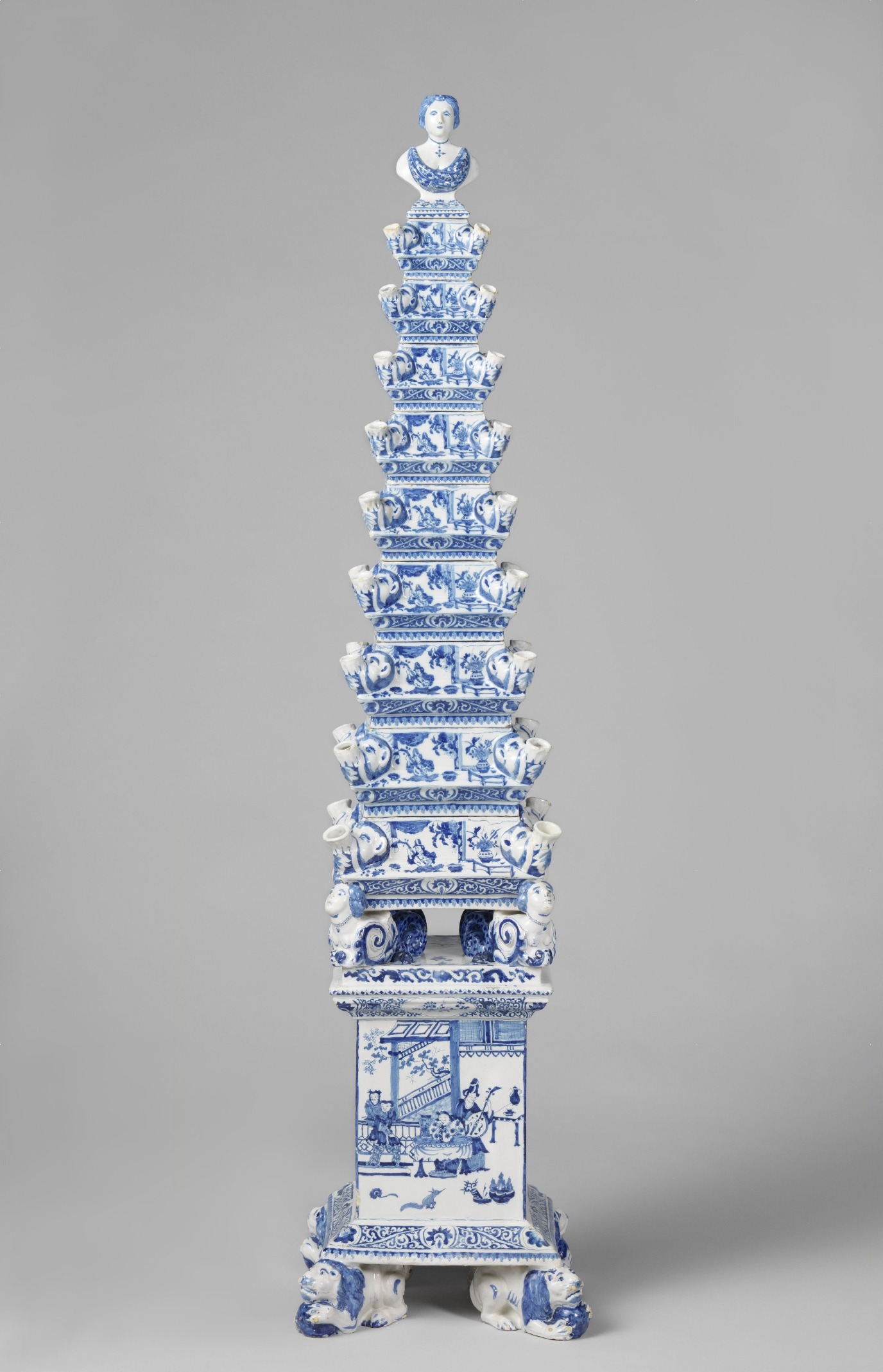
So how do you do that? Show what you don’t see, but was once there? What do museum visitors see once Valika Smeulders has finished? She laughs, and explains that she has only just started on this process in her present job. But she has plenty of examples. Take a 17th-century tulip vase in the Rijksmuseum. ‘To fully understand what this says about the Netherlands in the 17th century, you need to know that tulips were very special and came all the way from Turkey. And if that vase happens to be a piece of Delft Blue, you also have to realize how much we were in awe of what China was doing with porcelain and ceramics at the time.’ So this new approach means that the museum is exhibiting a lot of the same works of art, but is highlighting different aspects in the explanations. Deciding on the captions for the wall labels can be quite tricky. ‘We can only write one label for each painting, even though we have enough information for a whole book.’
A big salad
Smeulders uses a salad as a metaphor. ‘History isn't just a few well-known names; it’s an enormous entirety. You could compare it with a salad. It tastes nice because it has blue cheese and something sweet in it. The flavours complement and enhance each other, so the entirety is more than just the cheese or the sweetness. It's much layered. And no two mouthfuls are the same. You taste a bit of lettuce, then some pepper.’ So according to Smeulders’ metaphor, the wall labels are the individual ingredients of one big salad. Researchers often focus on a single ingredient, something they know all there is to know about. For example, some historians know all about the colonial trade in Asia, while others specialize how the Caribbean operated in the same period. Smeulders brought these specialists together while preparing the Slavery exhibition. They learned a lot from each other and their discussions led to new insights.
Protestant kingdom
She also hopes to generate this type of interdisciplinary value with her religious sciences colleagues in Groningen. If it were up to her, museum visitors should consider themselves to be eating out of a salad bowl when it comes to religion. Smeulders: ‘Everyone knows that Catholicism was very important to us in the Middle Ages, and that we then gradually evolved into a Protestant kingdom.’ To her, this story only skims the surface. ‘We can show people more clearly that this is still very much embedded in the Dutch DNA. And how it’s linked to other religions, both now and the past.’
Smeulders is convinced that if we could introduce more layers into the way we talk about history, more people would be able to relate to it. When looking at a painting, nobody really identifies with a governor or head of state. But what if some of their possessions were to feature in the painting? It might have been your ancestors that grew that delicious-looking fruit. And if the painting features the area under their control, Smeulders wants people to ask themselves what it is that characterizes that landscape. ‘Mobility, trade, mutual relationships. The painting is about your native soil, and much, much more.’
National identity
This recognition is important to her, as national identity is one of the main pillars of the Rijksmuseum’s collections. And yes, in Smeulder’s world, identity is also a salad. You always have more than one identity. You’re Dutch, and you’re a mother, for example. Having multiple identities also applies to the Netherlands as a country. ‘Which brings us back to the Delft Blue tulip vase. Over the centuries, the Dutch identity has been formed by ingredients connected with various ethnicities and religions.’
Smeulders has been thinking about identity issues since she was very young. Born in Curaçao, she moved to Woerden in the Netherlands as a toddler, then to Suriname when she was seven, returning to the island of her birth a few years later. She thought: this is where I come from, I’ll feel at home here. But it soon turned out that the islanders thought otherwise. Wherever she lived, she always missed something from one of the other places she had previously lived. In Suriname she missed Unox tomato soup. On Curaçao, she missed the beautiful natural surroundings of Suriname. She has been influenced by all of these places; they all form different constituent parts of her.
Curiosity
Smeulders originally started a degree in Political studies in Leiden, but she was disappointed by the restrictive outlook of the programme. So she switched to Languages and Cultures of Latin America. ‘This suited me much better, particularly because it was a bit of everything. Cultural sciences, language, but also legislation, history, literature, business studies. I found it much more interesting to study the bigger picture from an integral perspective. So I’ve been driven by curiosity since I was quite young.’
She’s now putting her natural curiosity to good use at the Rijksmuseum, as well as at the UG. During her inaugural lecture, she showed photos of two people who had been in Suriname in 1832. One photo showed a white man in a suit, the other showed a black woman, partially clothed in traditional Afro-Surinamese dress. If you just look at the photos, you come to your own conclusions, said Smeulders. The white man probably owned slaves, and the black woman was probably an enslaved person. But if you delve into the history and take account of the religious factor, you see things very differently. The man in the photo, Eduard Oliveira, was a member of the Protestant community in Paramaribo. He was born into slavery, and had a Jewish father. The woman is in fact his wife, Charlotte Halfhide. She was born in freedom. Her grandfather was mixed race and his freedom was ‘bought’.
Making the invisible visible
Smeulders had a good reason for showing these photos; Halfhide and Oliviera were her mother’s great-grandparents. Their story is a perfect example of how history and identity can be more diffuse than you would first think. Judgements that we make, such as ‘perpetrator’ and ‘victim’ can also be more complex than we assume, she warns. Salad, it’s all salad, just like her museum work. Smeulders: ‘That’s the challenge of making the invisible visible. It’s all about thorough research. I see it as a sport, it excites me.’
About Valika Smeulders
Valika Smeulders (Willemstad, 1969) spent her childhood in Suriname and the Netherlands. She studied Language and Cultures of Latin America in Leiden and Mexico City, and Heritage studies in Rotterdam, where was awarded a PhD in 2012 for a thesis entitled Slavernij in Perspectief (Slavery in Perspective). She started working at the Rijksmuseum in 2017, where she compiled the Slavery exhibition and became head of history in 2020. In 2024, she was appointed as Professor by special appointment of Museums, heritage, and religion at the UG. She gave her inaugural lecture on 3 October 2025.
More information
Valika Smeulders