
From the classroom to the streets: performative action as climate protest

Climate change can feel overwhelming. But what if performative methods from theatre could help us engage with it in a more personal and active way? At University College Groningen, Marian Counihan and Marlieke Wilders lead ACT UP!, an Erasmus-funded project that invites students to step out of the classroom and into the streets, using performance as a tool to act against climate change. We spoke with them about the power of performative methods as a form of protest, and how students and citizens can find their voice in the climate debate.
In simple terms, what is the ACT UP! project about?
Marlieke: ACT UP! is a project where students engage with climate change through theatre. Over the course of a full semester, we give them the space and support to develop their own performative interventions that they actually implement in an urban setting. Our students thus use public space as their stage to experiment how theatre can raise awareness and start a conversation around climate change. At the same time, it’s really about empowerment: we want students to feel confident stepping into the role of active citizens and taking action on urgent societal challenges.
What inspired this project?
Marian: It all started with a conversation between Marlieke and me. We both felt that we needed to address climate change more directly in our teaching and research. But we didn’t want to approach it only from the scientific side. Coming from the humanities, we wanted to highlight the role of imagination, emotion, and storytelling in making sense of climate change. So the project grew out of that impulse: to use our imaginative capacity to think about, and act against, climate change.
Marlieke: Yes, and we also felt a sense of responsibility. We’re not just researchers; we’re teachers, and our students are our first audience. So we asked ourselves: how can we give them the tools to think about, talk about, and act on climate issues? At the same time, there was a broader debate going on about activism in academia. Should scientists remain neutral, or should they take a stand? We were both reflecting on that responsibility: How can we motivate and train our students, without telling them what to think or pushing them in a certain direction? And importantly, we wanted to do this in ways that weren’t extreme, unlike for instance the road blockades of Extinction Rebellion. Instead, we asked: What are more subtle, constructive ways for students to speak up? How can we give them agency and autonomy to engage with the issue in their own voices?
You started a collaboration with the theatre company NITE here in Groningen. How does this collaboration work in practice?
Marlieke: So far, NITE has mainly supported us in training our students and helping them think about how to design their urban interventions. We quickly realised we needed a professional theatre partner. We can bring in the theory, but we’re not theatre practitioners. So it made sense to let professionals do what they do best. For instance, NITE’s dramaturg Friederike Schubert came into our classroom and gave a masterclass, which was a great starting point.
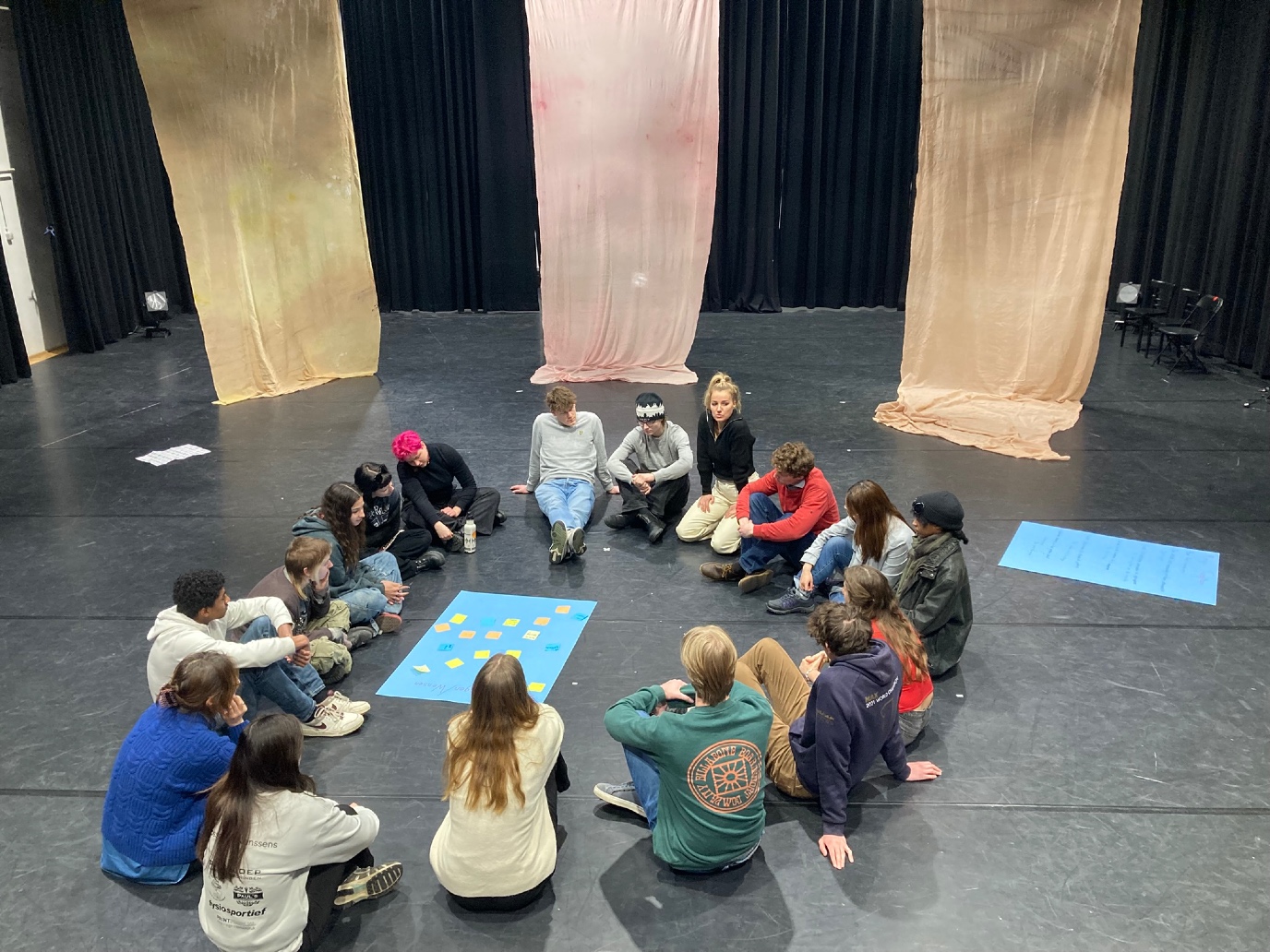
Marian: Friederike’s approach to theatre-making was extremely useful for our students, who come from very diverse backgrounds. Some have never studied the humanities, some have never even been to a theatre before. So part of the collaboration was also about opening up that world. In both years we took students to two performances: last year one was an open rehearsal, where they could see the creative process in action, and the other was the premiere of Nachtwacht. That gave them a sense of what NITE itself is doing. This year students visited a try-out from Club Guy and Roni Invites and NITE’s performance HOPE.
Marlieke: Our students also follow two workshops with Renske van Oosterhout, who works for the educational department of NITE. In the first workshop, Renske guides them through the basics: what exactly is an intervention, and how do you move from a broad topic like climate change to something more personal? What do you care about, and how do you narrow it down into a specific idea? In the second workshop, they make those ideas more concrete: deciding what to keep, what to leave out, and how to sharpen the techniques of communication. That hands-on process iss very valuable. This year, we have added a third workshop with dancer Rosie Reith, who is also featuring in HOPE, on how students can use their embodied presence in developing their intervention.
And why performative methods? Why not music or street art?
Marian: Well, in a way it is street art! We’re doing theatre in the streets. Students design urban interventions, unexpected performances that interrupt daily life and grab attention. It’s not a staged play, it’s more like a flash mob, but carefully prepared.
Marlieke: Theatre is so powerful because it’s embodied. You communicate not only with words, but with your body. And you connect directly with other bodies – your audience – at that very moment. That immediacy, that shared experience, can move people in ways few other media can.
Marian: And theatre also makes sense politically. In a sense, politics is theatre: it’s about representation, about making voices heard in front of an audience. From ancient Greek theatre to parliamentary debates today, the link between politics and performance has always been strong. So using performative methods to talk about climate politics feels very natural.
ACT UP! is a collaborative project. You are working with different partner universities from Norway, Estonia and South Africa. Why these places?
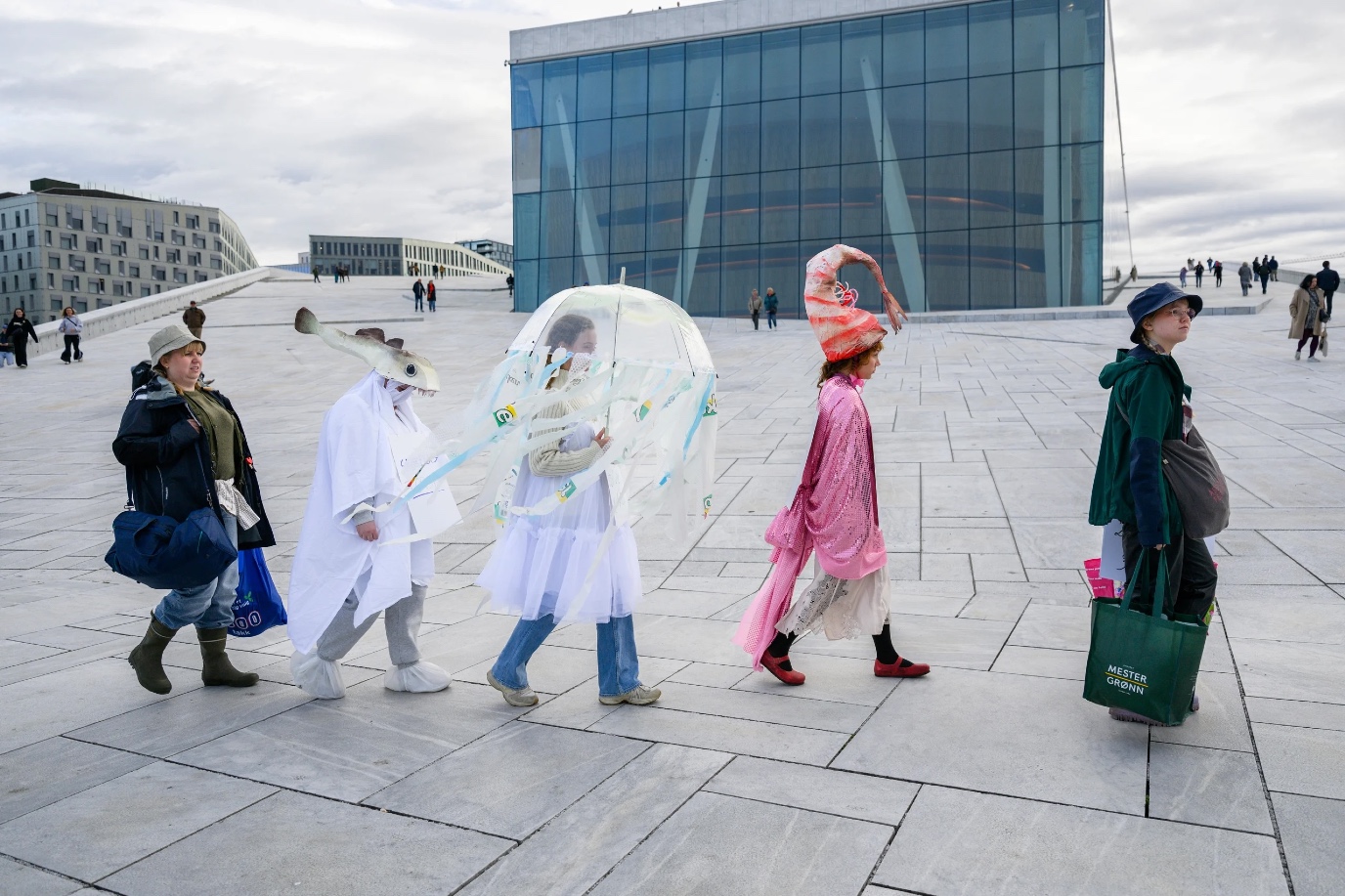
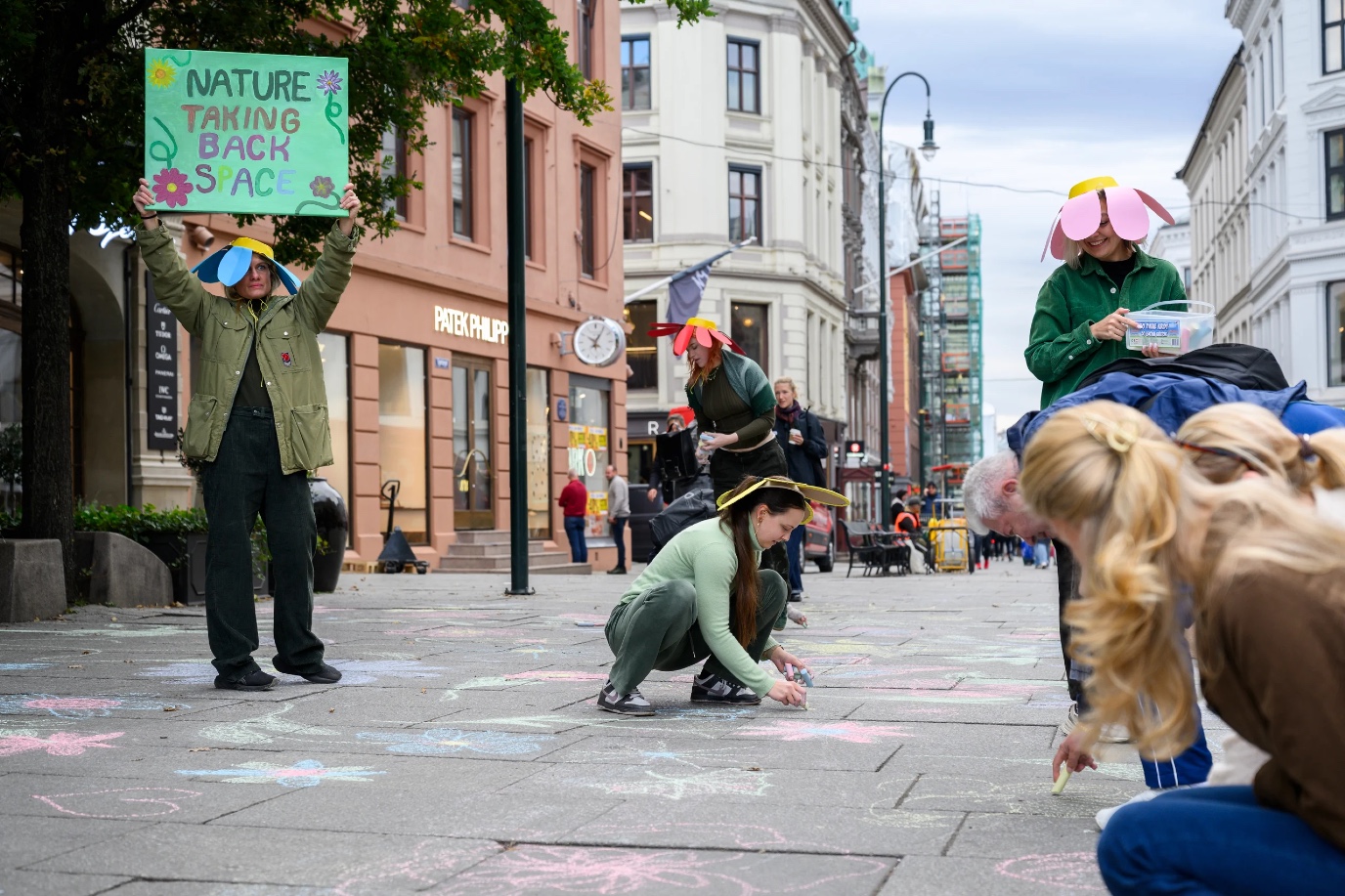
Marian: What makes these partners so valuable is that the urgencies of climate change are unfolding very differently in each site. For example, our Norwegian partner is based in a gas-producing country. That creates certain similarities with the Dutch context, but at the same time, the environmental pressures there are very different. The fjord ecosystem around Oslo, for instance, shapes the way climate issues are experienced.
Marlieke: In Estonia, the situation again looks very different. They have coal mining regions, so the climate urgency there is completely different from ours. And beyond the environmental angle, there are also cultural and historical differences. Coming out of the Soviet Union, the very idea of activism is understood in a completely different way. In the Netherlands, people might sit down on a highway as a form of protest. In Estonia, that kind of public action is not part of the culture – at least not yet.
Marian: Yes, and then of course, South Africa is again a different situation; climate change risks and harms are coupled very strongly to socio-economic inequalities. This plays out within South Africa but also within the context of global North-South inequalities. So each locality brings its own perspective, its own sense of urgency, and its own way of thinking about what it means to be activist. That diversity makes the collaboration incredibly rich. And because we also have different groups of students in each institution, the project really becomes a conversation across contexts.
Can you give an example of how such a theatre intervention actually can look like?
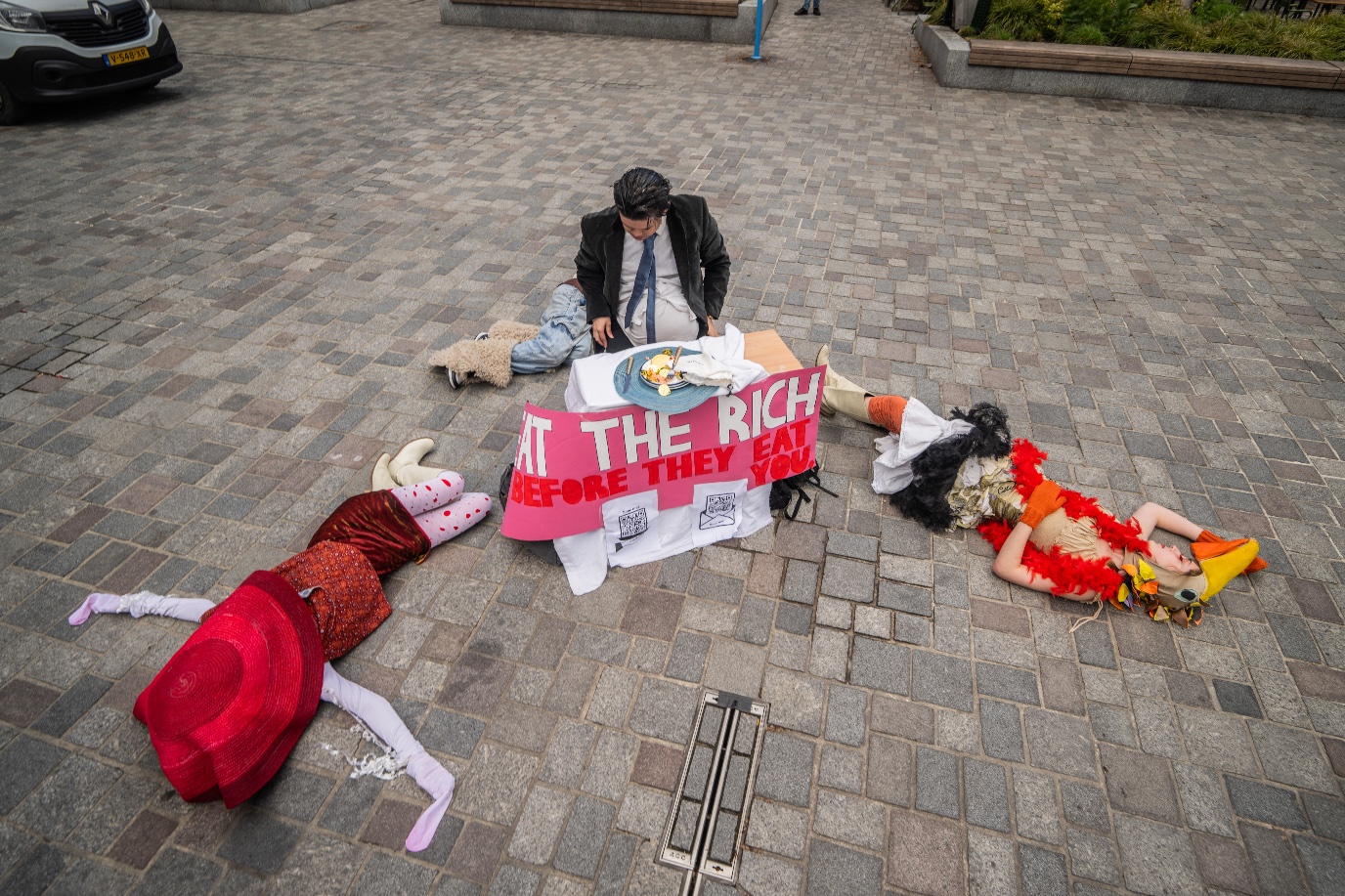
Marlieke: One group created a ‘Funeral for the Earth.’ They built a coffin with a globe on it, dressed in black, and walked in procession through the park. It was nerve-wracking for them, but they got strong, positive reactions from passersby, including a group of school children who were incredibly enthusiastic.
Marian: Another group staged a mini street play about insects. They dressed up as butterflies and a caterpillar who refused to eat leaves because of pesticides. It sounds playful, but it really got people thinking about biodiversity. The students wrote the script themselves and performed it in different spots around the city.
How did students respond to the experience?
Marian: Some were sceptical at first, wondering what they had gotten themselves into. But after performing, many said it was one of the most powerful learning moments of their studies. It gave them a sense that their voice matters. That even a small act can trigger responses and contribute to public debate.
Marlieke: That’s the real goal: empowering students as active citizens. And not just the students. Audiences on the street also get pulled in. Sometimes in subtle ways, like school kids stumbling upon a performance and realising that climate action can take many forms.
What’s next?
Marlieke: In the fall, the consortium visited Oslo for an intensive week in which Master’s students from the Art and Society and Theatre and Society specializations at OsloMet developed and performed urban interventions for audiences in public spaces across the city.
At the start of this semester, we had our second transnational exchange in Estonia. There, the consortium worked together with students from the Viljandi Culture Academy in both Viljandi and Narva. We held joint teaching and feedback sessions and explored possible sites for interventions. The Estonian student group carried out their interventions in April.
Now, in Groningen, we’re doing a second iteration with a new group of students who will do their interventions in May and present their results during our annual Project Presentation Day.
Marian: It’s an ongoing process. Each year we try things out, reflect on what worked and what didn’t, and adjust. Teaching feeds into the research, and the research feeds back into the teaching. And in the meantime, our students are literally out there in the streets, using urban space as a learning environment and making climate issues visible in city life.
More news
-
19 October 2026
From research to business: RUG Ventures helps ideas move forward
-
-
03 September 2026
Ming Cao reappointed as scientific director of the Jantina Tammes School