
After UCG
Many students wonder where a Liberal Arts and Sciences degree can take them. Here, you can find more about where our alumni come from, where they live today, what our UCG graduates have gone on to study and the career paths they have pursued.
Facts and Figures
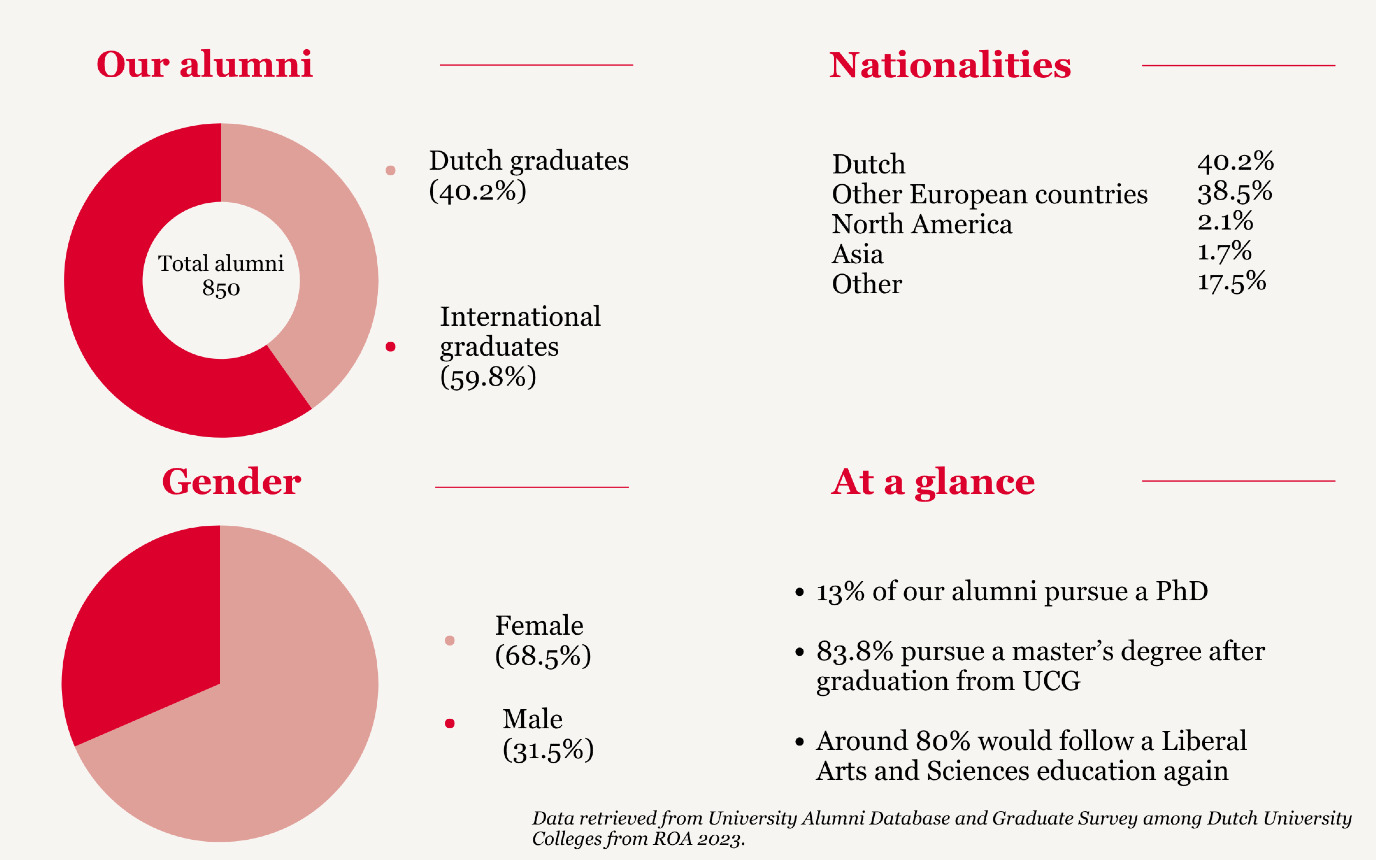
University College Groningen (UCG) was founded in 2014, and our first cohort graduated in 2017. Since then, we are proud to have built a growing alumni community of more than 850 graduates. After three years at UCG, students graduate with a Bachelor of Arts (BA) or Bachelor of Science (BSc) in Liberal Arts and Sciences from the University of Groningen, with around 80% of our graduates earning a BSc degree. Along the way, they develop the knowledge, skills and interdisciplinary perspective to pursue their academic interests and shape their own career path.
Our alumni community is as international as UCG itself, with graduates representing more than 35 nationalities across Europe, Asia, Africa, North and South America, and Oceania. Approximately 60% of our graduates are international and around 40% are national. Dutch is therefore the most represented individual nationality, while our international alumni come from countries including Germany, Italy, the United Kingdom, France, Spain, China, India, the United States, South Africa, and many more. This international community brings together a wide range of perspectives and cultures, preparing our graduates for further study and careers in an increasingly global world. The community also reflects a diverse gender balance, with approximately 70% women and 30% men.
Our graduates take diverse paths after UCG. Around 84% pursue a master’s degree, with 63% continuing their studies at universities ranked among the global Top 100, including University of Oxford, Kings College London, and Yale University. 13% go on to pursue a PhD. A rather small percentage of our graduates enter the job market directly or start their own businesses. Based on a national survey among all University Colleges in the Netherlands from 2023, around 80 % of our alumni would follow a Liberal Arts and Sciences education again.
Where our alumni live now
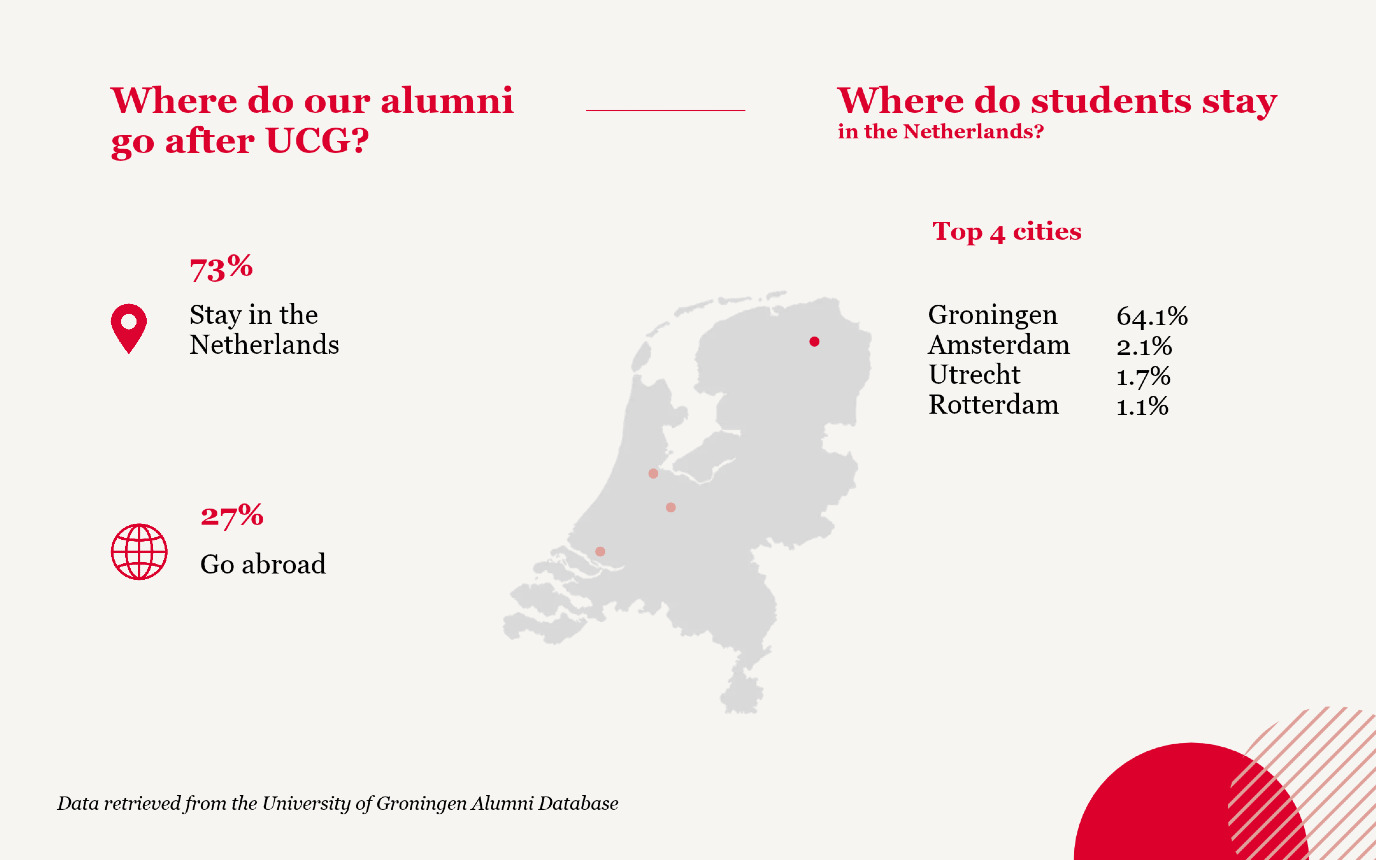
The majority of UCG alumni currently live in the Netherlands (73.0%), reflecting the strong connection many graduates maintain with the country after completing their studies. At the same time, the alumni community has a clear international footprint, with graduates living across Europe and beyond. Germany is the second most common country of residence (5.0%), followed by Italy, France, Spain, the United States, and the United Kingdom. This geographic spread demonstrates the global reach of the UCG community, with alumni building careers and lives in a wide range of countries.
For those alumni who decided to stay in the Netherlands, Groningen is the most popular city (64.1%), followed by Amsterdam, Utrecht, and Rotterdam.
Master's programmes after UCG
To give prospective students a better understanding of where UCG graduates go after their studies, we conducted an analysis of publicly available LinkedIn profiles in 2026.
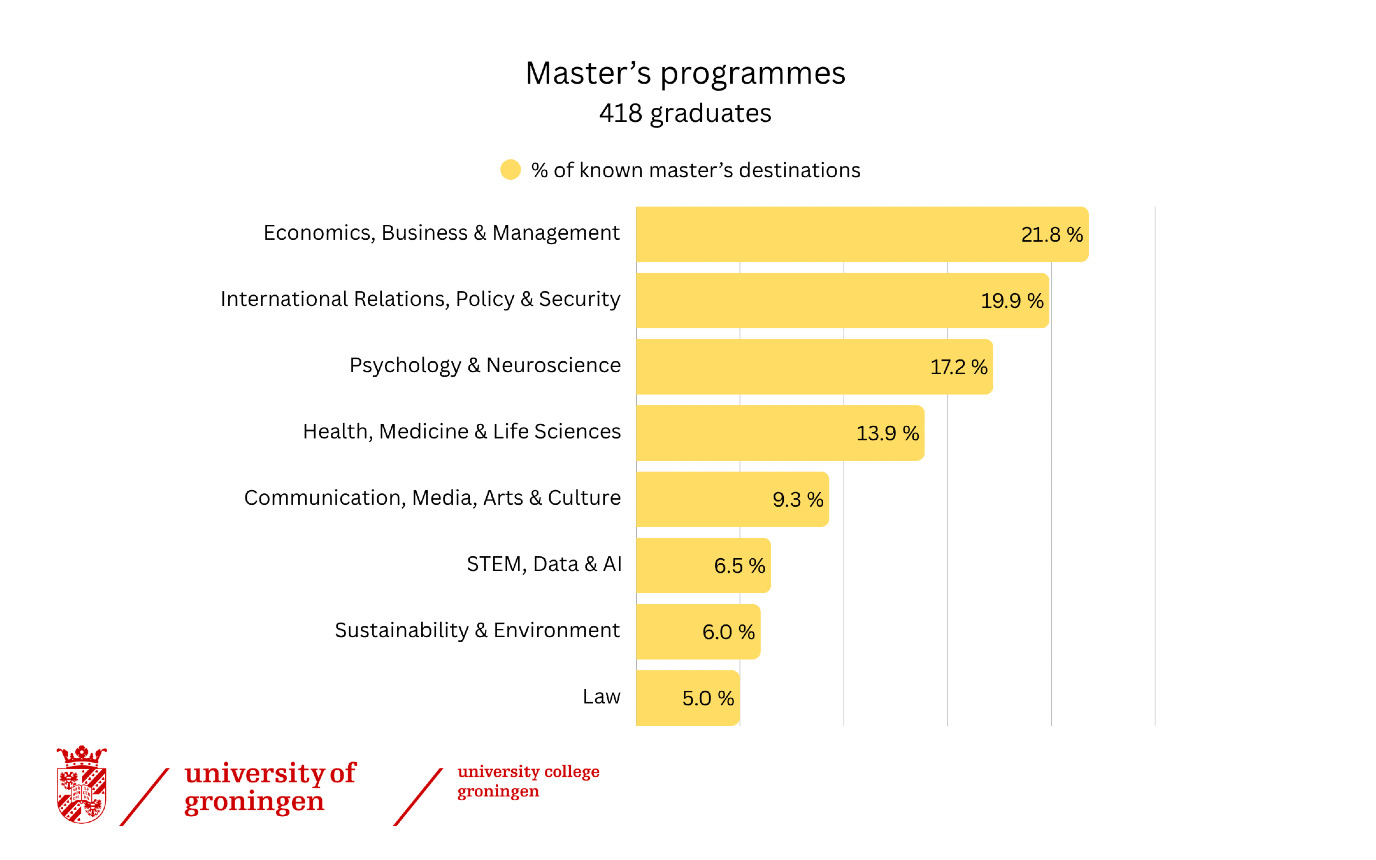
As UCG graduates pursue a remarkably wide variety of master's programmes across many universities and disciplines, we grouped these programmes into broader academic clusters to provide a clearer overview of postgraduate destinations. The clusters are based on the primary academic field of each master's programme, allowing us to identify overarching trends while preserving the diversity of our graduates' educational pathways. At the time of the analysis, UCG had 726 graduates, and we were able to identify 418 graduates on LinkedIn.
The largest group (21.8%) continued into master's programmes in Economics, Business & Management. This was followed closely by International Relations, Policy & Security (19.9%), while Psychology & Neuroscience (17.2%) and Health, Medicine & Life Sciences (13.9%) also represent substantial pathways. Smaller but still significant proportions of graduates pursued master's degrees in Humanities & Culture (9.3%), STEM, Data & AI (6.5%), Sustainability & Environment (6.0%), and Law (5.0%).
These findings highlight the broad range of postgraduate pathways pursued by graduates of the Liberal Arts and Sciences programme, reflecting its interdisciplinary nature and the flexibility it provides for specialisation at the master's level.
Master's programmes within the University of Groningen
The University of Groningen offers a broad range of master’s programmes across a variety of disciplines. Below, you’ll find examples of the master’s programmes our graduates have gone on to pursue at the UG.
Facuty of Arts
-
Global Political Economy
-
Applied Cultural Criticism
-
Forensic Linguistics / Multilingualism
-
Writing, Editing and Mediating
-
Journalism
-
International Relations
-
Media and Business
-
Development Studies, Governance and Public Policy
-
International Humanitarian Action
-
Conflict, Security and Development
-
Politics, Philosophy & Economics
-
History
-
Arts and Cultural Studies
-
European Studies
-
Media Studies
-
Midden-Oosten Studies
-
Noord-Amerika Studies
-
Taalwetenschappen (research)
Faculty of Behavioural and Social Sciences
-
Psychology
-
Clinical Psychology
-
Political Science
-
International Criminology
-
Talent development and creativity
-
Visual Anthropology
-
Environmental Psychology
-
Clinical Forensic Psychology and Victimology
-
Cultural Anthropology: Sustainable Citizenship
-
Pedagogische Wetenschappen
-
Sociology
-
Educational Sciences
Faculty of Economics and Business
-
Economic Growth and Development
-
Economics
-
Business Administration Strategy
-
Duisenberg Honors Program in Quantitative Risk Management
-
Business Administration
-
Business Econimics
-
Human Resource Management
-
Economic Development and Globalization
-
Finance
-
International Financial Management
-
Marketing
Faculty of Law
-
International Human Rights Law and Global Criminal Law
-
Fiscaal recht
-
Global Crimial Law
-
IT-recht
-
Nederlands recht
-
Public International Law
Faculty of Medical Sciences
-
Medicine
-
Cancer and Stem Cell Biology
-
Management, Policy Analysis and Entrepreneurship in Health and Life Sciences
-
Health Sciences - Specialisation: Infectious Diseases and Public Health
-
Nutrition and Health
-
Cancer, Stem Cells and Developmental Biology
-
Interdisciplinary Research in Health Dynamics
-
Human Movement Sciences
-
Molecular Medicine and Innovative Treatment
Faculty of Science and Engineering
-
Computational Physics / MPhil Scientific Computing
-
Science and Business Management
-
Public Sector Innovation and eGovernance
-
IT and Cognition
-
Service Systems Design
-
Artifical Inteligence
-
Behavioural and Cognitive Neurosciences (also research track)
-
Biology
-
Science Education and Communication
-
Energy and Environmental Sciences
-
Biomedical Sciences
-
Computational Cognitive Science
-
Medical Pharmaceutical Sciences
-
Physics
Faculty of Spatial Sciences
-
Population Studies
-
Urban Studies
-
Cultural Geography
-
Society, Sustainability and Planning
-
Real Estate Studies
Facutly of Philosophy
-
Philosophy
-
Philosophy, Politics, and Economics
Career paths after UCG
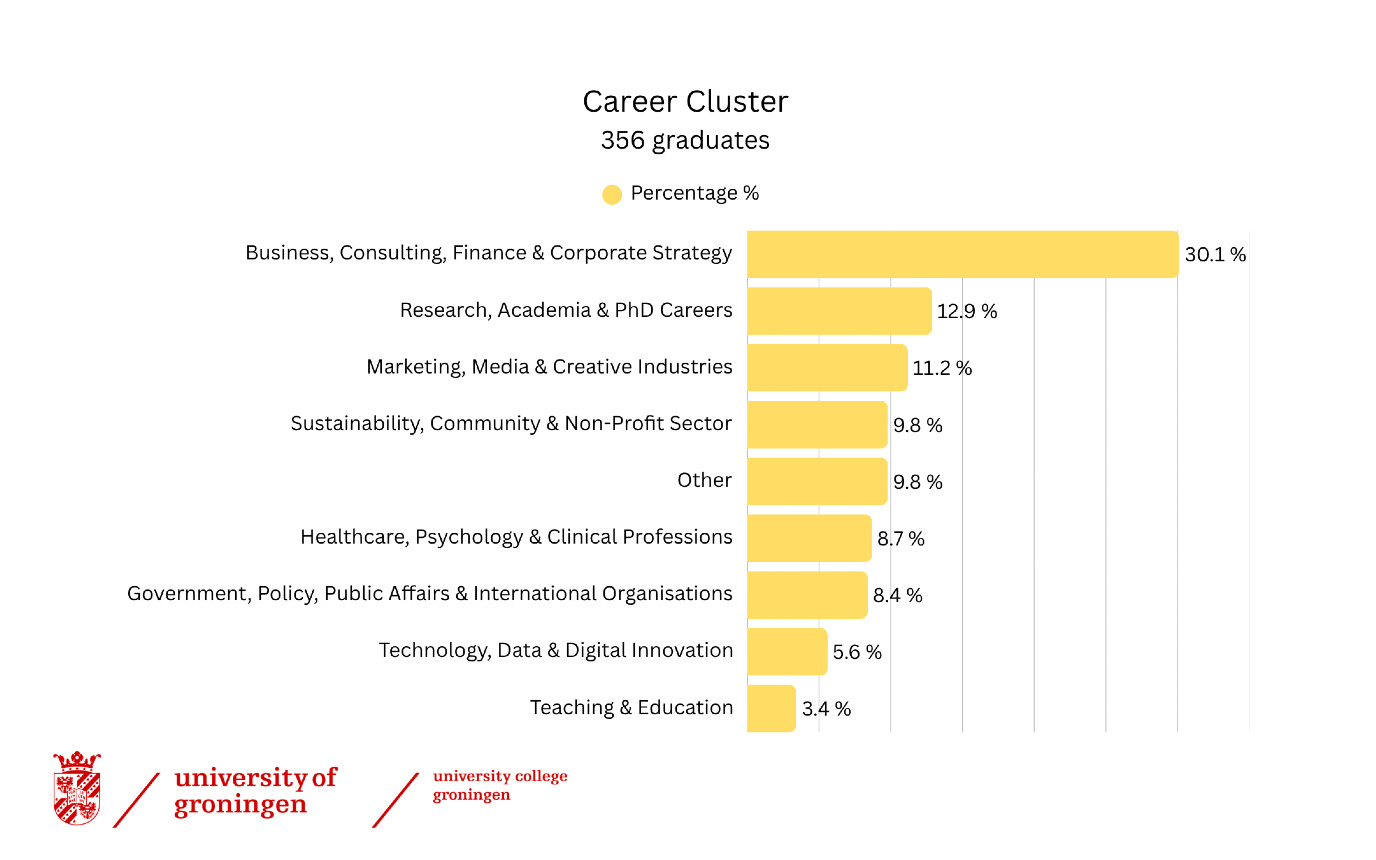
We also analysed publicly available LinkedIn profiles to gain a better understanding of the career paths alumni pursue after UCG. As UCG graduates work across a wide range of sectors and professions, we grouped their occupations into broader career clusters to provide a clearer overview of where alumni go after graduation. The clusters are based on the primary field or sector in which alumni work, allowing us to identify broader career patterns while reflecting the diversity of paths pursued by our graduates.
At the time of the analysis, there were 726 alumni, and we were able to identify the current job descriptions on LinkedIn for 356 of them. The largest proportion works in Business, Consulting, Finance & Corporate Strategy (30.1%). This is followed by Research, Academia & PhD Careers (12.9%), Marketing, Media & Creative Industries (11.2%), and Sustainability, Community & Non-Profit Sector (9.8%). Other graduates work in Healthcare, Psychology & Clinical Professions (8.7%), Government, Policy, Public Affairs & International Organizations (8.4%), Technology, Data & Digital Innovation (5.6%), and Teaching & Education (3.4%).
These findings demonstrate the versatility of a Liberal Arts and Sciences education. Rather than preparing graduates for a single profession, the programme equips them with the interdisciplinary knowledge, analytical skills, and adaptability to pursue careers across a wide range of sectors, from business and research to government, technology, healthcare, education, and the non-profit sector.
Alumni profiles
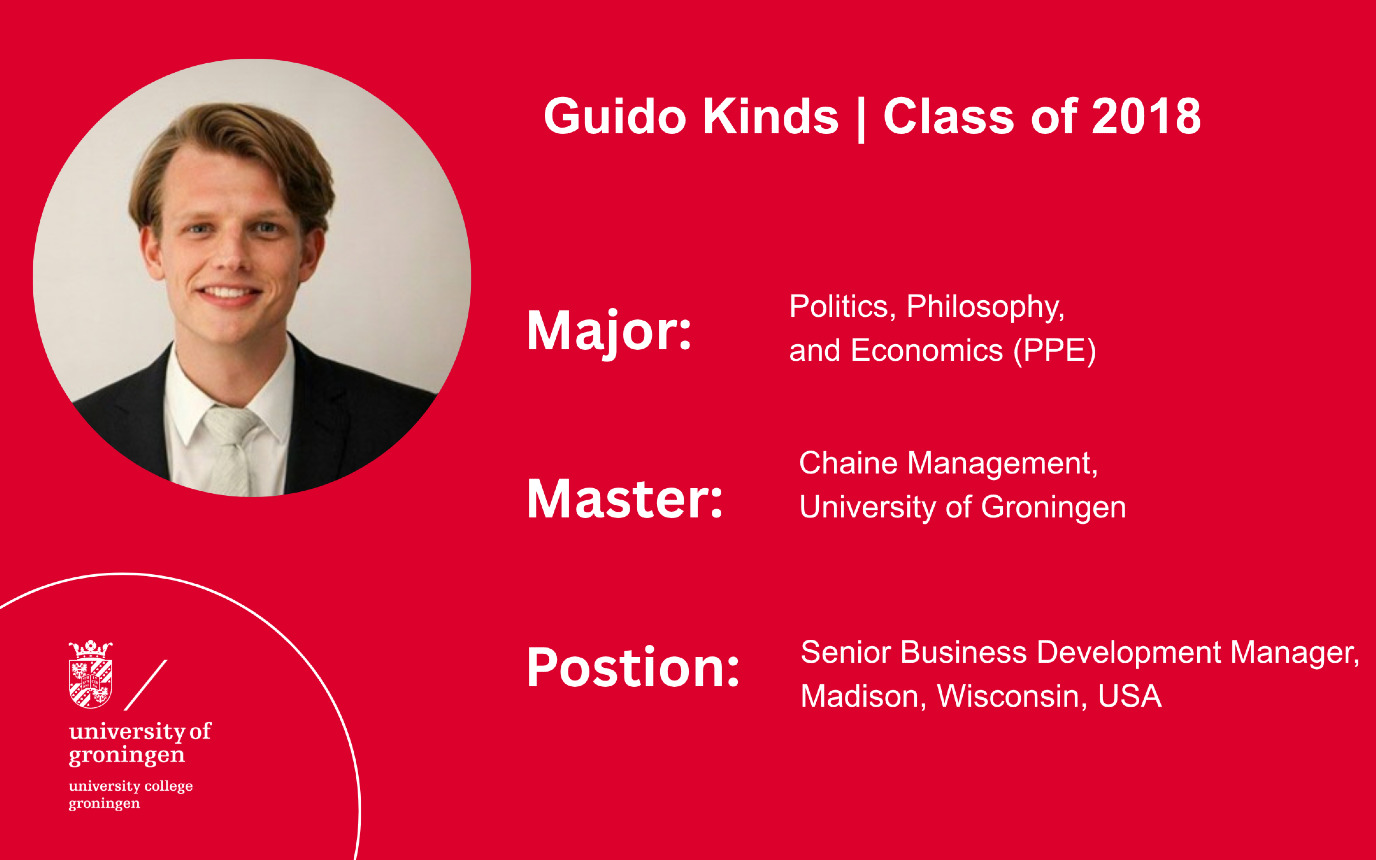
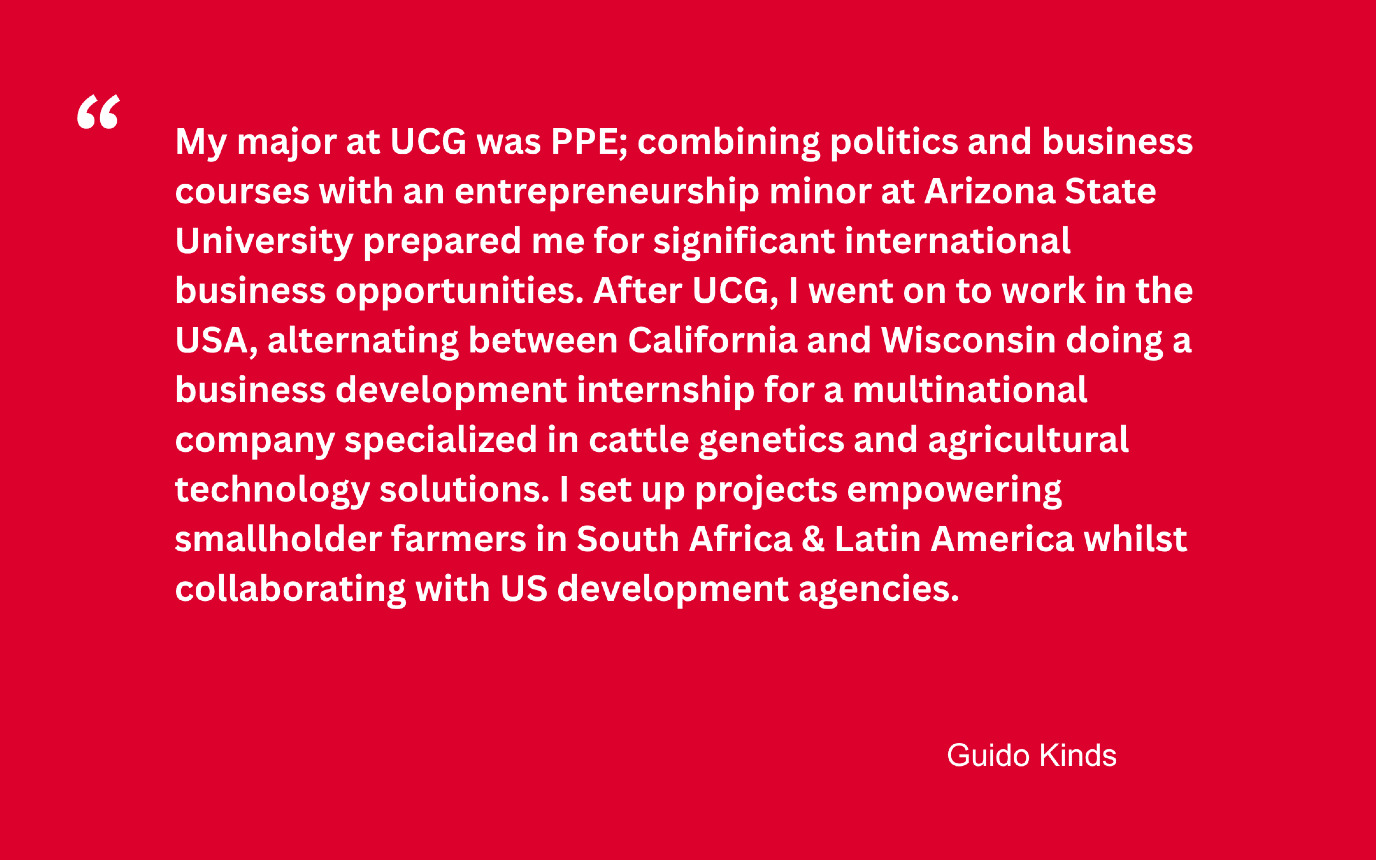
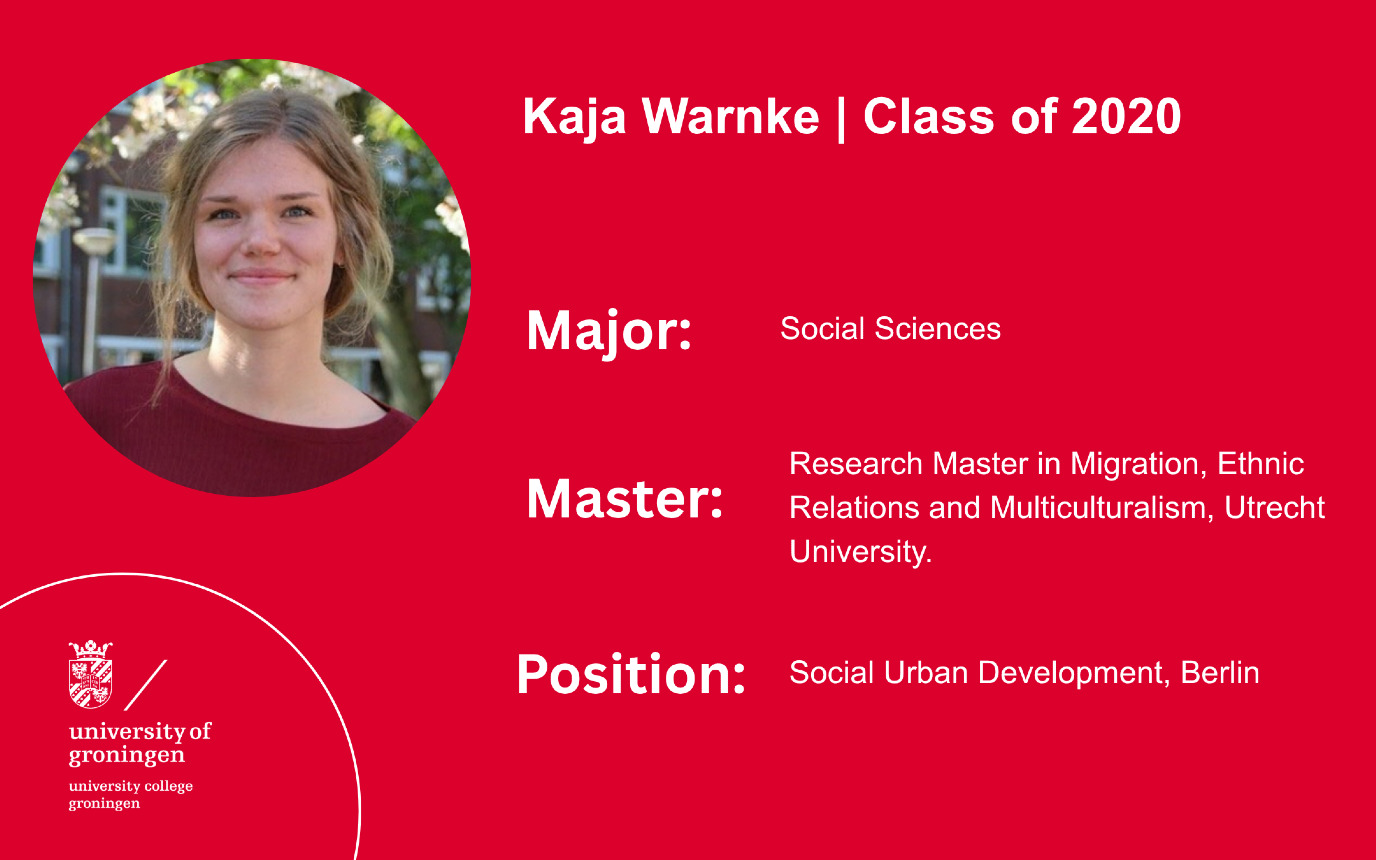
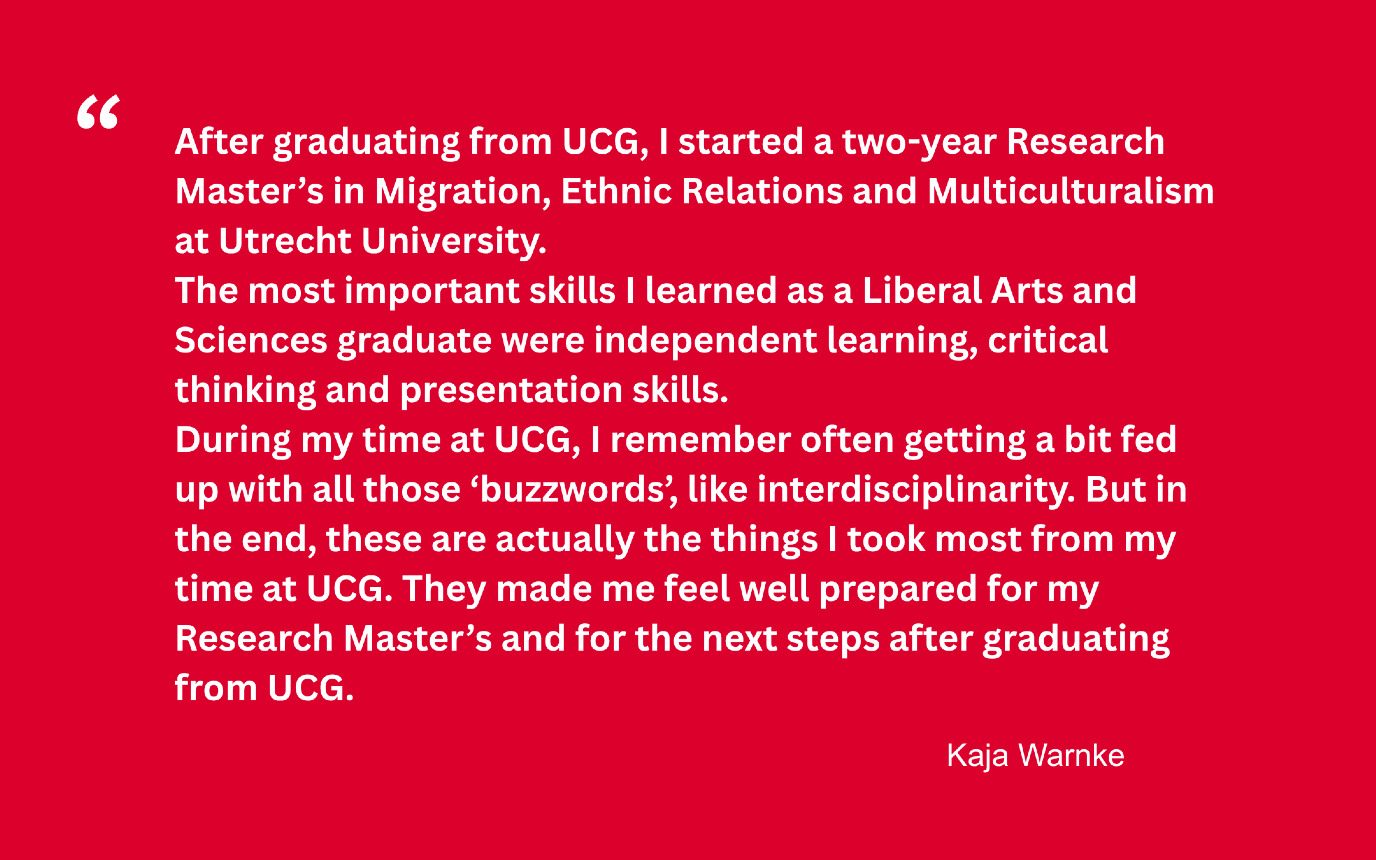
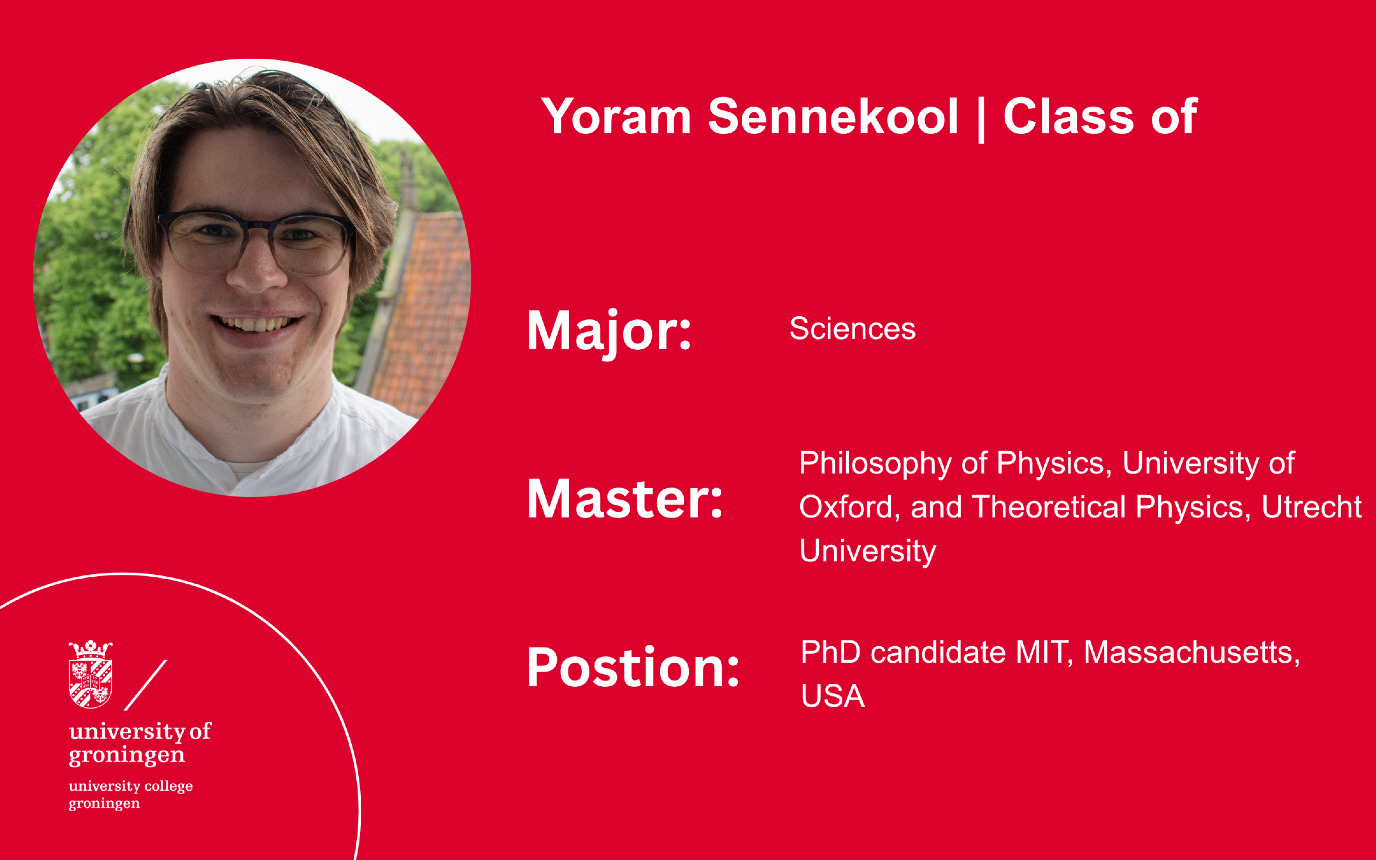
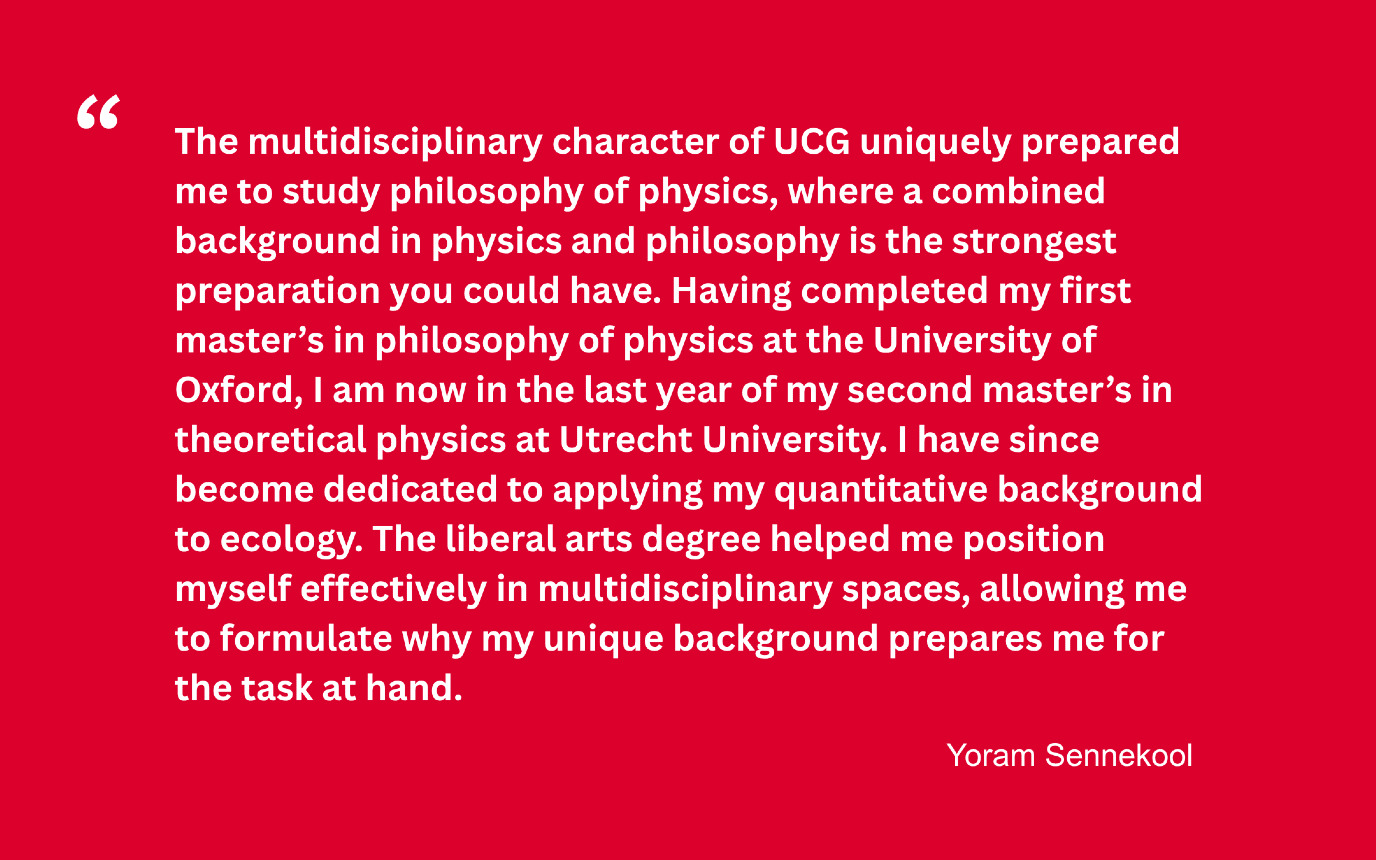
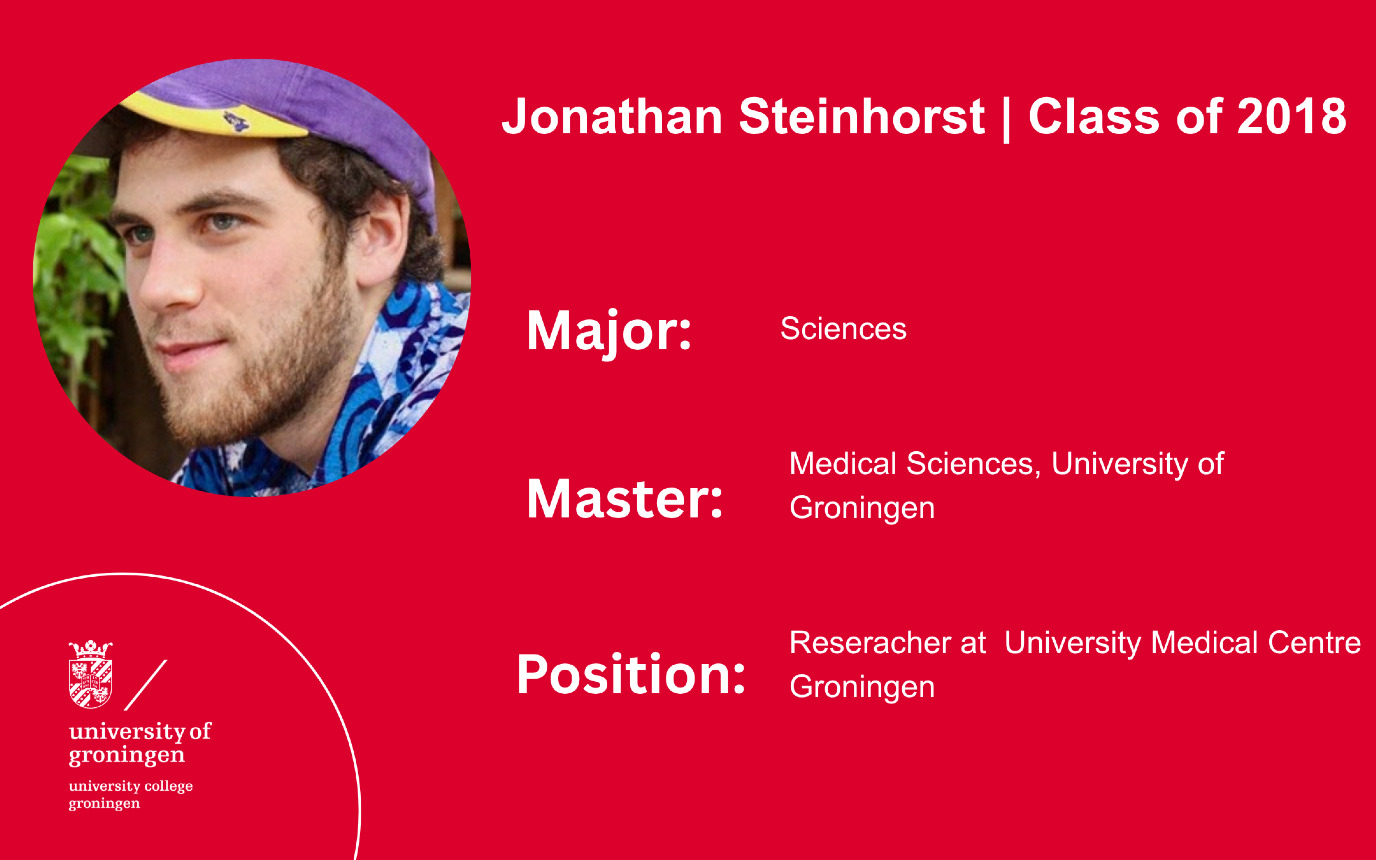
Would you like to see examples master's programmes and acreer paths chosen by graduates after UCG? Check out the examples below!
Do you want to be informed about the latest updates at UCG? Sign up for our newsletter!