
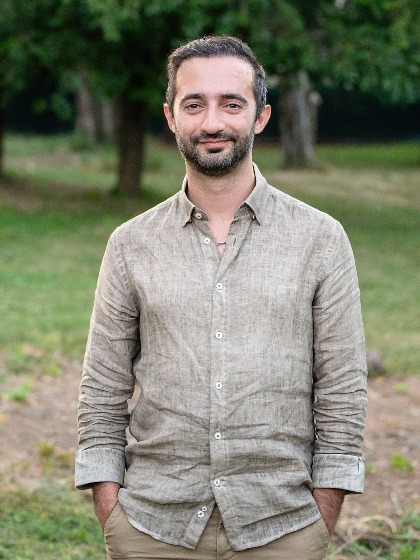
Y. (Yasin) Koc, Dr
Assistent Professor
E-mail:
y.koc rug.nl
Vakgebied
Expertise
I am a social psychologist interested in investigating how disadvantaged groups navigate their identities through privileged systems. How do they deal with their lower status? How does society perceive them? When do advantaged groups support their action to improve their status? To seek answers for these questions, I use diverse methods often combining correlatinal exploratory studies with follow-up experiments as well as qualitative research to develop an indepth understanding of the psychological phenomenon. I have 5 main lines of research:
1. Multiple Conflicting Identities: We all have multiple social identities, but what happens when some of them are in conflict with each other ? By drawing parallels between bicultural identity integration framework and social identity theory, we examine the nature of identity conflict and ways to increase integration between multiple conflicting identities.
2. Experiences of Disadvantaged Groups: What happens to disadvantaged group members when they are discriminated? Do they stick with their group? Do they try to improve their status by leaving their group? How are they affected by societal issues? Focusing on social change and well-being outcomes , we investigate these questions.
3. Majority's Perceptions of Disadvantaged Groups: Intergroup conflict is prevelant in our lives. The society always seems divived and polarised. How does the majority perceive the minoritized groups? What motivates discrimination? How can we improve intergroup relations? We investigate these questions from the perspective of the majority, yet with an emphasis on improving the status of the disadvanted groups.
4. Responding to Privilege: When people belong to advantaged groups, they struggle to acknowledge their privilege that comes with their group belonging. People, therefore, have different ways to react to their own privilege: Deny, Distance, Dismantle or 3-D was conceptualised by Knowles and colleagues, and recently Defend was added to this conceptualisation by Shuman et al. We investigate when people use which strategy, and how privilege acknowledgement can relate to allyship.
5. New Masculinities: There is a higher recognition that masculinity is not singular, but there are multiple constructions of masculinities. More and more men create and endorse progressive masculinities against traditional perspectives. But what happens next? Do new masculinities threaten manhood? How does society perceive the new progressive men? Can traditional and new masculinities co-exist? Using mixed methods research, we explore these questions.
1. Multiple Conflicting Identities: We all have multiple social identities, but what happens when some of them are in conflict with each other ? By drawing parallels between bicultural identity integration framework and social identity theory, we examine the nature of identity conflict and ways to increase integration between multiple conflicting identities.
2. Experiences of Disadvantaged Groups: What happens to disadvantaged group members when they are discriminated? Do they stick with their group? Do they try to improve their status by leaving their group? How are they affected by societal issues? Focusing on social change and well-being outcomes , we investigate these questions.
3. Majority's Perceptions of Disadvantaged Groups: Intergroup conflict is prevelant in our lives. The society always seems divived and polarised. How does the majority perceive the minoritized groups? What motivates discrimination? How can we improve intergroup relations? We investigate these questions from the perspective of the majority, yet with an emphasis on improving the status of the disadvanted groups.
4. Responding to Privilege: When people belong to advantaged groups, they struggle to acknowledge their privilege that comes with their group belonging. People, therefore, have different ways to react to their own privilege: Deny, Distance, Dismantle or 3-D was conceptualised by Knowles and colleagues, and recently Defend was added to this conceptualisation by Shuman et al. We investigate when people use which strategy, and how privilege acknowledgement can relate to allyship.
5. New Masculinities: There is a higher recognition that masculinity is not singular, but there are multiple constructions of masculinities. More and more men create and endorse progressive masculinities against traditional perspectives. But what happens next? Do new masculinities threaten manhood? How does society perceive the new progressive men? Can traditional and new masculinities co-exist? Using mixed methods research, we explore these questions.
| Laatst gewijzigd: | 21 februari 2025 17:34 |