
Skip to ContentSkip to Navigation
founded in 1614  -  top 100 university
Over ons Praktische zaken Waar vindt u ons dr. F. (Frits) Steenhuisen

dr. F. (Frits) Steenhuisen
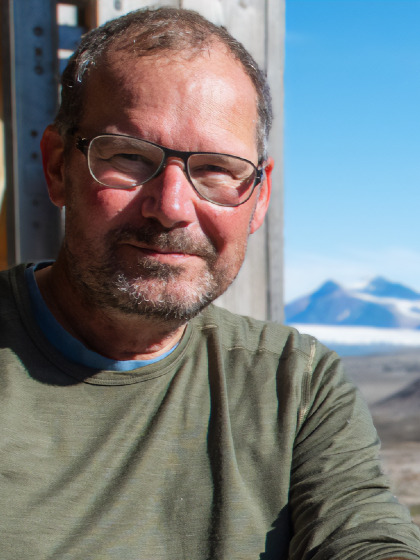
Onderzoeker

2023-2027

Occurrence of Legacy and Emerging Contaminants in Antarctic top predators
This project aims to assess the concentrations of both legacy and emerging contaminants in Antarctic phocid seals. Skin biopsy samples are collected using a crossbow and biopsy arrows. Tissue samples are analysed for as PFAS, PCBs, and mercury, as well as for stable isotopes to infer trophic level and feeding habits.

(PhD project Giulia Gai)

2026-

SAPPHIRESeasonal Arctic PFAS Pollution: Habitat Interactions & Risk Evaluation
This project studies how seasonal dynamics influence the fate of PFAS (per- and polyfluoroalkyl substances) in polar aquatic environments with a focus on ice formation.

We have received funding from the Svalbard Environmental Protection Fund to study how seasonal dynamics influence the fate of PFAS (per- and polyfluoroalkyl substances) in the aquatic environment. The project is a collaboration between the University Centre in Svalbard (UNIS), Wageningen Marine Research (WMR) and the Arctic Centre of the University of Groningen (RUG).

Our research aims to assess:
- Freezing effects: Does ice formation affect PFAS in water, influencing exposure risks to biota? We’re studying this through lab and field experiments in freshwater systems.
- Seasonal bioaccumulation: How do PFAS levels in aquatic invertebrates like Daphnia and Gammarus change with the seasons? Regular sampling will reveal how life cycles and environmental shifts influence uptake.

Why it matters: The Arctic, and Svalbard in particular, is a sentinel for global environmental change. Understanding PFAS dynamics here will help us refine risk assessments and develop targeted mitigation strategies—critical for protecting fragile polar ecosystems.

Laatst gewijzigd:22 juni 2026 15:53