
Pillars
Pillar 1: Open Access
Pillar 1: Open Access
Deliverables
-
Establish an academic board for UGP
-
Develop a sustainable funding model for UGP
-
Improve technical capabilities of UGP
-
Improve visibility and findability of UGP and its content
-
Strengthen collaboration with Open Educational Resources
Members of the Open Access team
-
Margreet Nieborg (lead) (m.nieborg@rug.nl)
-
Babette Knauer (b.knauer@rug.nl)
-
Dorine Kieft (d.c.h.kieft@rug.nl)
-
Dorien van Rheenen (d.van.rheenen@rug.nl)
-
Jose Sikken (j.sikkens@rug.nl)
-
Giulia Trentacosti (g.trentacosti@rug.nl)
-
Pieter van der Veen (p.n.van.der.veen@rug.nl)
Pillar 2: FAIR Data and Software
Pillar 2: FAIR
Our vision is to foster a research culture in which the sharing and reuse of research data and software are the norm- recognized as indispensable scholarly assets, valued for their reusability, impact, and lasting contribution to knowledge. We are committed not only to increasing the volume of shared data and software, but also to enhancing their quality in accordance with the FAIR principles (Findable, Accessible, Interoperable, and Reusable), thereby promoting their reuse.
This vision is realized through the development and delivery of targeted training and workshops, direct consultancy for researchers, and active engagement in policy development and advisory. By doing so, we can help tackle contemporary challenges in scholarly research, such as publication biases or the replication crisis, as well as empower future research to be more open, collaborative, and impactful.
Deliverables
-
Develop FAIRification workshop
-
Create a guide for data stewards for ‘Ensuring your RDMP/RSMP consultancy is FAIR'
-
Develop 'Find data to re-use for your next PhD chapter' workshop (with Gopher)
-
Integrate RDMS with DataverseNL to increase publication of metadata
-
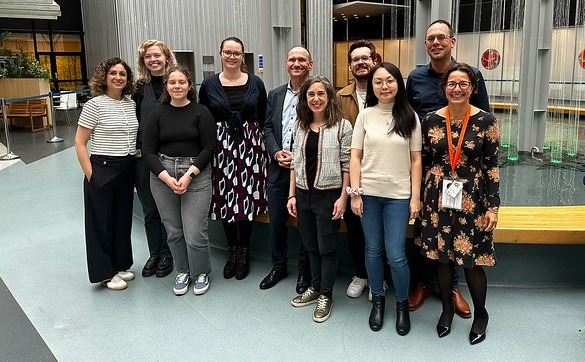
(UMCG) Creating a FAIR data and software management information hub for UMCG researchers
-
(UMCG) Establishing a FAIR data management workshop for GSMS PhDs
-
(UMCG) Developing a Software Management Plan
-
(UMCG) Organizing a (bi-)annual FAIR data symposium
Members of the UMCG team
-
Jone Ansuategui Echeita, Data steward UMCG Digital Competence Center
-
Bjorn Bakker, Data steward & research software consultant UMCG Digital Competence Center
-
Efi Gkoumassi, Team lead UMCG Digital Competence Center
-
Joëlle Jagersma, Data steward UMCG Digital Competence Center, Project manager PROVIDE
-
Yugyun Kim, Data steward UMCG Digital Competence Cen
-
Kiana Gholamjani Moghaddam, Data steward UMCG Digital Competence Center
-
Karina Sulim, Data steward UMCG Digital Competence Center and AHON-database
-
Štepánka Zvěřinová, Data steward & training coordinator UMCG Digital Competence Center
Pillar 3: Open Education Resourses
Pillar 3: OER
Our vision is to promote the creation, sharing, and reuse of open educational resources by educators and students. We aim to provide educators with the tools and opportunities to update traditional teaching methodologies, and to make use of novel teaching methodologies that turn students into co-creators of knowledge. In doing so, we can increase the quality of education, make it more flexible and accessible, and provide additional options for academic staff and students to show their excellence.
Deliverables
-
The creation of (central) policy and incentive structures to stimulate the creation and use of Open Educational Resources
-
Aiding teacher professionalization through the creation of (thematic) workshops, self-paced learning opportunities, and Open Education integration tools
-
Providing infrastructure support for novel forms of Open Educational Resources such as e-learning
-
Connecting educators and students to societal actors to increase learning impact in accordance with the Sustainable Development Goals (SDGs)
Other activities
-
Organization of an international meeting on open and innovative education: on 18 March 2026, the International Strategy and Relations department and the Teaching Academy Groningen organized an afternoon session on the Global University Academy and educational innovation. Together, we explored how to make academic education more accessible to groups with limited access to higher education, such as people in refugee camps, and how this can be facilitated through open education.
-
Keynote on Open Education: during the opening of the Education Festival 2026, the vision for opening up our education was presented, structured around four focus areas: learners, pedagogy, society, and learning resources.
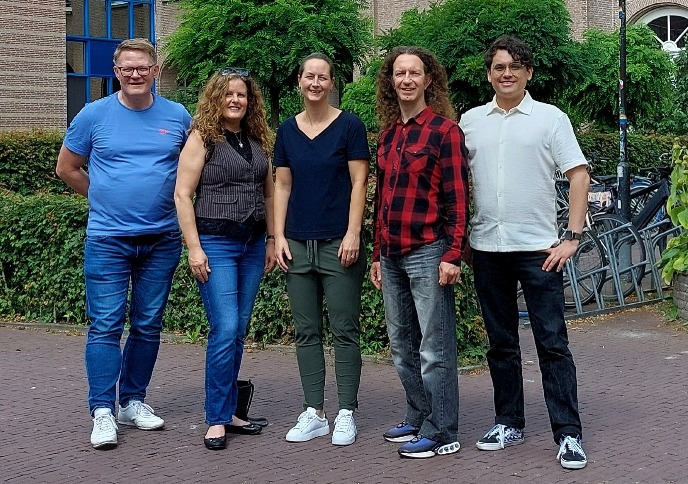
Members of OER
-
Angelos Konstantinidis
-
Estelle Meima
-
Manuel Reyes
-
Tracy Poelzer
-
Jan Riezebos
Pillar 4: Public Engagement
Pijler 4: Public Engagement
Public engagement stands for social and public involvement with science. It describes the many ways in which the activities and benefits of higher education and research can be shared with a wide audience. Engagement is by definition a ‘two-way street’, so it goes both ways. Anyone involved in education, research or other academic activities should be able to collaborate with public partners. These partners can vary from citizens, to communities and (non-)governmental organizations. By interacting with and listening to the audience, this can be beneficial for both parties. Think of it as a meaningful dialogue between the public and science.
Deliverables
-
Continuing the Seed Fund to stimulate public engagement projects
-
Organising event for and extending the public engagement community
-
Extending public engagement trainings for support staff and academics
-
Developing a central public engagement website and add public engagement to the research support portal
-
Supporting faculties in writing SEP societal relevance
-
Writing a proposal for a Citizen Science Hub
-
Writing a position paper for public engagement in UG
Members of Public Engagement
-
Marit Bogert
-
Mariska de Bone
-
Renske de Jonge
-
Nina Dieters
-
Mohammad Gharesifard
-
Yorick Karseboom
-
Eva Liminovic
-
Lars Hendrikman
-
Gabriela Matoušková
-
Henk Mulder
-
Maaike Muller
-
Paul van Duuren
-
Eva Teuling
-
Bas Teunissen
-
Elies Wempe-Kouwen
-
Sander van Lanen
-
Maaike de Heij
-
Sarah Willemsen
-
Vincent Hazelhoff
-
Fleur Meijer
Pillar 5: Communication
Pillar 5: Communication
Communication is key to stimulating a culture change in academia in which Open Science becomes the norm. The objective of this pillar is to raise awareness about Open Science and to inform the UG community about support and infrastructure options and the programme’s progress. To this end, we have developed a dialogue-based communication approach centred on researchers, with dedicated communication instruments such as the Open Science Newsletter, the Open Science Blog and the Open Science Bites podcast.
Members of Communication
-
Babette Knauer
-
Josca Westerhof
-
Alba Soares Capellas
-
Eliška Jelínková
Pillar 6: Community
Pillar 6: Community
We engage the community to increase the visibility and accessibility of open science, both within and beyond Groningen and the north of the Netherlands.
By providing a platform where everyone can acquire new skills, share their knowledge and articulate their support for the broader dissemination and uptake of Open Science practices.
Community is engaged through the transparency and inclusivity of research practices and mindfulness of different disciplines’ engagement in OS. We are open to engage academics and students who are curious about Open Science, regardless of experience. We strive to disseminate best practices through courses, workshops and quarterly events promoted through the newsletter and different social media platforms.
Deliverables
-
Ensure sustained engagement across community platforms
-
Organisation of events where participants can learn and apply OS principles
-
Foster and collaborate with OS communities within northern Netherlands academic institutions
Members of Community
-
Carlijn Kammenga
-
Maurits Masselink
-
Vera Heininga
-
Gert Stulp
-
Rink Hoekstra
-
Charlotte Vrijen
-
Taichi Ochi