
ENW M-grant for study of brain adaptation to menopause
Dr. Niki Gervais , assistant professor in behavioural and cognitive neuroscience at the University of Groningen, has been awarded an ENW M1-grant of EUR 400,000. The grant will support her research into how the brain responds to hormonal changes during menopause and what this means for memory and Alzheimer’s disease risk.
Gervais’ project, “Unravelling why estrogen modulating treatments impair memory while also decreasing risk for Alzheimer’s disease”, addresses a striking contradiction. Lower estrogen levels are linked to memory problems, for example in postmenopausal women and breast cancer patients receiving hormone therapies. At the same time, these treatments appear to reduce the risk of Alzheimer’s disease.
We do not yet know how long these symptoms persist or how the brain compensates for this loss
How the brain adapts
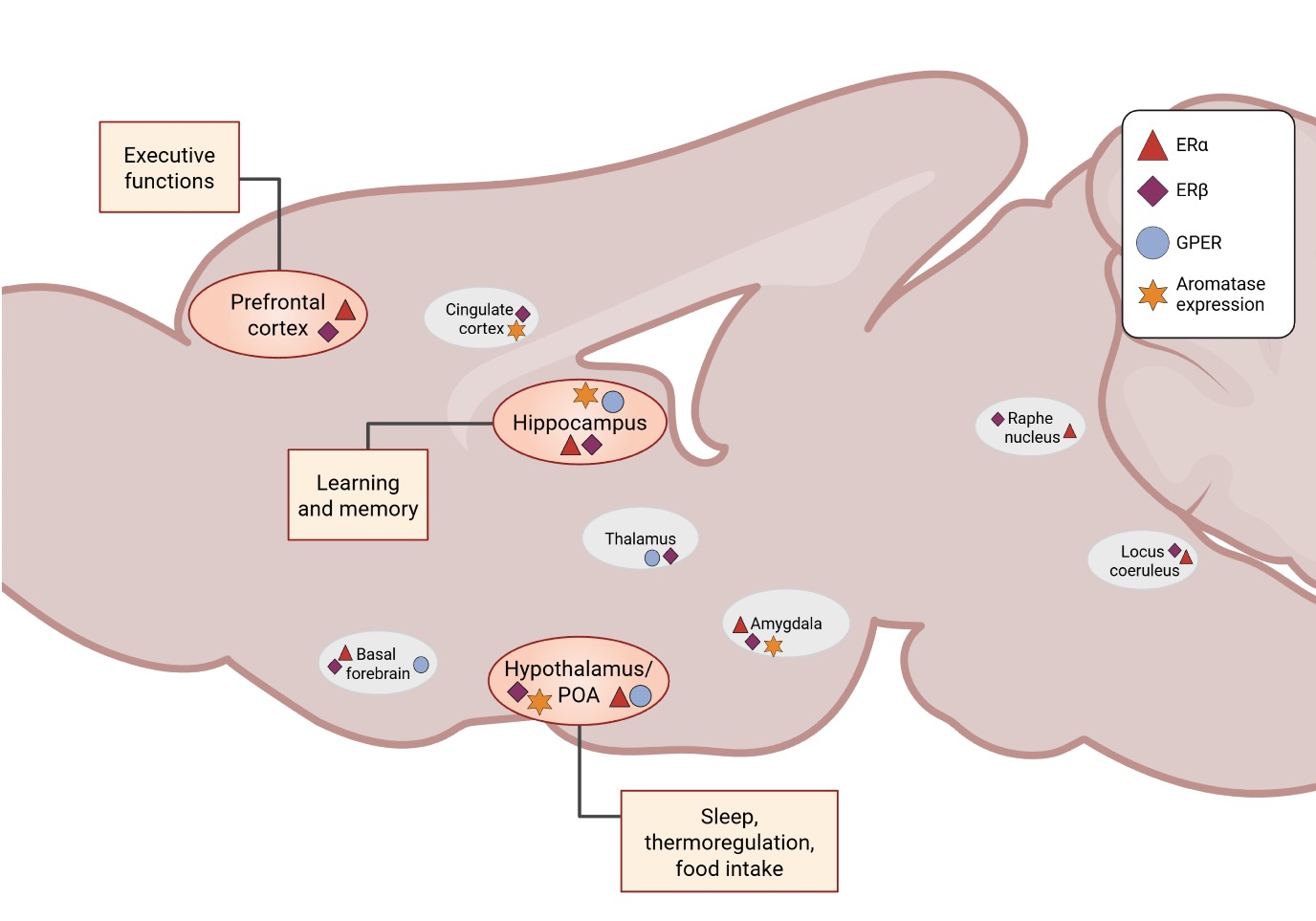
The project focuses on how the female brain adapts to the loss of ovarian hormones during menopause. During the reproductive years, the brain is highly sensitive to these hormones, but what happens after they decline is still unclear.
Using rodent models of menopause and Alzheimer’s disease, the team will investigate the underlying neurobiological mechanisms. This approach allows researchers to study processes that are difficult to examine in humans.
Focus on women’s health
The research comes at a time of growing awareness that women’s health is underrepresented in science. At the Groningen Institute for Evolutionary Life Sciences (GELIFES), multiple researchers are working on this topic from different angles.
What sets this project apart is its focus on adaptation rather than decline. Instead of only studying negative effects, it explores how the brain may adjust to hormonal changes and support healthy ageing.
This project will help women remain resilient during the menopausal transition by understanding how the brain responds to ovarian hormone loss and subsequently adapt to promote healthy aging.
The findings could benefit a large part of the population. Nearly 50% of the population will experience menopause, and the research is also relevant for patients undergoing hormone-related treatments for breast cancer.
The four-year project will be carried out by a PhD candidate under Gervais’ supervision, in collaboration with researchers from GELIFES (Prof. Peter Meerlo), UMCG (Dr. Janine Doorduin), and the University of Cologne (Dr. Thibaut Sesia).
About the NWO M-grant
The grant is part of the NWO Open Competition Domain Science-M1 programme, which funds innovative, high-quality fundamental research. M-grants enable researchers to develop new lines of inquiry or address urgent scientific questions.
In this funding round, sixteen projects were awarded across a wide range of topics, from sustainable chemistry to mathematical models and ecological research.
More information
More news
-
-
03 September 2026
Ming Cao reappointed as scientific director of the Jantina Tammes School
-
01 September 2026
Evrim Ursavas appointed scientific director Wubbo Ockels School