
Migratory birds find their wintering spot in Afrika thanks to an interplay between genes and environment
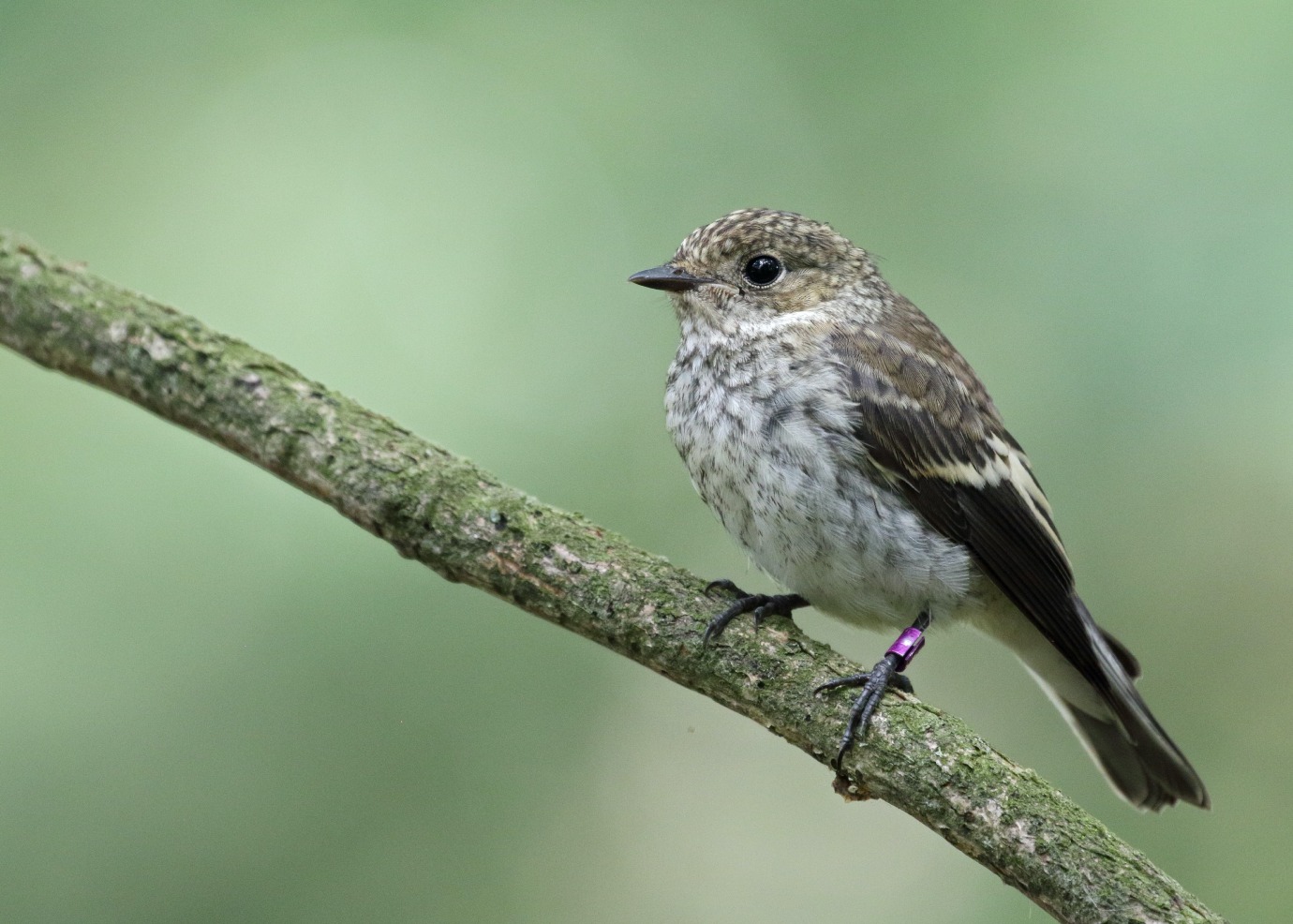
Migratory birds such as the pied flycatcher typically have wintering locations in Afrika close to others from the same breeding population. That means that birds breeding in the Netherlands run into each other again in Afrika, while, for instance, Spanish populations also end up close together. But how do they know where to go? A team of European researchers tracked the migration of pied flycatchers from eight different countries, but also performed a crucial intervention: what happens to the birds of Dutch eggs that are being raised by Swedish foster parents? The results of this study appeared in Science on June 25, and the researchers conclude that genes as well as environment influence where in Afrika a bird finds its wintering spot.
FSE Science Newsroom | Christiaan Both & Koosje Lamers
Every fall, billions of migratory birds leave their breeding areas to go to a wintering location elsewhere. The pied flycatcher, a small bird of just 12 grams, travels some 3000 to 13,000 kilometers to Afrika. There, he often settles in a place where also his peers from the same population reside: pied flycatchers from the Netherlands run into each other in Africa in winter, while their Spanish counterparts meet up elsewhere in Africa.
Why birds from a certain breeding area migrate to such a specific wintering location, is not yet understood. For some species of birds, it’s obvious: young geese learn from their parents, and several other species learn from their travel companions. But for song birds that travel alone and in the night, it is not yet clear why the end up at a specific spot.
A non-stop flight of fourty hours
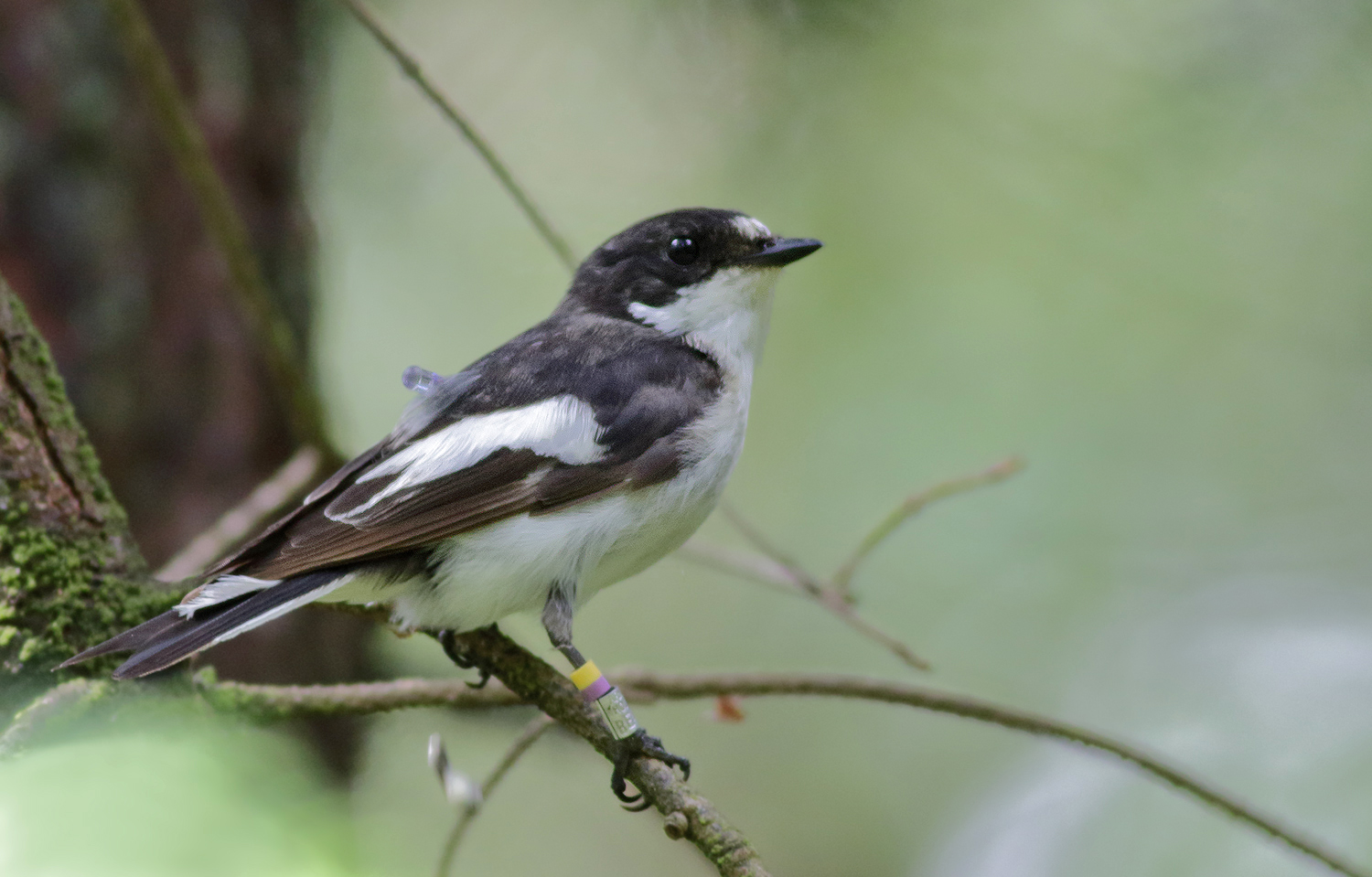
A large team of European researchers studied the pied flycatcher’s migration from eight different locations in the entire breeding area. The project was coordinated by Koosje Lamers and Janne Ouwehand from the University of Groningen (UG), under supervision of Christiaan Both (also UG). From Spain to Siberia, flycatchers where tracked using dataloggers to record their route to west-Africa. All populations first flew to Spain and Portugal in fall. There, they stopped for some time, before embarking on a non-stop flight of about fourty hours over the Atlantic to the most western part of Africa.

After that, their migration route bent eastward, and the birds flew various distances: Spanish birds resided in the most western part of the wintering locations, while the Siberians went farther east to spend their winter in Nigeria. While the Spanish breeding population only flew about 3000 kilometers in fall, the Siberians travelled almost 13,000 kilometers because of the long detour via Spain and Portugal.
‘It is remarkable that these pied flycatchers from Siberia take such a detour,’ remarks PhD-student Koosje Lamers. ‘A less western route, for instance, crossing the Mediterranean Sea near Italy and then crossing the Sahara, would save them some 4,500 kilometers.’ This shorter route is in fact a perfectly fine alternative, because the collared flycatcher, which is closely related, uses it to fly from Central Europe to their African wintering locations. Lamers: ‘So it is plausible that this strange detour is an evolutionary remnant from the past, when during ice ages, the pied flycatchers only appeard in the western part of Africa and Europe.'
Raised by Swedish foster parents
To determine how pied flycatchers know where to go in Africa for wintering, the researchers translocated flycatchers from The Netherlands to South-Sweden. They did this by removing Dutch eggs, and having them hatched out and raised by Swedish parents. They also moved female Dutch birds to Sweden, resulting in half-Dutch-half-Swedish offspring. The migration routes from the Dutch and Swedish populations where then tracked. Lamers: 'The non-tranlocated Dutch flycatchers turned out to end up some 500 kilometres more to the east in West-Africa than Swedish counterparts. And Dutch flycatchers that grew up in Sweden, went to a location about halfway between the normal Dutch and Swedish locations, and the mixed offspring was a bit closer to the normal Swedish locations in Africa.'

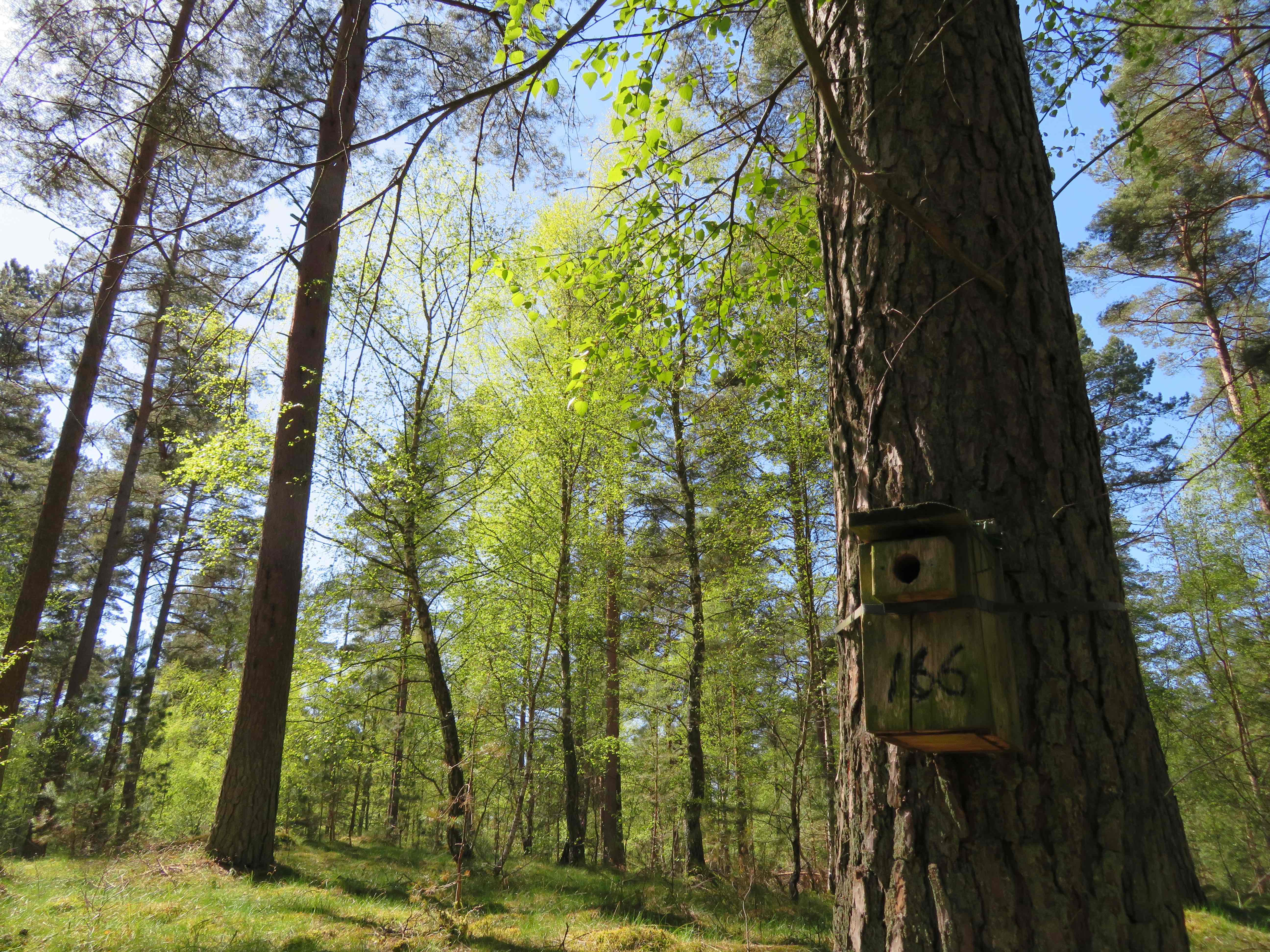
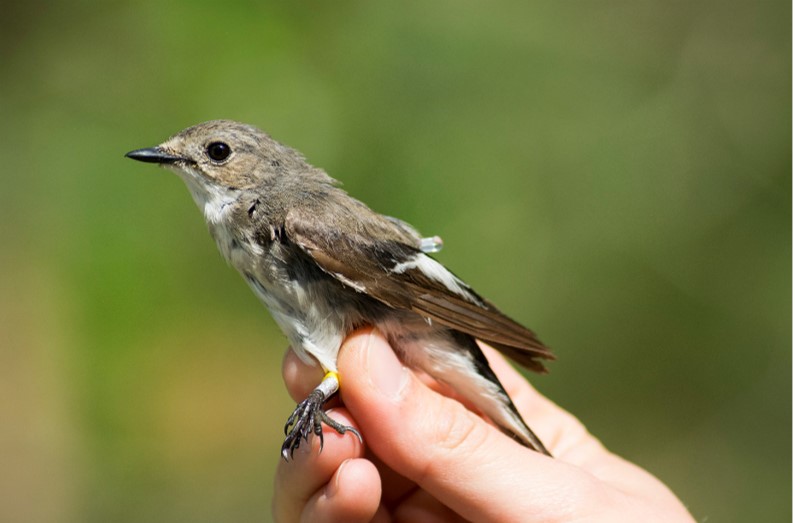

This study shows that the wintering location of flycatchers is determined by a mixture of inheritance and natal environment. In addition, it is remarkable that the population-specific wintering locations are reached via shared routes. Lamers: ‘So, it is probably not the case that the direction of the migration is inherited, and differs per location. Instead, it is probably the length of the route that is fixed.’
Finally, the study shows that this migration behaviour is not learned from the parents, because their young embark on their travels later in the year. This knowledge is relevant to understand how migratory birds might adapt to climate change. The timing of their migration is heavily influenced by climate change, and whether or not the birds can start earlier, depends on where in Africa they spend their winter. Lamers: ‘Morover, our research shows that new combinations of breeding areas and wintering locations can arise, as we saw with the Dutch eggs that hatched in Sweden.’
Reference
Lamers, K.P., Ouwehand, J., Ubels, R., Nicolaus, M., Camacho, C., Potti, J., Bell, F., Burgess, M., Lampe, H.M., Nilsson, J.Å., Kerimov, A., Ilyina, T., Belskii, E., Grinkov, V.G., Sternberg, H., & Both, C. Innate factors and ontogeny determine non-breeding areas of migrant songbirds . Science, 25-6-2026.
Read more:
In an article that was published in the journal Nature Ecology & Evolution on 14 September, Biologists from the University of Groningen show how European pied flycatchers can adapt to climate change.
More news
-
-
03 September 2026
Ming Cao reappointed as scientific director of the Jantina Tammes School
-
01 September 2026
Evrim Ursavas appointed scientific director Wubbo Ockels School