
Veni grants for two GELIFES researchers
Two of the fifteen Veni grants awarded to UG and UMCG researchers by the Dutch Research Council (NWO) are for GELIFES researchers Oscar Franken and Hanna ten Brink. With the grant money, the researchers will be able to further develop their own research ideas for three years.
In total, the NWO has provided Veni funding up to €280,000 each to 188 promising early-career researchers. The Veni grants, together with the Vidi and Vici grants, are part of the NWO Talent Programme. The Veni grants are designed for outstanding researchers who have recently gained a PhD. Within this Talent Programme, researchers are free to submit their own topics for funding. The NWO selects the researchers on the basis of their quality, the innovative nature of their research, the expected societal impact of their research proposal, and the possibilities for knowledge utilization.

The bigger the better, the smaller the faster: Why do males and females grow apart?
Dr. Hanna ten Brink, Groningen Institute for Evolutionary Life Sciences
In many animal species males and females look different. This has consequences for the management of populations since males and females will respond differently to environmental change. Differences between the sexes are often not fixed, but change during the development of an individual due to environmental conditions, for example food availability. In this project, the researcher will study how environmental conditions affect the evolution of sex differences and what the consequences of these differences are for the population.
Effects of heat waves on marine communities in shallow coastal seas
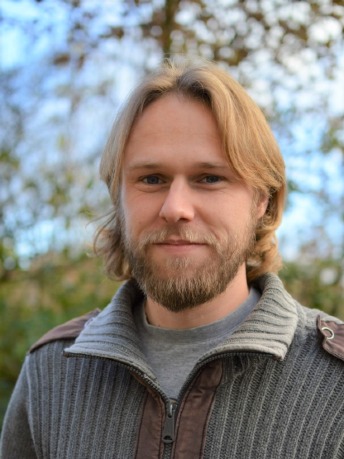
Dr. Oscar Franken, Groningen Institute for Evolutionary Life Sciences & NIOZ Royal Netherlands Institute for Sea Research
Increases in frequency and intensity of heat waves are affecting life in shallow seas. Especially locations that are dry during low tide are exposed to extreme temperatures. Animals living more shallowly could therefore have a higher risk of dying. I will analyse existing datasets to see if species in the Dutch Wadden Sea have been affected by heat waves. In experiments I will test if we can explain the observed changes by measuring the thermal tolerance of species. This research quantifies the risk shallow seas face during heat waves, which is important to anticipate on effects of future heat waves.
More news
-
-
15 September 2025
Successful visit to the UG by Rector of Institut Teknologi Bandung
-