

Women and Their Invisible Struggles (2)
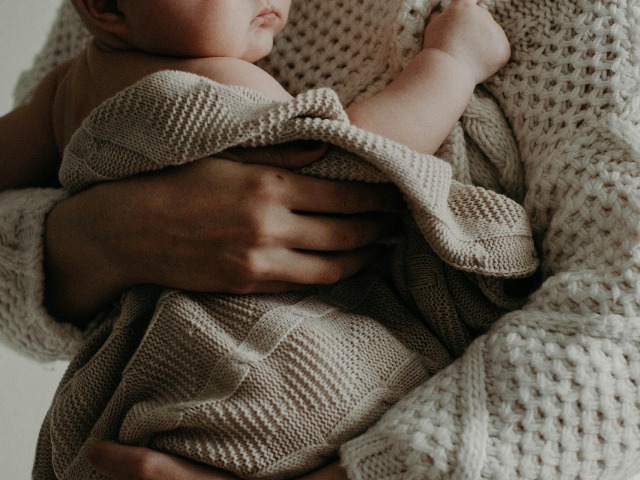
Slovakia's birth rate hit a record low (8.53 per 1,000 inhabitants) in 2024 and has been declining since 2021. Though slightly above Europe's average of 8.4, the total fertility rate (1.56 children per woman) remains below the replacement level (2.1 births per woman) indicating a clear population decline in the coming decades. Many conservative politicians and religious activists in Slovakia believe that further restriction of abortions and raising parental allowance will inevitably increase birth rates. In my research on pregnancy and motherhood conducted last spring, I found that the difficulties faced by many young mothers cannot be solved by a one-time raise of their allowance because the root causes lie elsewhere. Young mothers described many challenges, from problems in healthcare and educational facilities; to concerns about their future job prospects and the feeling that society or the state is not on their side. These findings suggest that those in power are not addressing the real problems of pregnant women and mothers.
Mothers are given an enormous burden when it comes to raising human beings, yet their views are often disregarded. Some mothers experienced not being taken seriously when undertaking this new role. One respondent described how her concerns were ignored in a doctor's office or by kindergarten teachers, while her husband was treated differently when raising the same issues: It is terribly frustrating because I feel that my voice is not being heard at all just because I am not a man. Only when seeing how people treat and perceive a father who takes care of their children, is it possible to notice this double standard in the way mothers are neglected and criticized more strictly.
This disregard also applies to personal boundaries and physical proximity when touching women and their children: I would never have thought of grabbing a stranger, or their child, or their dog... The number of people for whom it comes naturally is astonishing to me. Another participant said that people often treat children as public property, grab them freely and interfere in things that have nothing to do with them. These mothers receive inappropriate remarks and questions about their appearance or parenting. One respondent was even accused of wanting to kill her child because of following hospital instructions. She also noted that if you don't ask, you don't know, but as a first-time mother, you don't even know what to ask.
A lawyer and educator, involved in two organizations supporting mothers, said that pregnant women often feel anxious about the development of the fetus and childbirth. They have doubts about their maternal role and feel strong pressure from society on how a woman should feel. It is assumed that a woman feels great since she is seen as fulfilling her life role. One participant had similar feelings about the contradiction between societal perception of motherhood compared to her own experience: an image is created online about how everyone is coping, how it is perfect, but the reality is that a person is sleep deprived, often frustrated and it's good when you can talk to someone who doesn't act like some super mother who handles everything, when you tell each other without embellishment that it is sometimes really difficult.
Beyond personal and social pressures, my respondents also expressed concerns about the political situation in Slovakia and the wider region. Since February 2022, the war in Ukraine (on Slovakia's eastern border) has become a new uncertainty that young mothers had not encountered before. Three of them said the war makes them deeply concerned about the future. However, domestic politics was mentioned even more often since the populist pro-Russian government makes many people reconsider moving abroad: We came here when our child was six months old and we are happy to be closer to family and friends […] but when thinking about the future, we see that the standard of living would definitely be better in France. As for families not fluent in other languages, moving to the Czech Republic seems like the most feasible option. A social counselor I interviewed was also skeptical that the political situation would improve anytime soon, admitting that there are no efforts to make families feel good in Slovakia. On the contrary, they throw logs under their feet.
Notably, not all who mentioned moving abroad had a western country as a destination in mind. One respondent explained that because her husband comes from Serbia, they are planning to move there before their child goes to school: everything is much cheaper there, and because he [husband] knows a lot of people, it is also more accessible to us, […] Serbia is not in the EU, but I don't think they are doing much worse there than we are. For these mothers, wellbeing depends on a strong support system. As long as they have close friends and family nearby, they are more likely to stay because they have someone to rely on. As one participant nicely summed up this dilemma – there is something missing and something better everywhere.
This research showed me that many of these burdens could be lifted, if these mothers were heard and treated as equals by politicians, strangers, or even their family and friends. The essence of this problem was nicely summed up by one mother's thoughts on the postpartum depression: Many mothers are afraid to talk about it, because of the judgement. Those moms really shouldn't be afraid to talk or be immediately judged or be afraid to ask anything. One needs to speak up about their issues and risk misunderstanding or indifference to break the vicious cycle of silence. In a perfect world victims of a defective system should not be expected to fix it themselves, but I am afraid that this political system will not allow for a positive change soon. Thus, I am especially grateful to my respondents for their trust and openness. I hope that one day pregnant women and mothers in Slovakia will feel as respected as their male partners and find a safe space and self-esteem in their role of a mother.
Sources:
Espinosa, Catalina. “Crude Birth Rate Europe 2025.” Statista, July 7, 2025. https://www.statista.com/statistics/1251516/crude-birth-rate-in-europe/.
“Hrubá miera pôrodnosti sa na Slovensku v roku 2023 dostala na bezprecedentne najnižšiu hodnotu,” FinReport, April 13, 2024, https://www.finreport.sk/agenturne-spravy/slovensko-ma-treti-rok-po-sebe-coraz-menej-obyvatelov-hruba-miera-porodnosti-bola-najnizsia-za-100-rokov/.
United Nations Department of Economic and Social Affairs, World Fertility 2024, United Nations, 2025. https://www.un-ilibrary.org/content/books/9789211071887.
About the author
Ľubomíra Tomášová is an alumna of the MA programme in Religion, Conflict and Globalization at the University of Groningen and is originally from Slovakia. She previously completed bachelor’s degrees in Philosophy and in English Language and Literature. Her interests include cinema and literature, as well as exploring questions at the intersection of religion, culture, politics, nationalism, and gender.