
Effectiveness of Bulgarian Legislation on Smoking and Use of Nitrous Oxide against Non-Communicable Diseases in Children
Marina Uzunova, LLB student (University of Groningen), M.I.Uzunova student.rug.nl
Non-communicable diseases (NCDs) cause more than 41 million deaths annually, but this outcome may be prevented if measures are taken to address factors, such as physical inactivity and smoking.[1] On a European level, Bulgaria currently has one of the highest rates of mortality caused by NCDs, while also having the highest rates of smoking adolescents.[2] In recent years, the country has put effort into prevention of risk-based health deterioration and upholding of health standards to address NCDs, so it is therefore interesting to understand what practical measures against NCDs have been taken so far. This paper will analyse how Bulgaria implements children’s health rights’ standards within its Health Act in terms of protection of the youth against smoking and recreational use of nitrous oxide.
Emphasis on the Bulgarian Health Act
The Bulgarian Health Act (2005) is one of three main pieces of health-related legislation, along with the Law on Health Insurance and the Law on Health Institutions.[3] One of BHA’s aims is the reduction of NCD risk factors.[4] Over the years, numerous provisions for the regulation of tobacco and alcohol use, as well as for the promotion of early medical screening, have been included in it. [5]
Focus will be placed on the specifics of Art. 56a(1), adopted in 2010, Art. 56a(2) and Art. 56a(3), adopted, following amendments, respectively in 2022, of the Bulgarian Health Act on the restriction of the use of products, more specifically prohibition on smoking and use of nitrous oxide.[6] Under Art. 56a(1) and Art. 56a(2), a ban on smoking and use of nitrous oxide in public places is imposed, specifically for terrains adjacent to schools, school campuses, baby care centres, kindergartens, playgrounds and every location where child, educational, outdoor sport and cultural activities take place. Art. 56a(3) prohibits the use of nitrous gas in all closed public spaces, except for medical purposes.
Typically utilized as an anaesthetic, nitrous oxide has increasingly started being used as a recreational drug for the effects of euphoria and dissociation.[7] The act of inhaling it may lead to hypoxia, pneumomediastinum and pneumothorax, and frostbite.[8] Continuous use could result in haematological, cardiovascular, psychiatric and neurological disorders, as well as low Vitamin B12 levels.[9] Social risks include deterioration of the cognitive functions, dependence, social isolation, and changes in normal behavior.[10]
Article 56a, which restricts product use, also regulates exposure to second-hand smoke and thus battles such exposure as a risk factor. Based on the fact that prohibition on smoking and usage of nitrous oxide concerns spaces predominantly frequented by children and teenagers, such as schools and playgrounds, it may be determined that they are the main target group of the measure. Attention is placed on the protection of children’s health both directly - by restricting opportunities for subjecting individuals to passive smoking and - indirectly - by mitigating visual influence on children with regards to usage of tobacco products and nitrous oxide.
Link to the Children’s Right to Health
This analysis will examine Bulgarian health provisions in the context of the UN Convention on the Rights of the Child (CRC) and specifically Art. 24 which prescribes enjoyment of the highest attainable standard of health.[11] It will further examine Art. 33, which prescribes protection from the illicit use of narcotic drugs and psychotropic substances, and Art. 6 on the inherent right to life and development of the child.
It is imperative to study these standards in relation to those established by the Committee on the Rights of the Child (CteeRC) within its General Comment No 15 (2013) on the right of the child to the enjoyment of the highest attainable standard of health (Art. 24).[12] Firstly, the standards for measures based on Аrt. 6 prescribe identification of risk factors, possible health determinants and addressing them.[13] Implementation of Аrt. 24 should include consideration for social, cultural, environmental preconditions, ensuring realization of goods, services, conditions, determining and guaranteeing community-based measures on preventative care, such as ensuring safe public spaces.[14] Additionally, Аrt. 24 should be interpreted in light of current health problems/threats by identifying said threats and adopting measures in response to the priority threats/health risks, as well as by placing attention on addressing environmental pollution, particularly by protecting smoke-free environment.[15] To address the risks, States are required to adopt measures, including but not limited to legal measures, that are non-discriminatory, guarantee the State’s intervention in the protection of children’s health and adequately respond to the underlying determinants of children’s health.[16]
The CteeRC’s General Comment No. 4 (2003) on adolescent health and development also stresses on the need to properly protect children from harmful substances.[17] It urges that States should make sure children have access to appropriate health-related information, including by prohibiting certain information or encouraging learning about positive practices of protection against smoking and recreational usage of products.[18] The information requirement may be directly linked to both Art. 24 as a way to ensure that children themselves seek to attain the highest standard of health, as well as to Art. 33 because it targets the use of illicit substances.
The Effectiveness of Article 56a in Response to the CRC and Growing Usage of Nitrous Oxide and Smoking Products
Considering the standards set for upholding the rights of children against the use of tobacco and nitrous oxide, certain conclusions on the assessment of Bulgarian legal measures are to be made. Art. 56a acknowledges smoking and the use of nitrous oxide in and around places with children often present as a risk factor that has to be regulated. The provision also takes into account environmental and social prerequisites, such as the visual influence of smoking people and of second-hand smoke itself on children. Considering the ever-growing usage of smoke products in Bulgaria, including the emergence of new products like nitrous oxide-filled balloons, it can be claimed that Art 56a is a response to current health threats.[19] It also addresses environmental pollution, as successful implementation of the measure would help protect designated public areas from smoke.
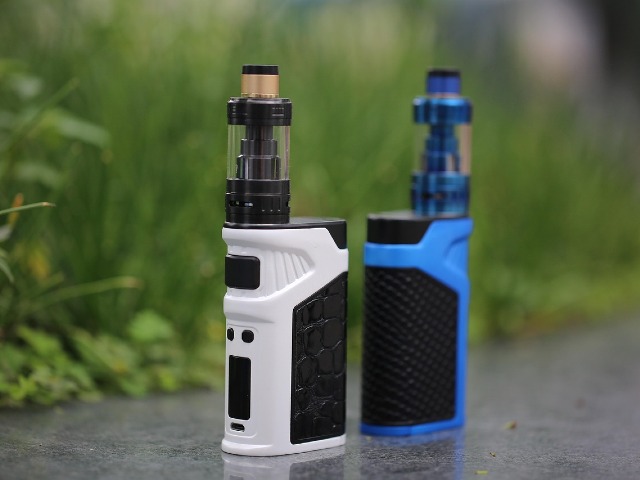
On the other hand, there are noticeable gaps in compliance with the CRC-related standards. For instance, not enough attention is placed on control of the use of e-cigarettes or vapes, yet they are recognised as priority threats to health based on their growing popularity amongst young people. According to the World Health Organization (WHO), more than 23% of Bulgarian young people (aged 13-15) use reusable e-cigarettes, putting them in first place within the European region.[20] Furthermore, 30% of the people aged 16 to 19 smoke vapes.[21] The Bulgarian Government recently unanimously adopted a ban on the use and advertisement of both nicotine and non-nicotine disposable vapes at first reading, which based on its aim and content is similar to the measures under art. 56, but clarification on how and which organs would enforce the new law is yet to follow.[22] While the bill prohibiting disposable vaping products is awaiting expiration of the objection period of the European Commission before it can fully enter into force, there are no plans whatsoever for a ban on reusable vaping products currently considered on a national level.[23]
Conclusion
This leads to the conclusion that while Art. 56a is indeed non-discriminatory and adequate from a legal point of view, complete implementation has not yet been achieved. Further effectiveness of Art. 56a may be achieved by restricting additional products, such as novel and emerging nicotine and tobacco products, as well as by being more specific regarding enforcement by the relevant institutions to ensure proactive intervention by the State.
[1] Sophia Lazarova and Dessislava Petrova-Antonova, ‘Health-Promoting Behaviors in Bulgaria: A Cross-Sectional Study on Non-Communicable Diseases and Lifestyle’ (2025) 15(1) Societies 15.
[2]‘Bulgaria: Country Health Profile 2023’, Organization for Economic Co-operation and Development (OECD) and European Observatory on Health Systems and Policies (EOHSP), (Paris, France, 2023); ‘Better Non-communicable Disease Outcomes: Challenges and Opportunities for Health Systems: Bulgaria: Country Assessment’, World Health Organization (WHO), (Geneva, Switzerland, 2020).
[3]Silviya Aleksandrova-Yankulovska and Florian Steger, ‘Personal responsibility for health in Bulgarian public health law and social legislation’ (2024) 24 BMC Health Services Research 2.
[4]Antoniya Dimova, Maria Rohova, Stefka Koeva et al., ‘Bulgaria: Health System Review’ (2018) 20(4) Health Systems in Transition, 129-132.
[5]Ibid.
[6]Bulgarian Health Act (Закон за здравето) 2005, Article 56a(1)-Article 56a(3).
[7]Jan van Amsterdam, Ton Nabben and Wim van den Brink, ‘Recreational nitrous oxide use: Prevalence and risks’ (2015) 73 Regulatory Toxicology and Pharmacology 790–796.
[8] ‘Recreational use of nitrous oxide: a growing concern for Europe’ (European Monitoring Centre for Drugs and Drug Addiction, November 2022).
[9]Ibid.
[10]Ibid.
[11]Convention on the Rights of the Child (adopted 20 November 1989, entered into force 2 September 1990) 1577 UNTS 3, Art. 6, 24, 33.
[12] UN CRC General comment No. 15 on the right of the child to the enjoyment of the highest attainable standard of health (art. 24) (17 April 2013) CRC/C/GC/15.
[13]Ibid, para 16-17.
[14]Ibid, para 23-24; para 26.
[15]Ibid, para 32; para 49.
[16]Ibid, para 71-73.
[17]UN CRC General Comment No. 4 on adolescent health and development in the context of the Convention on the Rights of the Child (1 July 2003) CRC/GC/2003/4.
[18]Ibid, para 6-7, para 21.
[19]‘More and more teenagers in Bulgaria are using laughing gas, authorities warn’ (Bulgarian News Agency, 24 September 2024)
[20]Prevalence of tobacco and e-cigarette use by young people in the WHO European Region (World Health Organization, 2024)
[21]‘Survey: 2% of Children Aged 6 to 9 Smoking Cigarettes, 3% Vaping’ (Bulgarian News Agency, 31 May 2024)
[22]‘Parliament Adopts at First Reading Ban on Vape Devices’ (Bulgarian News Agency, 12 February 2025)
< https://www.bta.bg/en/news/bulgaria/832063-parliament-adopts-at-first-reading-ban-on-vape-devices>.
[23]‘Parliament Bans Sale of Energy Drinks to Children and Single-Use Vape Pens’ (Bulgarian News Agency, 20 June 2025)