
Belangrijk bijbelmanuscript uit de 6e eeuw herontdekt
Een internationaal team van wetenschappers onder leiding van dr. Kim Fowler (Faculteit Religie, Cultuur en Maatschappij) is erin geslaagd 42 verloren gewaande pagina’s terug te vinden van een van ’s werelds belangrijkste vroege manuscripten van het Nieuwe Testament: Codex H.
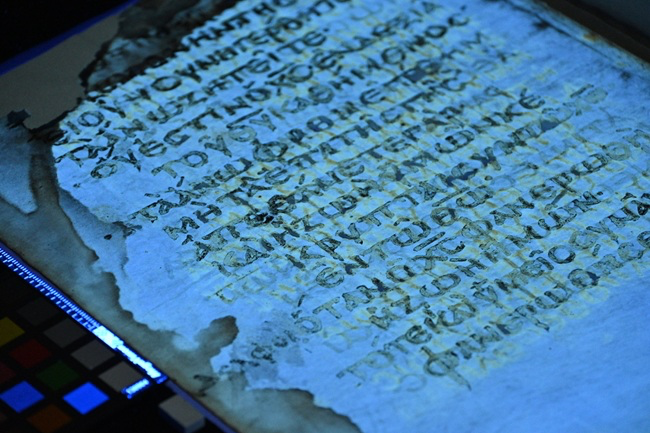
Deze 6e-eeuwse kopie van de brieven van Paulus kent een complexe geschiedenis. Het werk raakte in de vergetelheid toen monniken van het Groot-Lavra-klooster op de berg Athos in Griekenland het in de 13e eeuw uit elkaar haalden om het als kladpapier te gebruiken voor het herstellen van andere boeken. In de loop der tijd werden veel van de bladzijden (vaak illegaal) van de berg Athos meegenomen door internationale reizigers die op zoek waren naar antiquiteiten. Tegenwoordig zijn de overgebleven fragmenten verspreid over bibliotheken in Italië, Griekenland, Rusland, Oekraïne en Frankrijk.
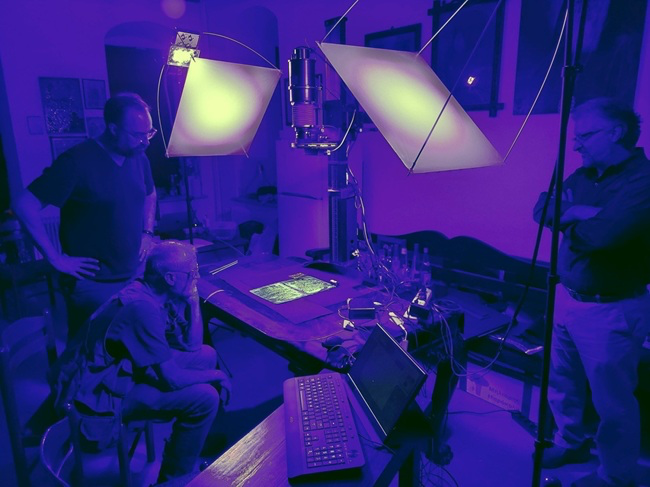
Samen met collega’s van de Early Manuscripts Electronic Library (EMEL) heeft het team met behulp van 'multispectral imaging' de beelden van de bewaard gebleven pagina’s van het manuscript verwerkt. Hierdoor kon ‘spooktekst’ van ontbrekende pagina’s worden gereconstrueerd. De sporen van deze ontbrekende tekst zijn achtergebleven toen het manuscript opnieuw werd geïnkt en vervolgens werd gesloten, waardoor onzichtbare resten van de tekst op de tegenoverliggende pagina’s achterbleven.
Het team werkte ook samen met deskundigen in Parijs om een koolstofdatering uit te voeren, en kon zo bevestigen dat het manuscript uit de 6e eeuw stamt.
Hoewel de teruggevonden tekst deel uitmaakt van het Nieuwe Testament dat we al kennen, is het manuscript van groot belang omdat het het oudste bewaard gebleven voorbeeld is van een belangrijk systeem van aantekeningen en opmaak voor de brieven van Paulus. Deze ontdekking biedt ons dan ook een uniek kijkje in de geschiedenis van de bijbeloverlevering en werpt licht op de gewoonten van de schrijvers en lezers van dit manuscript in de afgelopen eeuwen.
Foto's: Damianos Kasotakis
Meer nieuws
-
06 januari 2026
Geschiedenis dichterbij brengen
-
-