
NWO Open Technology funding for improving quality 3D printing technology

For research on safer application of metals in 3D printing technology, Dr. Liangliang Cheng of the Engineering and Technology Institute Groningen receives a grant of EUR 950,000 from the NWO Open Technology Program. Industrial partners account for over EUR 100,000 of the total amount.
Co-applicant of the project coordinated by the University of Groningen is Delft University of Technology. International partner is Queen Mary University of London.
Innovative solution
The researchers will develop an advanced vibrational Non-Destructive Testing (NDT) methodology for quality assurance of metals in 3D printing technology, also known as additive manufacturing (AM). With this, they will facilitate a fundamental and industrially applicable solution for autonomous inspection and qualification of metal AM parts in an industrial process chain. This innovative solution will be based on a new approach that integrates data-driven modeling, model frequency analysis and explainable artificial intelligence (AI).
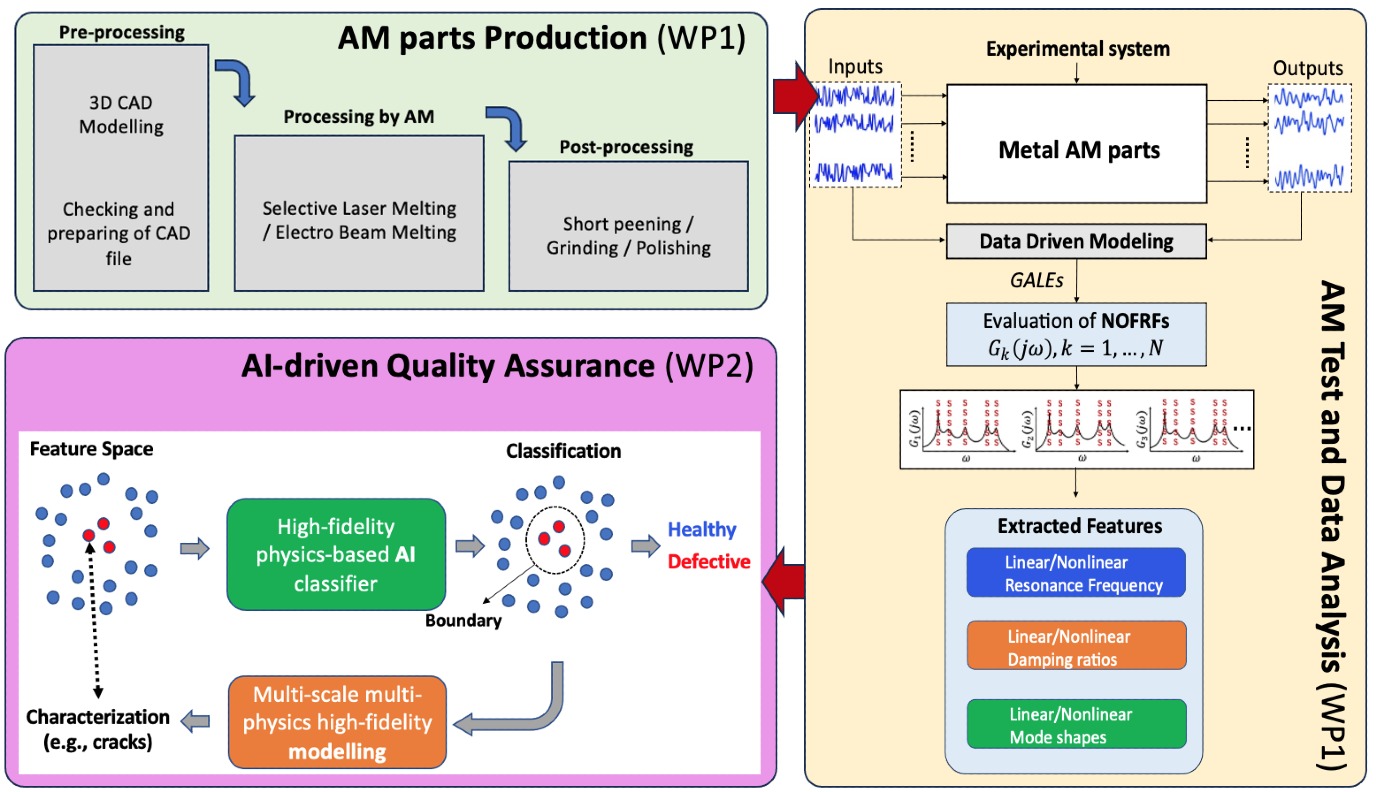
Optimizing benefits of 3D printing technology
3D printing technology is fundamentally transforming manufacturing processes in various industries. However, ensuring the quality of 3D parts is still a challenge. The goal of the researchers is to achieve a safer application of metals in 3D printing technology and thus optimize the benefits of 3D printing technology.
Open Technology Program
The Open Technology Program provides funding for application-oriented technical-scientific research. Scientists from all disciplines can submit proposals, and various companies and partners can participate in a project by making a financial or material contribution. Research applications are submitted throughout the year. This round, a total of sven research projects received funding.
More news
-
10 September 2026
Searching for the first generation of stars
-
10 September 2026
Wouter Vansteelant appointed Scientific Director of BirdEyes
-
08 September 2026
How do you spot a nice wool coat in a heap of discarded textiles?