Ben je geïnteresseerd in het beroep van conservator? En wil je concrete ervaring opdoen in dit vakgebied? Kies dan voor de Conservatorenopleiding.
Deze specialisatie biedt je de kans om niet alleen gedegen inzicht te krijgen in de museale wereld maar ook tijdelijk werkzaam te zijn in een belangrijk museum in Nederland of België.
De Conservatorenopleiding is een eenjarig programma, met de mogelijkheid op een aansluitende stage van een half jaar. Tijdens het masterjaar kun je een studiepad oude kunst of moderne en hedendaagse kunst volgen en leer je van alles over de achtergronden van musea en de werkzaamheden van conservatoren. Daarnaast krijg je de kans om na het masterjaar een betaalde stage van zes maanden te volgen bij een van de musea die participeren in de Conservatorenopleiding: Museum Catharijneconvent en het Centraal Museum in Utrecht, het Rijksmuseum in Amsterdam, Museum De Lakenhal in Leiden, het Groninger Museum, het Fries Museum in Leeuwarden en de Musea Brugge e.a.
Let op: de Conservatorenopleiding Kunstgeschiedenis is een specialisatie binnen de mastertrack Kunstgeschiedenis, MA Kunst- en Cultuurwetenschappen. Je meldt je dus aan voor de mastertrack Kunstgeschiedenis.
De mastertrack Kunstgeschiedenis/Art History heeft drie specialisaties: Moderne en Hedendaagse Kunst (Modern & Contemporary Art), Oude Kunst (Early Modern European Art) en de Conservatorenopleiding (Curatorial Studies).
Studenten kiezen voor één van deze drie studiepaden en studeren daarin af. Voor de conservatorenopleiding gelden specifieke eisen. Alle studenten volgen het vak Art History Now, dat een theoretische & methodologische basis vormt en studenten met een grondige schrijf- en researchtraining voorbereidt op de scriptie. Binnen dit vak kunnen studenten zich op hun gewenste expertise concentreren. Daarnaast volgen studenten nog een tweetal modules.
Op deze pagina vind je testimonials van studenten die stage
hebben gelopen in verschillende musea:
http://www.rug.nl/let/programma-en-stages.
| Semesters | ||||||
|---|---|---|---|---|---|---|
| VakkenVakkencatalogus > | 1a | 1b | 2a | 2b | 3a | 3b |
| Art History Now: Theory, Method, Historiography (10 EC) | ||||||
| Material religion + Museums and Religion (10 EC, keuzevak) | ||||||
| Objects: Collecting and Conserving (10 EC) | ||||||
| Practices: Curating and Creating (10 EC, keuzevak) | ||||||
| Excursion (5 EC) | ||||||
| Master Thesis (20 EC) | ||||||
| Tutorial (5 EC) | ||||||
| Museum Placement (30 EC) | ||||||
De conservatorenopleiding combineert het vak Art History Now met een keuze uit de vakken die zich op het museum, verzamelen en tentoonstellen richten. Bij het succesvol afronden van alle studieonderdelen kan de student aansluitend een stage van een half jaar in een vooraanstaand museum in Nederland of het buitenland volgen. Bovengemiddelde studieresultaten en de afronding van de MA scriptie (20 EC) voor aanvang van de stage zijn een vereiste voor de deelname aan dit programma.
| Programma-opties |
|---|
| Masterstage (specialisatie) Tijdens deze master kun je een stage lopen voor studiepunten. Je bepaalt zelf bij welke organisatie je stage loopt, en zoekt je stage zelf. Bureau Studentzaken kan je daarbij helpen. |
Een van de beschikbare stages wordt aangeboden door de Musea Brugge. Eventueel kan in het Masterjaar een onderdeel aan een buitenlandse universiteit worden gevolgd.
| Specifieke eisen | Extra informatie |
|---|---|
| vooropleiding |
Studenten met een bachelordiploma in Kunstgeschiedenis en Kunst, Cultuur en Media (incl. Visual Art programma) worden direct toegelaten tot deze mastertrack. Studenten van de Rijksuniversiteit Groningen met een bachelordiploma in:
met de Facultaire Minor (30 ECTS) History in Art, Architecture and Landscape zijn enkel via de Toelatingscommissie toelaatbaar tot deze mastertrack. Professionals en studenten met een achtergrond in een vergelijkbaar veld, kunnen zich ook aanmelden voor deze track. De Toelatingscommissie zal beoordelen of je educatieve/ academische achtergrond aan de toelatingseisen voldoet en zal het curriculum en niveau van je vorige opleidingen hierin meenemen. |
| taaltoets cijfer |
Extra taaleis Engels: een VWO diploma of een certificaat VWO Engels (cijfer 6 of hoger), minimum TOEFL eis iBT 90 (met een minimum van 21 voor alle onderdelen), of IELTS 6.5 (met een minimum van 6 voor alle onderdelen) or Cambridge C1 Advanced of C2 Proficiency. |
| overige toelatingseisen |
Studenten die deze specialisatie willen volgen, moeten zich inschrijven voor de MA Kunst- en Cultuurwetenschappen, en vervolgens de richting 'Kunstgeschiedenis' kiezen. Na het eerste semester vindt een selectie plaats voor de Conservatoren-opleiding. Studenten kunnen daarnaast een mail sturen aan dr. J. Keizer: joost.keizer rug.nl, om te laten weten dat zij de specialisatie willen volgen. |
| Vooropleiding | Organisatie | Instroom |
|---|---|---|
| Kunstgeschiedenis | Alle WO-instellingen | Drempelloze toelating |
Gebruik deze step-by-step guide voor meer informatie over jouw toelaatbaarheid en specifieke aanmeldprocedure.
Na het indienen van je aanmelding zal de Toelatingscommissie bepalen of jouw vooropleiding en ervaring voldoen aan de eisen van het programma.
De Toelatingscommissie neemt één van de volgende besluiten:
| Type student | Deadline | Start opleiding |
|---|---|---|
| Nederlandse studenten | 15 augustus 2025 | 01 september 2025 |
| 15 augustus 2026 | 01 september 2026 | |
| EU/EEA studenten | 01 mei 2026 | 01 september 2026 |
| non-EU/EEA studenten | 01 mei 2026 | 01 september 2026 |
| Specifieke eisen | Extra informatie |
|---|---|
| vooropleiding |
Students with a Bachelor's degree in Art History and Arts. Culture and Media (incl. Visual Art programme) are directly admissible to this Master's track. University of Groningen students with a BA in:
with a Faculty Minor (30 ECTS) in History in Art, Architecture and Landscape are also eligible for admission to this Master's track only via the Admission Board. Professionals and students with a background in a related field are welcome to apply to the track. The Admission Board will assess whether your educational/academic background meets the specific track requirements, and will consider the level and curriculum of your previous studies. |
| taaltoets cijfer |
Additional requirements English: A VWO diploma or a subject certificate for VWO English (mark 6 or higher), minimum requirement of TOEFL iBT 90 (with a minimum of 21 on all items), or IELTS 6.5 (with a minimum of 6 on all items) or Cambridge C1 Advanced or C2 Proficiency. |
| overige toelatingseisen |
Selection for the Curatorial Programme takes place at the end of the first semester among students of the master's track in Art History. For more information contact Joost Keizer (joost.keizer rug.nl) |
Please use this step-by-step guide for more information regarding your eligibility and your specific application procedure.
After you complete your application, the Admissions Board will assess whether your educational/academic background meets the specific programme requirements, and will consider the level and curriculum of your previous studies.
The Admissions Board will then determine whether:
| Type student | Deadline | Start opleiding |
|---|---|---|
| Nederlandse studenten | 15 augustus 2025 | 01 september 2025 |
| 15 augustus 2026 | 01 september 2026 | |
| EU/EEA studenten | 01 mei 2026 | 01 september 2026 |
| non-EU/EEA studenten | 01 mei 2026 | 01 september 2026 |
Dankzij de praktijkervaring die je tijdens je stage opdoet en het gedurende deze periode opgebouwde netwerk kun je je positie op de arbeidsmarkt versterken. Je bent hierdoor meer gekwalificeerd dan met een gewone master Kunstgeschiedenis voor een functie als conservator in opleiding of assistent- conservator, of bijvoorbeeld als educatief medewerker.
Uiteraard zijn er buiten de musea ook andere instellingen van kunst en cultuur waarvoor de ervaring die je reeds hebt opgedaan een voordeel kan zijn.
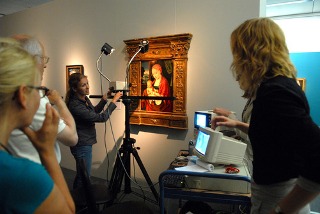
Het verrichten van onderzoek op het terrein van de kunstgeschiedenis is één van de mooiste uitdagingen die je als masterstudent kunt aangaan. In bijna alle kunsthistorische banen zit wel een onderzoekscomponent. Of je nu conservator bent in een prentenkabinet of beleidsmedewerker bij een gemeente, in beide gevallen wordt er een beroep gedaan op je onderzoeksvaardigheden en je kritische vermogen. Tijdens je master leer je wat kunsthistorisch onderzoek inhoudt, hoe je het zelf kan verrichten en welke mogelijkheden er zijn het toe te passen in de samenleving. Het onderzoeksveld is omvangrijk. Te denken valt aan analyse en interpretatie van kunstwerken, het je verdiepen in de techniek en materiele eigenschappen ervan, de museale en maatschappelijk context, met andere woorden de kunstwereld, theoretische vraagstukken en bijvoorbeeld archiefonderzoek. Idealiter sluit je onderzoek aan op de specialisaties van onze docenten, maar dat hoeft niet altijd het geval te zijn. Vanuit hun expertise kunnen zij je in ieder geval op hoog niveau begeleiden. Omdat de stafleden beschikken over talrijke internationale contacten is onderzoek in het buitenland één van de vele mogelijkheden. Daar is in het onderwijsprogramma voldoende ruimte voor.
Je belangrijkste onderzoek betreft de masterscriptie, die wordt geschreven in samenwerking met het museum waar je stage doet. Hierdoor is het bijvoorbeeld mogelijk om technisch onderzoek naar schilderijen uit te voeren. Daarnaast biedt het museum toegang tot bronnenmateriaal dat nog niet of nauwelijks is ontsloten. Je hebt de gelegenheid om rond te kijken in depots en informatie te verzamelen, die (nog) niet voorhanden is in de literatuur. Ook is het mogelijk om onderzoek te doen naar het museum zelf, bijvoorbeeld op het gebied van tentoonstellingsbeleid.
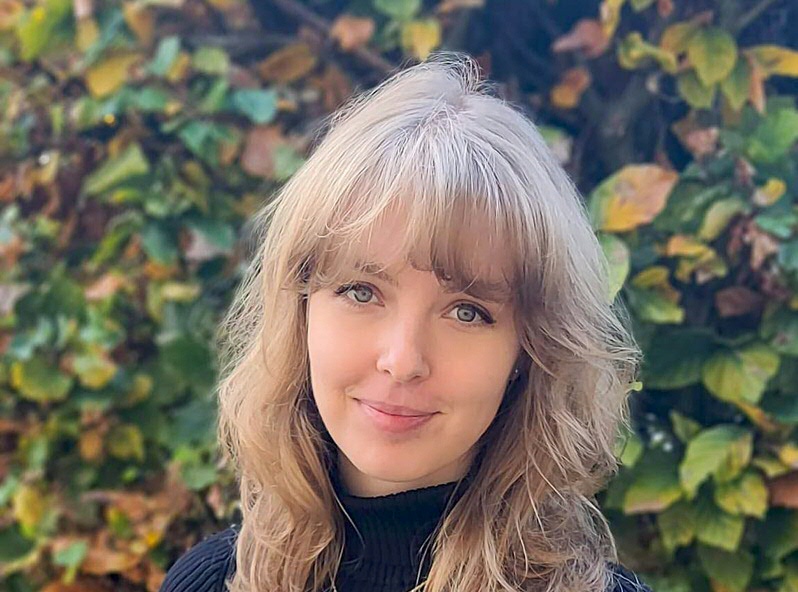
Hi! My name is Maryon, and I'm currently studying in the Master's programme for Art History & Curatorial Studies. I currently live in Akkrum, close to Heerenveen, so whenever we have class, I commute with the train about an hour and a half each way to Groningen. While the travel can sometimes be a bit of a hassle, I've found it also gives me extra dedicated time to prepare for class.
Ben je geïnteresseerd in een onderzoeksgerichte carrière? Kijk ook eens bij ons Research Masterprogramma Kunst- en Cultuurwetenschappen.