
Habermas shed a new light on democracy
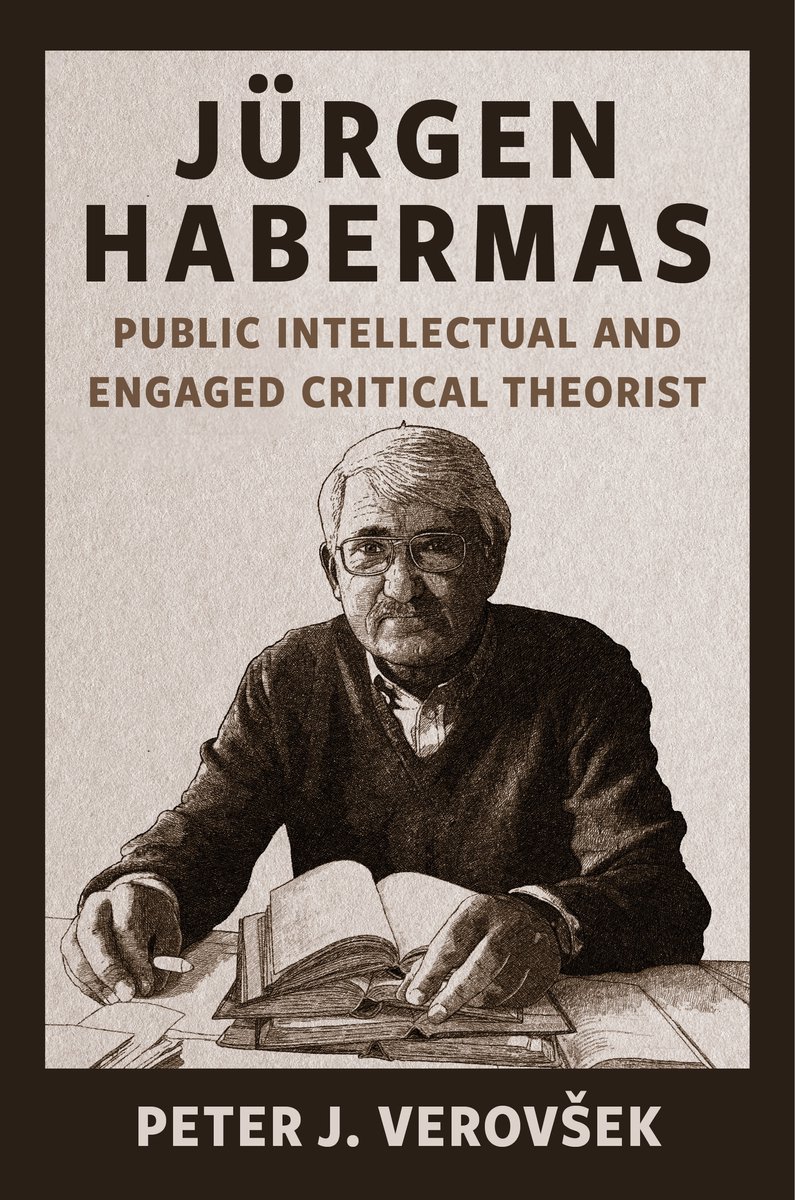
He is one of the most influential post-war thinkers in Europe. Jürgen Habermas was significantly shaped by Nazism in Germany. Peter Verovšek wrote a new biography of him, entitled 'Public Intellectual and Engaged Critical Theorist'. The German philosopher and sociologist passed away just 10 days before publication.
Totalitarian Germany was never to return. This conviction led Habermas to the proposition that a just society is achieved through open, rational discussions in which people strive for mutual understanding, free from coercion. His thinking on democracy and power-free dialogue became a touchstone for both supporters and critics. Habermas passed away on Saturday, March 14 of this year, at the age of 96.
Peter Verovsek, Assistant Professor (UD1) in History and Theory of European Integration, officially published his book on Habermas on April 13. ‘Habermas's death on Saturday the 14th has certainly put his name in the news. I had planned on sending him a copy of my book, but it was not to be’, says Verovsek. ’In light of this, my book launch on April 13 became something of a memorial as well.’

The public intelectual
Habermas has not only theorized the public sphere—he has also taken part in it through frequent commentary on current social, political, and cultural issues. Yet since Habermas’s extensive public-facing writings have been overlooked, his philosophy has often been criticized as apolitical.
Verovsek’s book transforms our understanding of Habermas by focusing on his work as a public intellectual, showing how he has shaped debates far beyond the ivory tower. While Habermas maintains a strict separation between his academic and his public-facing writings, he has also ensured that these two aspects of his work are part of a consistent whole.
The book highlights the development of Habermas’s views over time and the changing nature of his public interventions. His early political writings focused on questions tied to the particular situation of postwar West Germany, but since 1989 he has increasingly turned his attention to the future of Europe and global politics more broadly.
Political engagement
Verovšek sheds light on the interrelationship between Habermas’s participation in the public sphere and his theoretical work, demonstrating that his political engagement is crucial to understanding his philosophy. In a moment when public debate is under threat, this book offers timely new insight into Habermas’s lifelong project of defending the public sphere—both in theory and in practice.
Peter J. Verovsek is Senior Assistant Professor (UD1) in History and Theory of European Integration at the University of Groningen. He is also the author of Memory and the Future of Europe: Rupture and Integration in the Wake of Total War (2020).
More news
-
01 July 2026
Ninah Tiemersma named Alumnus of the Year
-
02 June 2026
Impact |The wainscotting at Museum Janning
-
28 April 2026
Groningen on the map as European capital of hip-hop