

Exploring Responsible Entrepreneurship through Serious Play
|
Course:
|
Principles of Entrepreneurship (Year 2)
|
|
Institution:
|
University College Groningen, University of Groningen
|
|
Programme:
|
Liberal Arts and Science (LAS) Bachelor
|
|
Date:
|
Friday, 9 October 2026
|
|
Teacher:
| |
|
Facilitator:
| |
|
Game used:
|
UnExpected Values: Designing the Company of Tomorrow
|
|
Format:
|
1-hour gameplay + 15-minute reflection
|
|
Participants:
|
27 students
|
The context
The Principles of Entrepreneurship course introduces students to the fundamentals that underpin entrepreneurial activities and how it can create different types of value in society. The game offers an opportunity to explore entrepreneurship through practice, bringing questions of business strategy, ethical decision-making, and sustainability into a shared co-learning experience.
The session in action
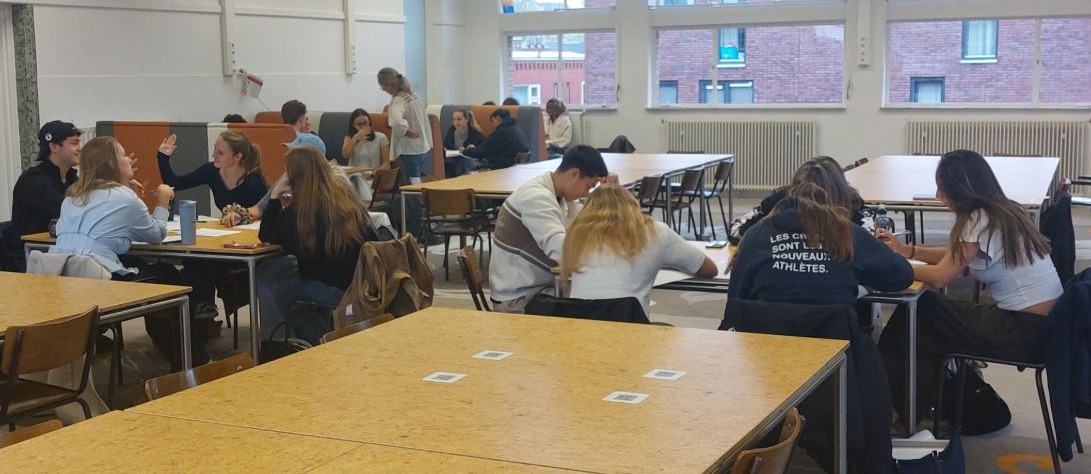
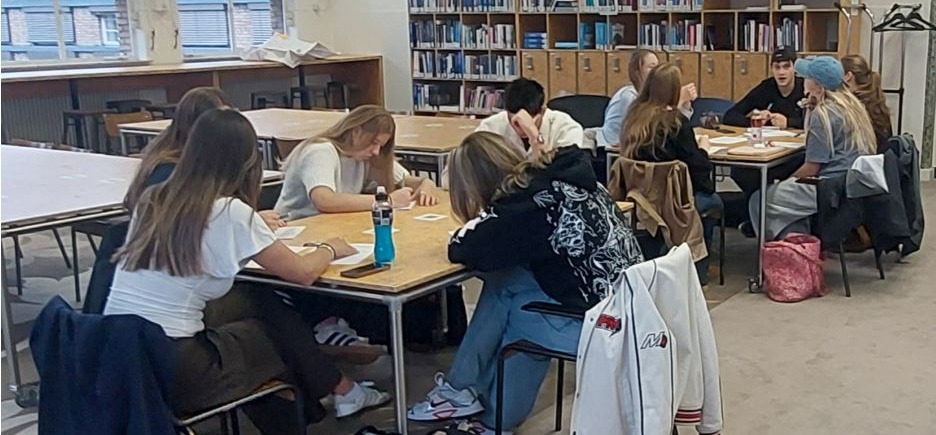
The session began with an introduction to the game as a role-play simulation in which each student becomes an entrepreneur designing their own company. Working in groups of four to five, students used a company canvas to describe their business idea, its target/user group, and how it creates value for people, the environment, and is financially sustainable. As the students had already completed a related homework assignment, most of them could quickly complete the first stage and present their company to the rest of the group.
In the second stage, students explored how to scale-up their businesses in response to increasing demand while maintaining quality and consistency with their initial business idea. Next, each student drew an event card presenting a new challenge. After completing their canvases, students presented their decisions and discussed how growth had an impact on people, the environment, and the financial business sustainability.
Students then exchanged three recognition cards, acknowledging peers' decisions related to people, planet, and the sustainable business value. It was emphasised that the cards were not part of a points system or grading; their purpose was to recognise one another's contributions. The round sparked lively discussions and presentations, followed by a plenary reflection.
The outcome
Students found the game engaging and motivating. Their reflections highlighted how it helped them think more deeply about responsible entrepreneurship, sustainability, and the challenges of developing a business.
The teacher was pleased with the implementation and also received very positive feedback from several students in private conversations later that day.
One student explained how the game had broadened their understanding of sustainability and the role it plays in business decisions:
"I also learned that ethics and sustainability are not extras added at the end. They belong in the early decisions, when you choose which direction your idea should grow in. Learning about the triple bottom line in class widened my view from environmental value to social and economic value as well. Sustainability mattered to me from the start, but now I see it as something that should shape every step."
The unexpected event cards also encouraged students to think about flexibility and responding to challenges:
"The event cards were another key moment. They showed me how important it is to think every aspect through, but also to stay flexible when something unexpected happens. You adapt and keep going, because there is almost always a solution. I noticed that I actually enjoy this kind of challenge. That is how I realised entrepreneurship is for me."
The opportunity to exchange ideas with others was another aspect students appreciated. One student described it as "actually interesting for exchanging ideas with others". At the same time, they pointed out that the session could have benefited from more time: "it was unfortunately too short, so there was not enough time to really dive into the depth of the business ideas of the others."
Educator takeaway
The session demonstrated how a company canvas, role-play, and peer recognition can be combined to make responsible entrepreneurship tangible. Building on an assignment students had already completed at home helped them move quickly into the simulation, while the unexpected challenges encouraged them to reconsider their initial ideas as their companies grew.
An important element was the combination of individual decision-making and collaborative reflection. Presenting their companies gave students an opportunity to explain their reasoning, while receiving feedback and recognition from peers helped them discover perspectives they might otherwise have overlooked.
The experience suggests that peer recognition can support learning when it is framed as an opportunity to acknowledge different contributions rather than as a competition for points or grades. For educators, this offers a practical way to bring feedback, reflection, collaboration, and the multiple dimensions of responsible entrepreneurship into the classroom.