

The Sustainable Futures you can create: a comprehensive guide to the two possible specialisations
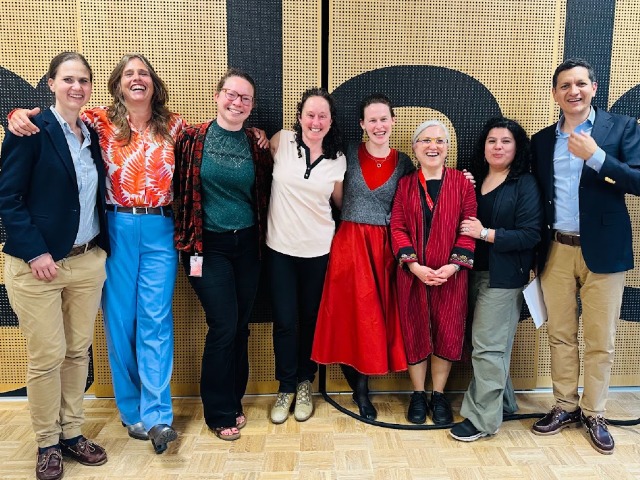
The MSc in Sustainable Futures at Campus Fryslân gives students the tools to understand how environmental, social, political and technological changes shape the world around us, and to work towards more resilient, democratic and sustainable societies.
After a shared foundation in sustainability, climate adaptation and interdisciplinary research, students choose between two specialisations: Territories in Transition, focused on places, communities, culture and ecological change, and Governance & Security, focused on democracy, technology, institutions and resilience. This blog post is designed to help you understand which of the two specialisations fits you better.
What is the MSc Sustainable Futures?
The name says futures, plural, for a reason. There is no single recipe for what a sustainable future should look like, and the challenges we face are of an inter- and multi-disciplinary nature in themselves. Climate change affects migration, tourism reshapes communities, technology changes governance, decisions about land or heritage affect ecosystems and people.
Campus Fryslân, and, more specifically, the MSc in Sustainable Futures brings these connections into the classroom through geography and social sciences, combining sustainability, governance and socio-cultural perspectives. Students examine the relationships between people, places, ecosystems and institutions, while developing practical skills through case studies, research, policy work and applied projects. It also comes with a choice: which part of this interests you most?
Are you interested in places, culture, mobility and nature?
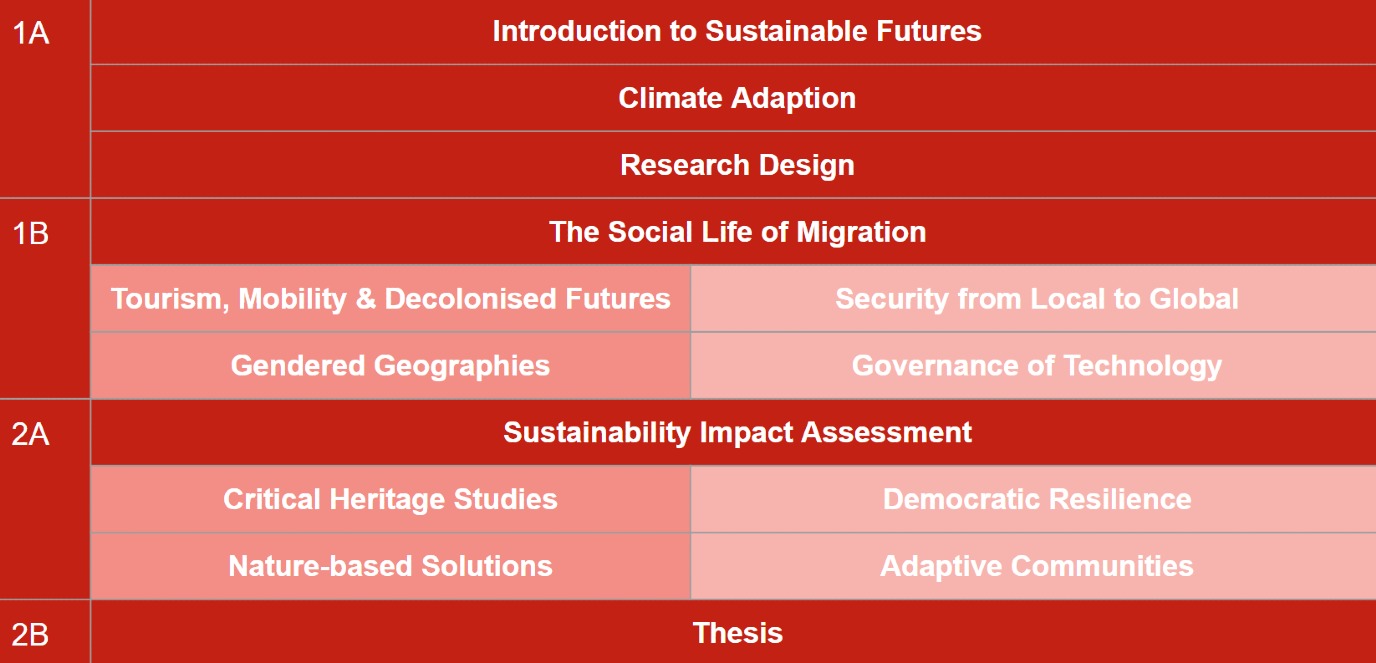
Choose Territories in Transition. This specialisation looks at places as constantly changing spaces shaped by people, culture, politics and ecosystems. The specialisation looks into how territories are transformed, who benefits (and who does not), and how communities might move towards more sustainable futures. The four courses belonging to Territories in Transition explore diverse sides of this question:
-
Tourism, Mobility & Decolonised Futures rethinks tourism and mobility, questioning the colonial ideas and practices that have shaped (and still do) the industry. Students explore Indigenous, ethnic and minority tourism, dark tourism, media tourism, festivals and creative tourism, and work on their own qualitative research project.
-
Gendered Geographies looks at how gender, sexuality and other forms of power shape the ways people experience and move through spaces.
-
Critical Heritage Studies explores relationships between heritage, identity and place, asking how societies use the past when imagining their futures.
-
Nature-based Solutions is all about ways of working with natural systems to address challenges such as climate change, biodiversity, water and livelihoods.
This specialisation might be for you if you find yourself asking: Who gets to shape a place, and who gets left out? How does tourism change communities? What does a decolonised tourism future look like? How do gender and power affect our experience of space? How can heritage help communities deal with change? How can we work with nature when responding to environmental challenges?
Are you more interested in democracy, technology and resilience?
Choose Governance & Security. Governance & Security takes a broad view of security. Instead of looking only at national defence or public order, it examines how societies prepare for and respond to political, technological, environmental and social challenges. The four courses students take in this specialisation are:
-
Governance of Technology examines the opportunities and risks created by technological change, including topics such as artificial intelligence and energy security, with a focus on responsible technology governance.
-
Democratic Resilience looks at polarisation, disinformation, populism and democratic backsliding, while exploring ways to strengthen citizen participation and democratic decision making.
-
Adaptive Communities asks what makes communities able to prepare for, respond to and recover from crises, with attention to social networks, public services, community leadership and local governance.
-
Security from Local to Global explores how security challenges emerge across different levels of governance and gives students practical experience with tools such as stakeholder analysis and policy briefs.
This pathway could be a good fit if you are asking questions like: How can democracies respond to polarisation and disinformation? Who should govern rapidly developing technologies (and how)? What makes a community resilient during a crisis? How can citizens have a meaningful role in political decision making? How do local and global security challenges connect?
What do both pathways have in common?
Before specialising, everyone starts from the same foundation.
In Introduction to Sustainable Futures, students examine different ideas of sustainability and ways of imagining the future through an interdisciplinary lens. Climate Adaptation looks at how societies, institutions and ecosystems respond to climate risks. Research Design prepares students to develop their own interdisciplinary sustainability research.
Then, students take The Social Life of Migration, exploring migration as a social process shaped by culture, politics, families, labour and institutions. Later, everyone takes Sustainability Impact Assessment, learning how to assess the environmental, social and economic effects of policies and projects, including questions of power, equity and stakeholder interests. The programme ends with a master's thesis, where students have the opportunity to apply the knowledge they have gained by developing their own research project.
So, in the end, this is what your journey in the MSc Sustainable Futures can look like:
So, which one is for you?
If your curiosity pulls you towards places, communities, tourism, mobility, culture, heritage, gender and nature, start with Territories in Transition.
If you are more interested in democracy, governance, technology, security, crisis response and resilience, explore Governance & Security.
And if you are somewhere in between, that is fine too. Start with asking yourself "What kind of problems do I want to work on?" and that can be already a great starting point. Otherwise, do not hesitate in reaching out to our admissions officer and/or our student ambassadors. They will be more than happy to help you decide!
About the author
Laura (from Portugal) is a second-year BSc Global Responsibility & Leadership student, majoring in Politics, Philosophy and Economy. She is currently working as a student assistant to the Marketing and Recruitment team at Campus Fryslân, while also serving in the Amnesty International Student Group Leeuwarden board, the Diversity, Equity and Inclusion Committee and the Programme Committee for the 2025/2026 academic year.