

Student permaculture garden: mirroring the way nature grows food
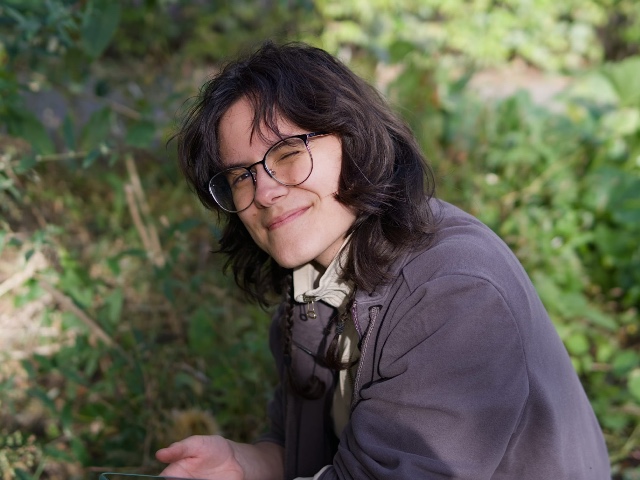
What is the Green Garden Project? And what are the values it stands for? This blog explores the student initiative to create a permaculture garden that mirrors the way nature grows food.
Initiative behind the Green Garden Project
It was a long dialogue with the university to get the garden project approved. And by long I mean that by the time the tiles were removed to start the garden, the initial founders of the idea had already finished their studies.
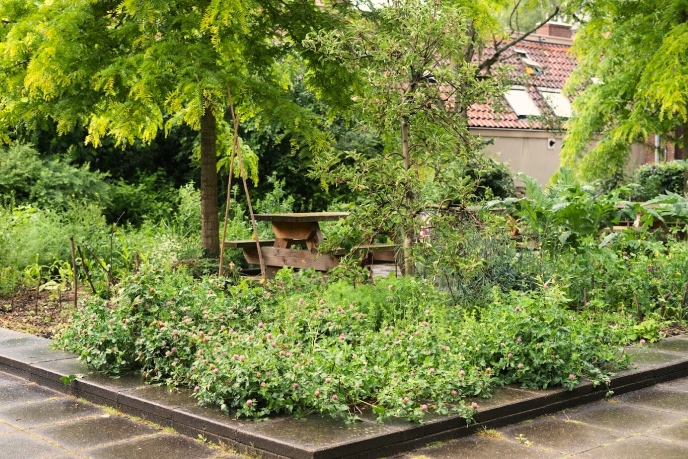
The university was concerned that after passionate students finish their studies, there would not be anyone else to take care of the garden. However, together with Cathy Hermans, the university's gardener and site manager, they found a way around this. The aim became to create a garden that is self-sustainable, a food forest that needs minimal maintenance.
Benefits of the permaculture garden
Permaculture is a form of gardening (and not only gardening), that imitates the way nature grows food. Different layers serve different purposes: groundcovers keep the soil moist and full of nutrients, nitrogen fixing plants have deep roots, shrubs and trees offer shade to some parts of the garden. These are the principles that we’re trying to implement along the fact of being fully organic and not using any chemicals, fertilizers or pesticides.
Today most of our food comes from monoculture, where neverending fields are dedicated to a single crop. This technique depletes the soil, because it does not have that diversity of plants that ensures the soil is replenished with nutrients. As a result, chemical fertilizers, which are very harmful for the environment, are used to compensate for this.
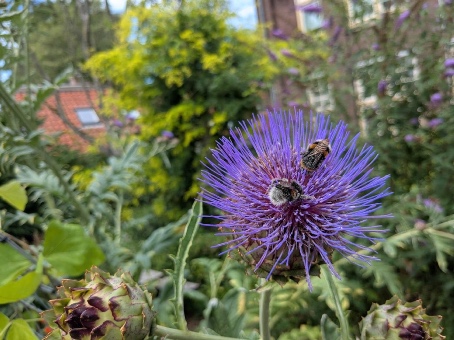
By encouraging biodiversity, we create habitats for many species, including important pollinators like bees, butterflies, and other insects. These pollinators help plants reproduce and increase crop yields naturally. As a result, permaculture systems become more resilient, require fewer chemicals, and contribute to long-term soil health and food security.
A place to learn
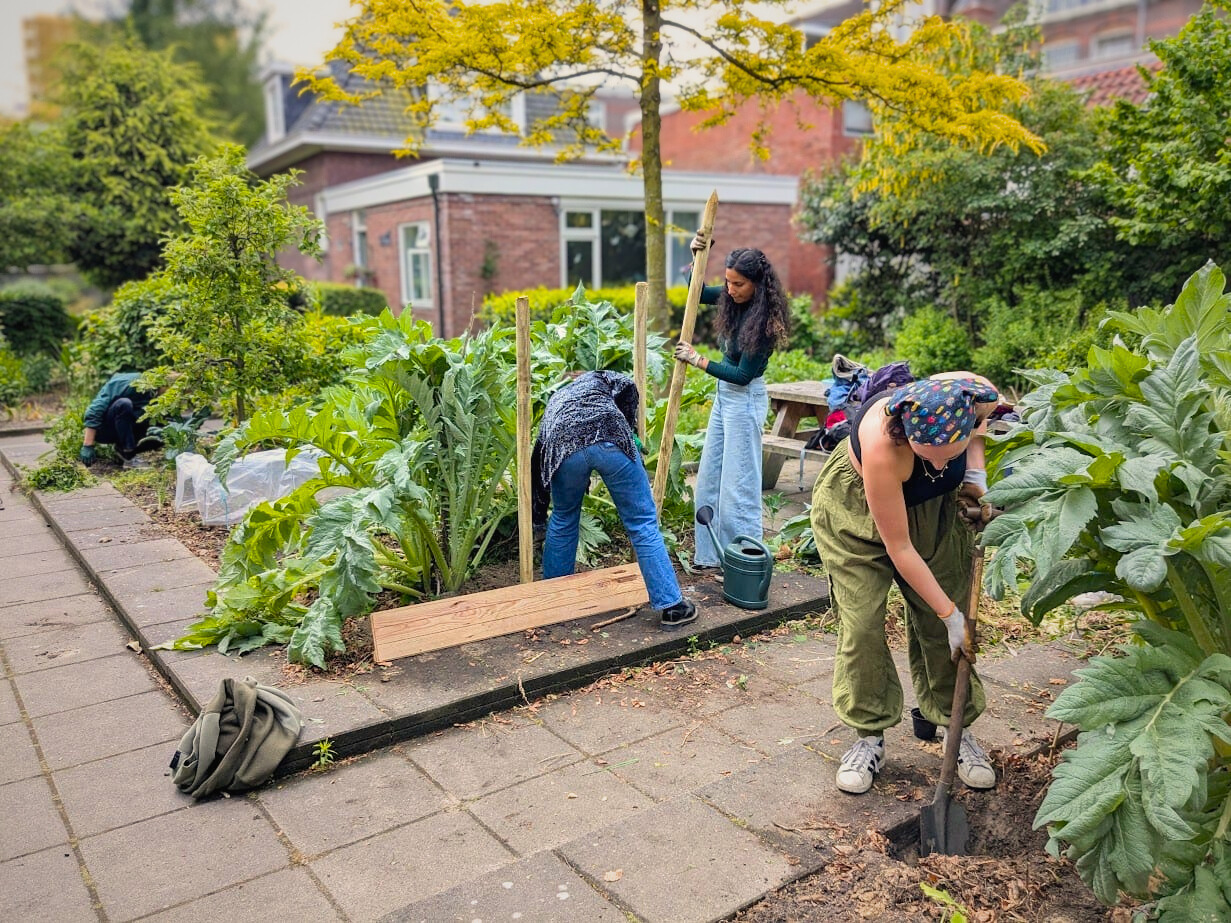
Spending time outside, nurturing a space, together with a community is one of the most fulfilling things I can imagine. We really treat it like a space to learn, no prior experience is required to be able to join the garden. The best way to learn is by making mistakes, and if you don’t go out there and practice the things you learn, they will not stick. It happened to me a few times that I mistook something for a weed, when in reality it was an herb that somebody else had planted there, and accidentally took it out. But then I realised that and put it back and learned from it.
Another time, I was told that you are supposed to germinate multiple seeds at once, because sometimes they are not successful. So, I accidentally sowed way too many tomato seeds and somehow they all ended up sprouting. I ended up with like 40 or 50 tomato plants that, obviously, did not fit in a garden. I ended up finding parents for them but I could have also taken them to a plant-swap, which is also something I would have never heard of if I wasn’t a part of the community garden.
Be part of a community
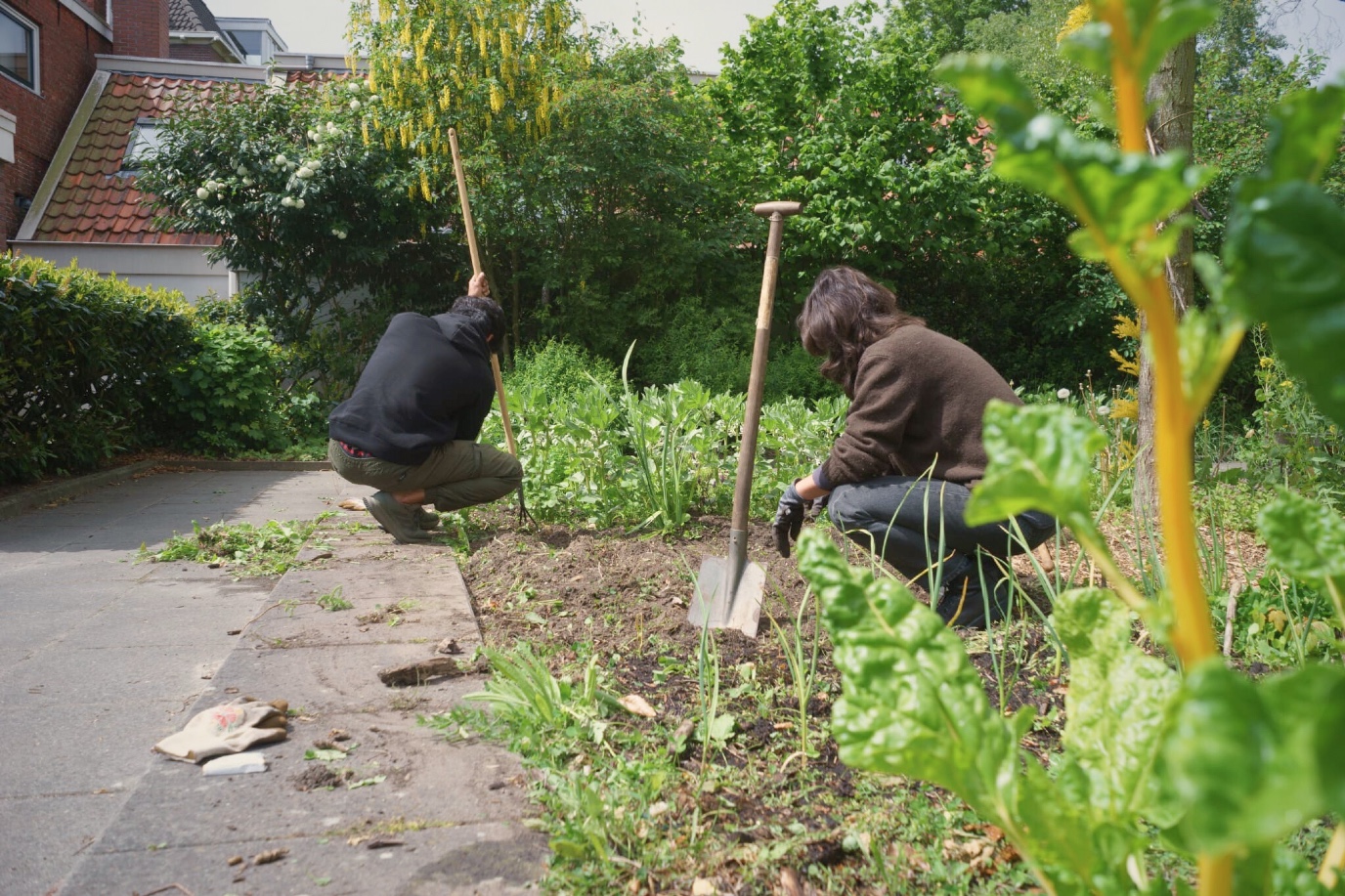
The community garden helped me find other events or initiatives and connect with various environmental groups. First of all, becoming a member of the Green Garden also makes you a Green Office ambassador. The Green Office is the body within the university tasked with environmental regulation and initiatives, they’re also our sponsors and best allies.
During my time in the community garden, I also discovered a great initiative called The Pollinators that researches and promotes native Dutch plants. You can get a pouch of seeds and then share it with others and plant them around together. It is absolutely amazing for pollinators, local insects and biodiversity.
Moreover, the dynamics of the group have genuinely been that of a close group of friends. And even though some people left and I’m leaving now, there’s a continuous flux of new members. We always aimed for this sort of organic structure. We plan and make decisions together, based on consensus, everyone can try out any idea, if it’s for the good of the garden.
Key takeaway
Most importantly, if you find the garden and there’s something you want or need to take, food or herbs, feel free to harvest anything you need. Because the garden is for everyone! So please feel free to enjoy the fruits of the garden.
Hello, my name is Milena Pintilie, I am from Romania and I recently graduated from the faculty of Economics and Business.