

Reflections on the Green Office Symposium
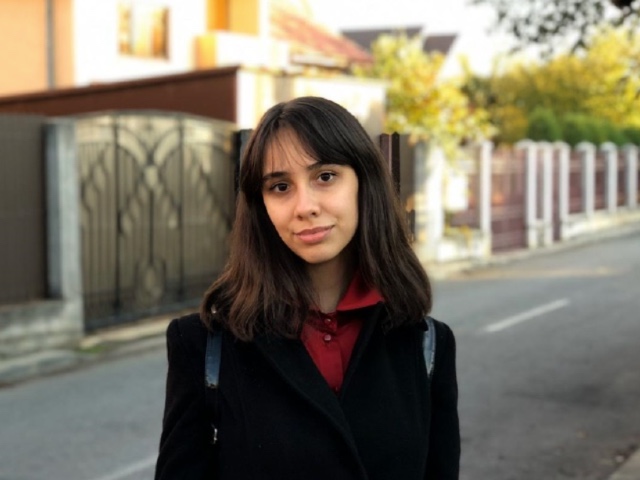
Sustainability may sound abstract, but Green Offices (GOs) exist to make it concrete. They turn ideas into action and show how change can happen in everyday university life. This blog shares my experience of attending the multi-GO symposium in Amsterdam as a student ambassador, offering a closer look at how these ideas take shape across campuses in the Netherlands.
Starting the Day - GO Symposium Kick-off
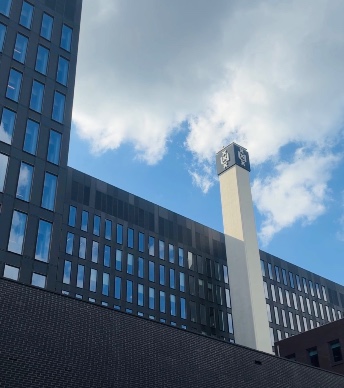
The symposium, organised by the University of Amsterdam (UvA) GO, brought together students and staff from Dutch universities all across the country. Participants joined from Breda, Leeuwarden, Nijmegen, Rotterdam, Tilburg, and Utrecht, to name a few. With around 30 attendees, the group felt diverse, but easy to connect with. It quickly became clear to me that universities are dealing with similar challenges, just in different ways.
I attended with two GO student staff members, and we took an early train from Groningen. The day opened with a short introduction, followed by informal networking over vegan snacks and drinks served in reusable cups - a small detail, but it set the tone immediately.
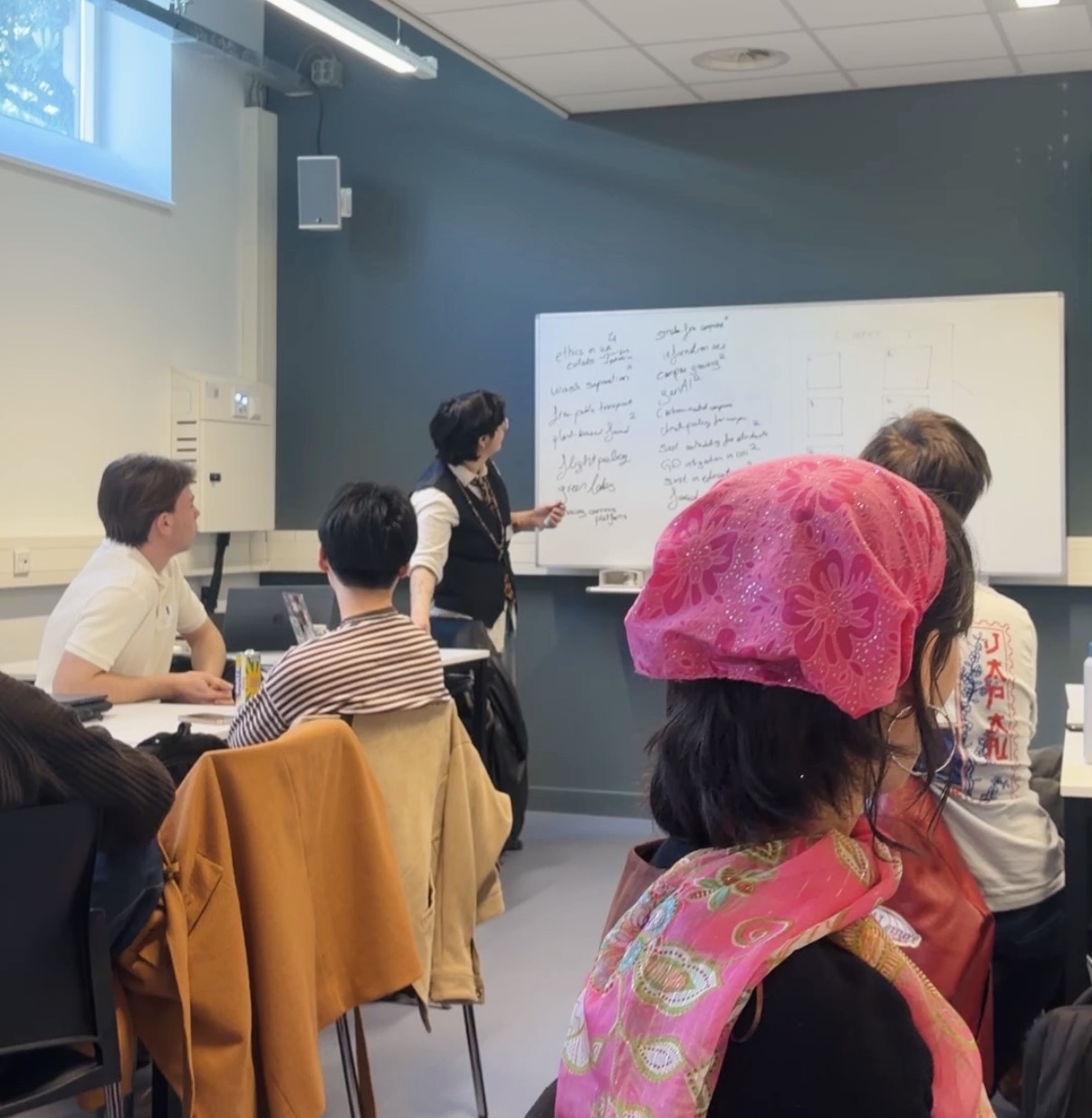
One of the most engaging parts of the symposium was how the discussion topics were selected. We chose the issues we ourselves proposed, which were then grouped into six themes: ethical considerations of university collaborations, campus greening and waste management, sustainable food policy, GenAI, integration of GOs, and sustainability in education. I joined the roundtable on waste management, as biodegradable waste had recently come up during one of our internal meetings within the GO Law Embassy which I am part of.
The discussion moved from disposal habits to a look at how universities handle waste after it is collected. Composting systems and campus garden projects came up as practical examples. Since we already have similar initiatives in Groningen, such as the Green Garden Project, it was easy to relate to these ideas and debate on how they could be improved.
Sustainability Policymaking in Universities
The morning session focused on how sustainability is organised within universities. What surprised me initially was how differently each GO operates. Some have well-established teams with permanent staff and student assistants and volunteers - which is the model here at RUG - while others work with much more limited resources. Funding plays a central role in shaping what is possible.
From a top-down perspective, the presentations made that very clear. A representative from SOS Earth, who travelled from Lancaster, discussed funding strategies, and a student speaker from Grenoble, France focused on collaboration between universities and greening opportunities within Erasmus+. The main takeaways were that grassroot projects and sustainability work depend on securing funding and building partnerships beyond one institution.
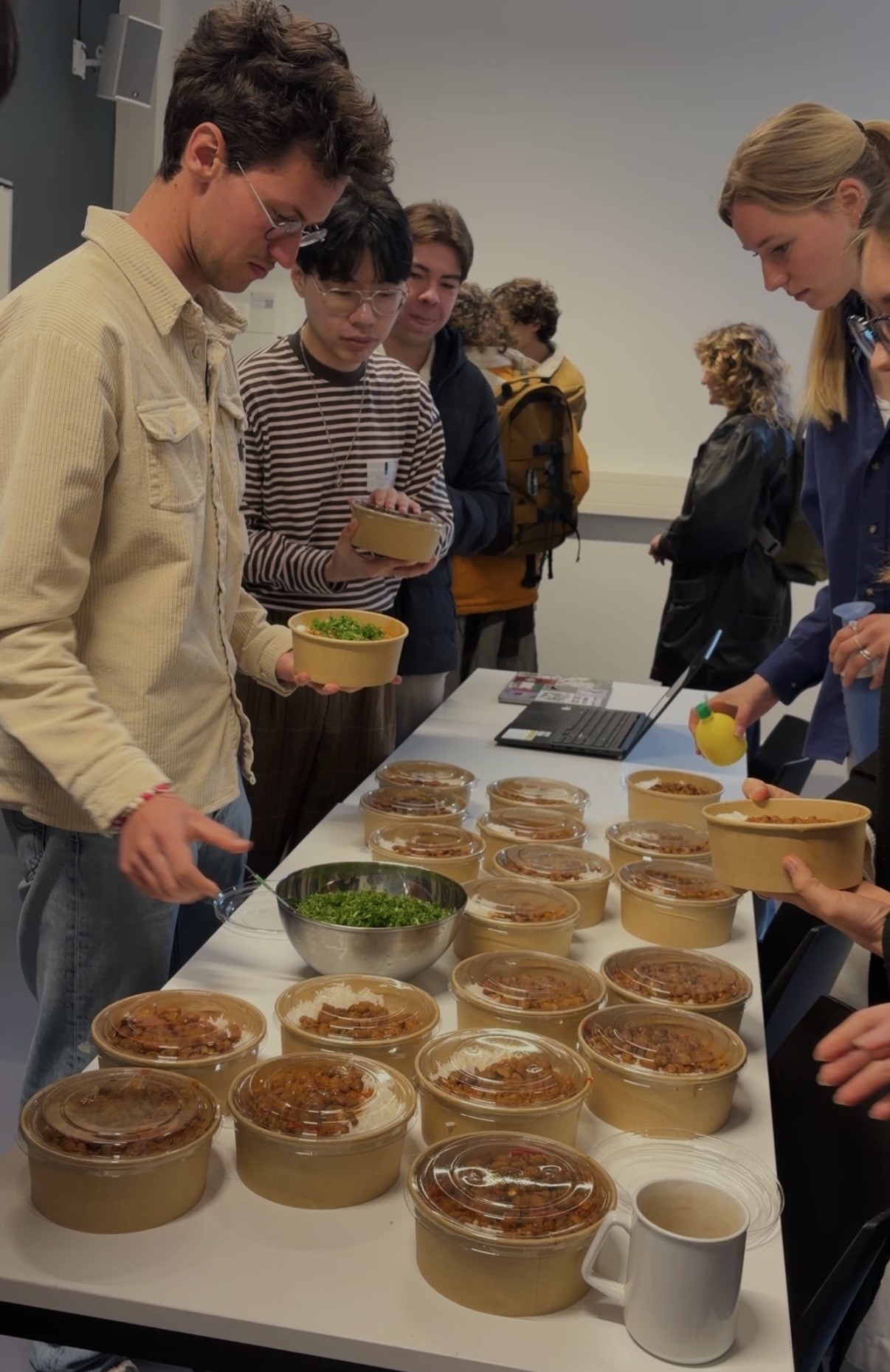
From a bottom-up perspective, food policy offered a tangible example of change. The Nieuwe Mensa at the UvA, a student-led plant-based food initiative with affordable meals, showed how sustainability can become part of daily lunch breaks on campus. A comparable initiative, De PITT at the University of Utrecht confirmed that these efforts are already taking shape across more than one campus.
Our lunch break, supported by a delicious meal from the Nieuwe Mensa, became a relaxed shared picnic where conversations flowed naturally.
Student Engagement and Visibility
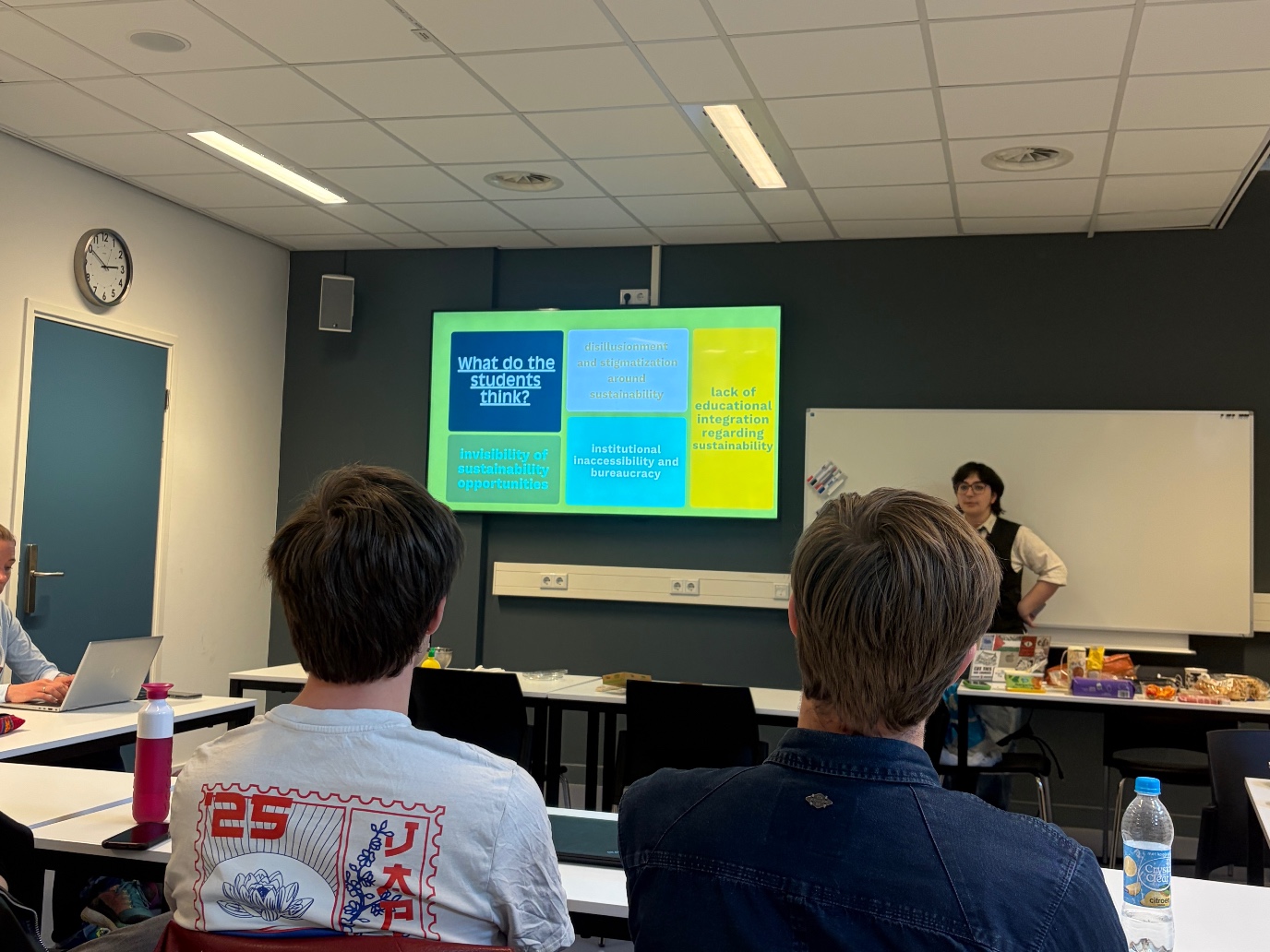
In the afternoon, the focus turned to student engagement. A presentation by the UvA GO and the Central Student Council reinforced the role of students in shaping administrative decisions and even lobbying for cleaner fuels and investments. Even more so, another presentation invited reflection on how creative practices can express and relieve climate anxiety, followed by an open group conversation mirroring the morning session. In smaller discussions, we explored how transparency and slow administrative processes affect the visibility of GOs. Some do not have a dedicated website, others seem to struggle to promote their work due to personnel capacity limits or administrative barriers. Thus, sustainability efforts can remain less visible than they should be, even when the work itself is substantial.
Closing the Day - Final Impressions
Personally, what stayed with me the most was seeing how similar challenges are approached in different ways, especially when thinking about the biodegradable/food waste issues. Attending as an ambassador made this very relevant to me, as it gave a good sense of how proposed ideas could be approached within our own initiatives here at RUG.
Hello! My name is Maria and I’m a master’s student enrolled in the LLM Energy and Climate Law program. Originally from a small but industrially active town in Romania, I grew up familiar with the issues of environmental pollution and decline in quality of life from a young age. This background sparked my passion for sustainability, especially in areas such as climate advocacy and the environmental impacts of emerging technologies. I find joy in educating both myself and others on green topics in any meaningful way I can come up with!