
‘Regeneration starts where courage meets imagination’
Kim Poldner can get very angry about harmful fast fashion companies like Shein, but her academic work (and personal mission) revolves around what is possible: restoration, renewal, and resilience. And entrepreneurs who demonstrate these traits. Her work as Professor by special appointment of Regional and Circular Economic Development is mainly focused on the Northern Netherlands, which turns out to be highly receptive to regenerative experiments and ecosystem formation.
Text: Bert Platzer
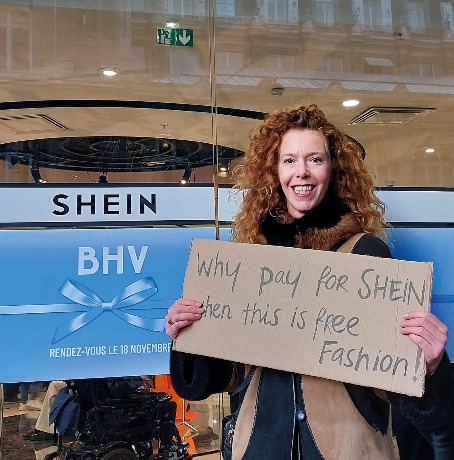
This autumn, her personal protest action in Paris went viral. It was right outside the door of new Shein store: Kim Poldner sees this Chinese fast-fashion giant as a symbol of the frenzied system she has been fighting for 20 years. ‘I’m glad that my spontaneous action drew attention to the damage being caused to the planet and our wellbeing,’ she says, ‘But my focus is on the positive: on the numerous hopeful developments and courageous entrepreneurs who are actively working towards restoration and renewal. Towards regeneration.’
This was the reason for her two different protest banners. On the one hand demanding attention for the toxic materials that Shein uses in its products. And on the other hand with a nod to the reason that so many people buy products from Shein: the cheap prices. ‘I protested in a gorgeous vintage coat that I’d fished out of a mountain of textile waste the week before. To my mind, the social movement “This is free fashion”, which is opening shops throughout the Netherlands offering free second-hand clothes, is a prime example of “reverse thinking”: our textile waste is free, while people are paying for the rubbish produced by Shein.’
Although Poldner gets very angry about monster-companies, her academic work and personal mission revolves around what is possible: restoration, renewal, and resilience. ‘My focus is on regeneration,’ she explains. ‘On the energy that is released when people, organizations, and communities have the guts to work towards something that is better than we had. Not optimizing, but healing. Not expanding something that isn’t working, but leaving the cracks untreated so that something new can emerge.’
From sustainability to regeneration
Sustainability and circularity are now everyday terms. But Poldner thinks that in practice, our approach is often too technocratic or narrow. ‘Circularity is worthwhile, but it’s usually confined to material flows, technology, or new business models. This is important, but it’s not enough.’ Regeneration takes things a step further. Our living environment is under pressure, and this is directly affecting our mental health. ‘The demolition of ecosystems is reflected in inner demolition: stress, pressure to perform, loss of purpose,’ explains the professor. ‘Recovery of planet Earth and our own recovery are two sides of the same coin.’
Local, creative, courageous enterprise
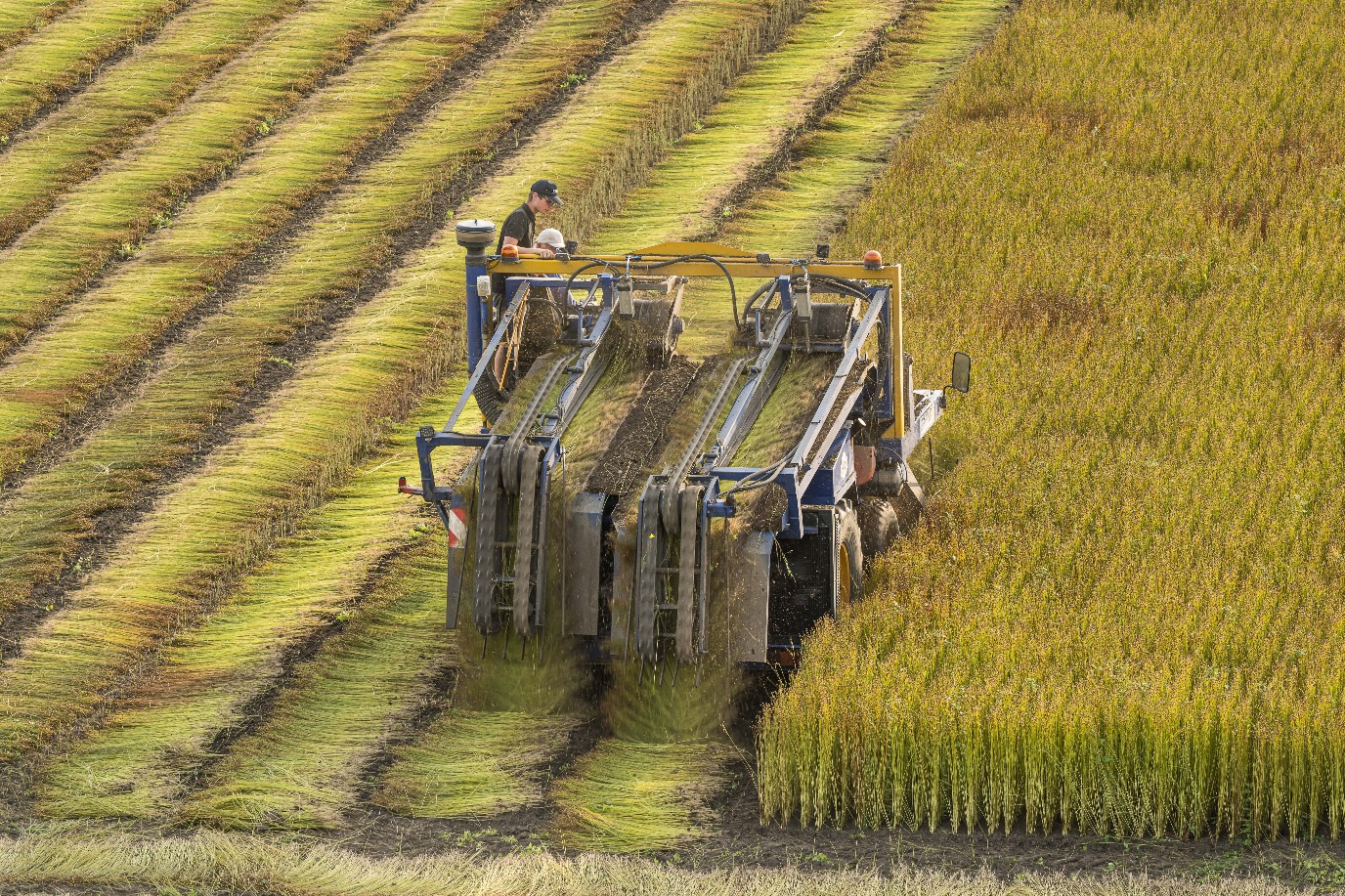
Regeneration work starts with looking at things, and dealing with them, from a different angle. Poldner cites the return of flax farming to the Netherlands as an inspiring example. Flax was once an important crop, which almost disappeared when textile production was moved to Asia. Developer Eileen Blackmore from House of Design has now brought the production of flax back to Groningen, and is making all kinds of new products from this circular, bio-based alternative to plastic. Moreover, she and the farmers are introducing flax as a rotation crop: good for the soil, better for biodiversity, and requiring less fertilizer. ‘That’s what I call regenerative enterprise,’ says Poldner. ‘It’s local, it’s creative, it’s courageous. And it shows that the economy of the future doesn’t only have to be high-tech. It can also evolve by rekindling older knowledge.’
The North as a nursery
In her job as Professor by special appointment of Regional and Circular Economic Development, Poldner mainly focuses on the Northern Netherlands, a region that turns out to be highly receptive to regenerative experiments and ecosystem formation. The SORTED project, which she is involved in, is a good example. In October, the 15 parties working together on the textile chain of the future received a grant worth €15 million. ‘The integral character of SORTED is what makes it so special,’ says Poldner. ‘It links high-tech with craftsmanship, material innovation with behavioural psychology, and private companies with the public sector and education. This is precisely where system change begins.’
So how does this look in practice? Led by textile collector Sympany, the partners are working on sorting technology and the recovery of cellulose from discarded clothing. As the automation of textile sorting requires different skills, new MBO (senior secondary vocational education) courses are being developed. And Dr Marijke Leliveld from the UG is conducting research into how consumers can be more sustainable when it comes to the way they buy and use clothing. ‘My role is to design new market opportunities and new networks for circular textile,’ Poldner explains. ‘Networks in which waste becomes a raw material, competitors become partners, and value is defined more broadly than simply in cash terms.’
Flax research 100 years ago
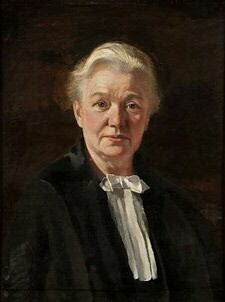
Jantina Tammes (1871-1947) was the first female professor in Groningen. In 1919, she became the first professor of genetics in the Netherlands, at a time when genetics was a new field of science. She gained international renown for her research into flax, an important agricultural crop used in the production of linen and linseed oil. Read more in the ‘Colourful Characters’ series.
Crisis as a catalyst for change
In her inaugural lecture entitled Regeneratieve Renaissance (March 2025), Poldner describes how crises create new openings for renewal. ‘COVID-19, nitrogen, climate change: they all expose the weaknesses, but they also reveal the opportunities.’ She sees the nitrogen pollution crisis a crack in the system, which is creating room for new farming practices. Her colleagues from the UG Campus Fryslân are helping farmers to switch to regenerative agriculture, including new business models such as recreation and agricultural nature management. ‘These farmers show us that regeneration is not an abstract concept,’ she says. ‘It is concrete, tangible, and encouraging.’ Regenerative leadership: from knowledge to embodiment. Although technology, innovation, and policy are important, Poldner is keen to stress that real transformation must ultimately come people. ‘You can’t change systems without changing yourself,’ she says.
‘Regenerative leadership means developing your inner compass.
It means making choices based on a sense of connection with ecology, community, and yourself.’ To underpin this, she developed a two-day retreat at the UG. The first was held last summer and a second will follow. ‘Not a traditional leadership training course, but one with time for slowing down, reflecting, and listening, alongside the theoretical framework.’
We are already on the move
Poldner’s biggest source of inspiration is the people she encounters everywhere: ‘I see so many courageous examples of how we can do things differently. People who don’t wait for perfection, but simply get on with it.’ She does not see regeneration as a thing of the future. It’s happening right now. In laboratories, in fields, in boardrooms, in classrooms. ‘You don’t need superheroes for regeneration, you just need people who are prepared to take their imaginative powers seriously. People who want to build an economy that is better for planet Earth, for communities, and for mankind. And the best bit is: we can all take that step.’
About Kim Poldner
Kim Poldner (1978) obtained a Master’s degree in Organizational and Cultural Sciences at VU Amsterdam. She worked as an entrepreneur in the sustainable fashion industry from 2005 until 2013, and was awarded a PhD on this theme by the University of St Gallen in Switzerland in 2013. In 2024, she was appointed Professor by special appointment at the UG and core lecturer at the University of Groningen Business School. Her chair is a collaboration between the Faculties of Spatial Sciences and Economics and Business, and the Provinces of Groningen, Friesland, and Drenthe.
This article has been taken from our alumni magazine Broerstraat 5.
More information
More news
-
07 September 2026
Why entrepreneurship thrives in specific regions
-
11 August 2026
InnoLaunch: Get your startup ready for takeoff in 8 weeks
-