
Dementia in migrants: does care in the native language help?
Does communication in one’s native language contribute to better care and greater well-being for older migrants with dementia? Professor of English Language and Culture Merel Keijzer and her multicultural team are seeking scientific evidence. This is urgently needed, as the fastest-growing group of dementia patients is those with a migration background. In the lead-up to World Alzheimer’s Day, she discusses her work to map language barriers and investigate how language strategies and ‘home language therapy’ can help provide person-centred care.
Text: Helma Erkelens / Photos: Henk Veenstra
Loss of second language due to dementia
For hospitals and long-term care, dementia in people with a migration background is an urgent issue, particularly as the first generation of ‘guest workers’ ages. Conditions such as Alzheimer’s, Parkinson’s, or a stroke can cause their second language – Dutch - to recede into the background. In addition to being a professor of English Language and Culture, Keijzer heads the Bilingualism and Aging Lab at the University of Groningen. Her research focuses on multilingualism and ageing.
Also affects emigrated Dutch people
‘This issue also affects Dutch people who emigrated to Australia or Canada in the 1950s, even if they spoke perfect English. They, too, revert to their native language,’ says Keijzer. ‘But if you don’t speak the language of your environment, you become isolated, and proper care is virtually impossible.’
Language barriers complicate dementia care
The loss of a second language leads to communication problems with doctors, nurses, and other healthcare professionals. Not every older person with dementia and a migration background always has a family member available to translate, and it is not always possible for care providers to arrange an interpreter. While Google Translate proves useful for purely practical matters, it is impersonal.
‘Dementia care currently falls short when it comes to language and cultural sensitivity,’ Keijzer continues. ‘Healthcare professionals have various strategies and therapies to ensure older adults feel more comfortable and less angry, anxious, restless, or depressed. Examples include music and reminiscence therapy, sensory stimulation (snoezelen), looking at photos, or a room decorated in a 1960s style. Yet, strangely enough, communication in one’s own language is not part of this. The positive news is that some hospitals and care institutions are becoming more aware of this, but generally, everyone is still searching for solutions.’
Predictor of health problems
Keijzer is an expert in multilingualism/second language acquisition and the brain. For her studies on language and ageing in people with a migration background, she received a Veni grant in 2009 and a Vidi grant in 2017. ‘When I started in Groningen in 2014, we discovered, among other things, that older Turkish women aged much faster compared to their Dutch peers. They experienced earlier cognitive and memory problems and also had poorer physical health. One of the predictors turned out to be their proficiency in their second language, Dutch, which is necessary to navigate our healthcare system.’
Avoiding care and overburdened informal carers
In follow-up studies, Keijzer observed the effects of language barriers in care situations. ‘If you do not share a language with the person caring for or treating you, interventions have little or no effect. We even saw that people avoided visiting their GP or refused treatment due to language barriers. We also found that families often took on the care themselves for this reason, resulting in older adults not receiving the best care and informal carers becoming burned out.’
Multicultural approach
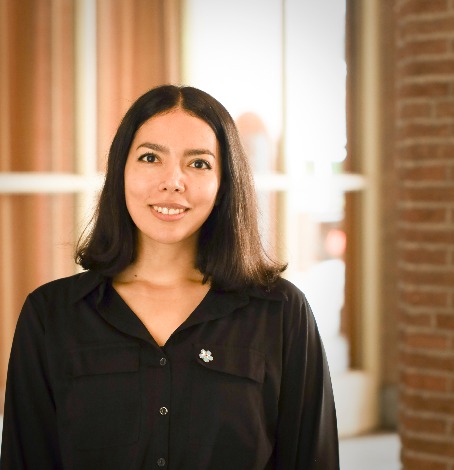
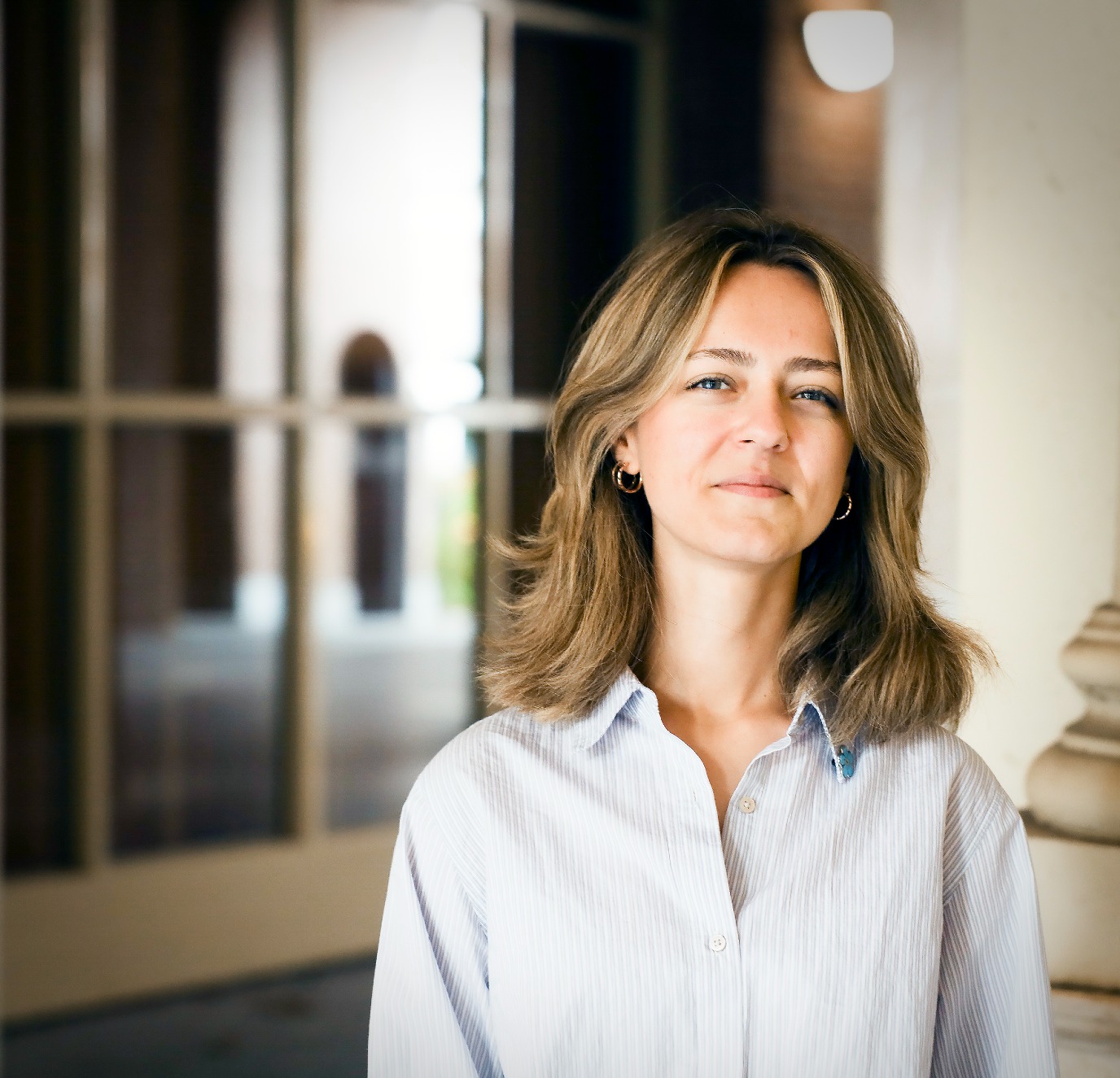
Over the next four years, Keijzer and her team aim to develop a practical definition of language barriers and explore how to overcome them. Thanks to the €1.5 million Vici grant, she has been able to appoint two PhD candidates with migration backgrounds: Ece Erol (Turkish) and Samira Khademrad (Iranian). They will conduct research in home settings, nursing homes, and hospitals. ‘This research is only possible with researchers who share the native language and culture of the participants.’
Does using the first language in care help?
Khademrad’s first language is Farsi. She will soon begin interviewing older adults diagnosed with Alzheimer’s from Iran and Afghanistan, as well as their informal carers. ‘These are usually their children, but they could also be members of their community. I will also interview professionals from the organizations we collaborate with, such as Pharos and Alzheimer Nederland.’ Keijzer wants to identify the specific language barriers in informal and long-term care and learn about the experiences of older adults and their carers. She will also investigate the effects of using the first language in care situations.
VR with images and sounds from home
Erol - whose first language is Turkish - focuses on the use of Virtual Reality (VR) in acute care for older Turkish people with dementia. VR headsets with images of calm environments and meditative atmospheres are already used in hospitals for dementia patients. What happens when these images and sounds are specifically from the person’s country of origin, with words and stories in their first language? Erol is investigating this with Turkish participants. ‘One group will receive VR with images and input in their first language, Turkish. A control group will receive VR without language, and another control group will receive regular care in Dutch without VR. This way, we want to find out whether exposure to the first language improves well-being, quality of life, and cognition.’ This research is being conducted in collaboration with the University Network for the Care of Older Adults at the University Medical Center Groningen (UMCG).
Courses for healthcare professionals
Keijzer explains: ‘The idea behind this research is that meaningful connection is possible, even if you do not share the same native language or only speak someone’s language a little. We call this translanguaging. We will develop tutorials, instructions, and an online course for healthcare professionals based on our research findings - all in collaboration with Pharos, Alzheimer Nederland, and Vilans. This ensures that people working in care or undergoing care training will already know useful language strategies when they do not share a language.’
Attention to regional languages in dementia care
The current focus is on the group where the problem is most acute: older adults with a migration background. However, even among native Dutch people, there are many who feel more comfortable communicating in their regional language or the dialect they grew up with. Keijzer says: ‘We will ensure that the knowledge can later be translated into care in regional languages - or into other language areas in Europe. One participant from Samira’s earlier research put it beautifully: “If you cannot express yourself understandably, it slowly breaks you.” This applies to everyone, no matter where their cradle stood.’
On 21 September, it is World Alzheimer’s Day. On this day, global attention is drawn to Alzheimer’s disease and other forms of dementia.
For more information
More news
-
14 September 2026
Cesspits reveal what the Dutch ate centuries ago
-
01 September 2026
Resilient local communities essential for reconstruction
-
01 July 2026
Ninah Tiemersma named Alumnus of the Year