
‘The law should be there for everyone’
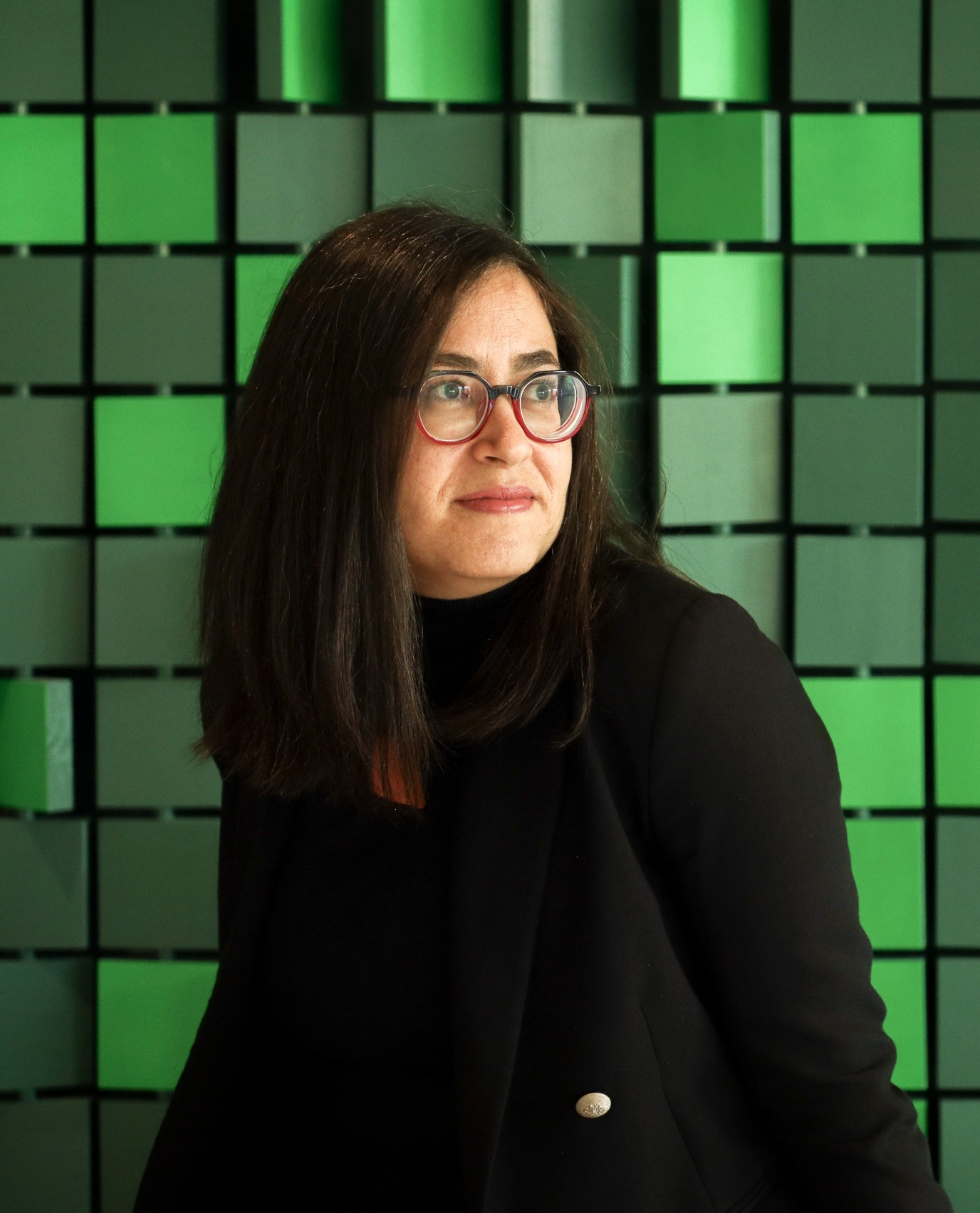
Diversity and inclusion are at the heart of Diversity Day, 6 October. For Katerina Tsampi, Associate Professor of Public International Law at the University of Groningen, this directly touches on the core of her work: the law should be there for everyone, especially for people and groups we do not always see. ‘We have to keep asking questions and make the invisible visible.’
Text: Esther van der Meer, Faculty of Law / Photo’s: Henk Veenstra
The best of both worlds
Katerina Tsampi grew up on the Greek island of Rhodes. Her father was a lawyer, her mother a teacher at a school with children from disadvantaged backgrounds. Her father taught her how much you can achieve through the law, while her mother experienced how the law can also fall short. ‘Growing up, I was fascinated by my father’s work: the fact that lawyers could claim things with the law in their hands. But at the same time, I saw my mother struggling: she had to work so hard to give her students a fair chance. I want to take the best from both their worlds: to use the law for people who really need it.’
She therefore almost naturally found her way to human rights. During her studies, she discovered the European Court of Human Rights – and she was sold. ‘I fell in love. The fact that there was an international court where you, as an individual, could bring a case, and that the Court’s judgments could have an impact on all areas of law, making both people and the law better and connecting human rights, rule of law and democracy: fascinating.’ That she did not become a human rights lawyer but a researcher was almost inevitable: ‘I became a researcher because I never stop asking questions.’
Human rights for everyone
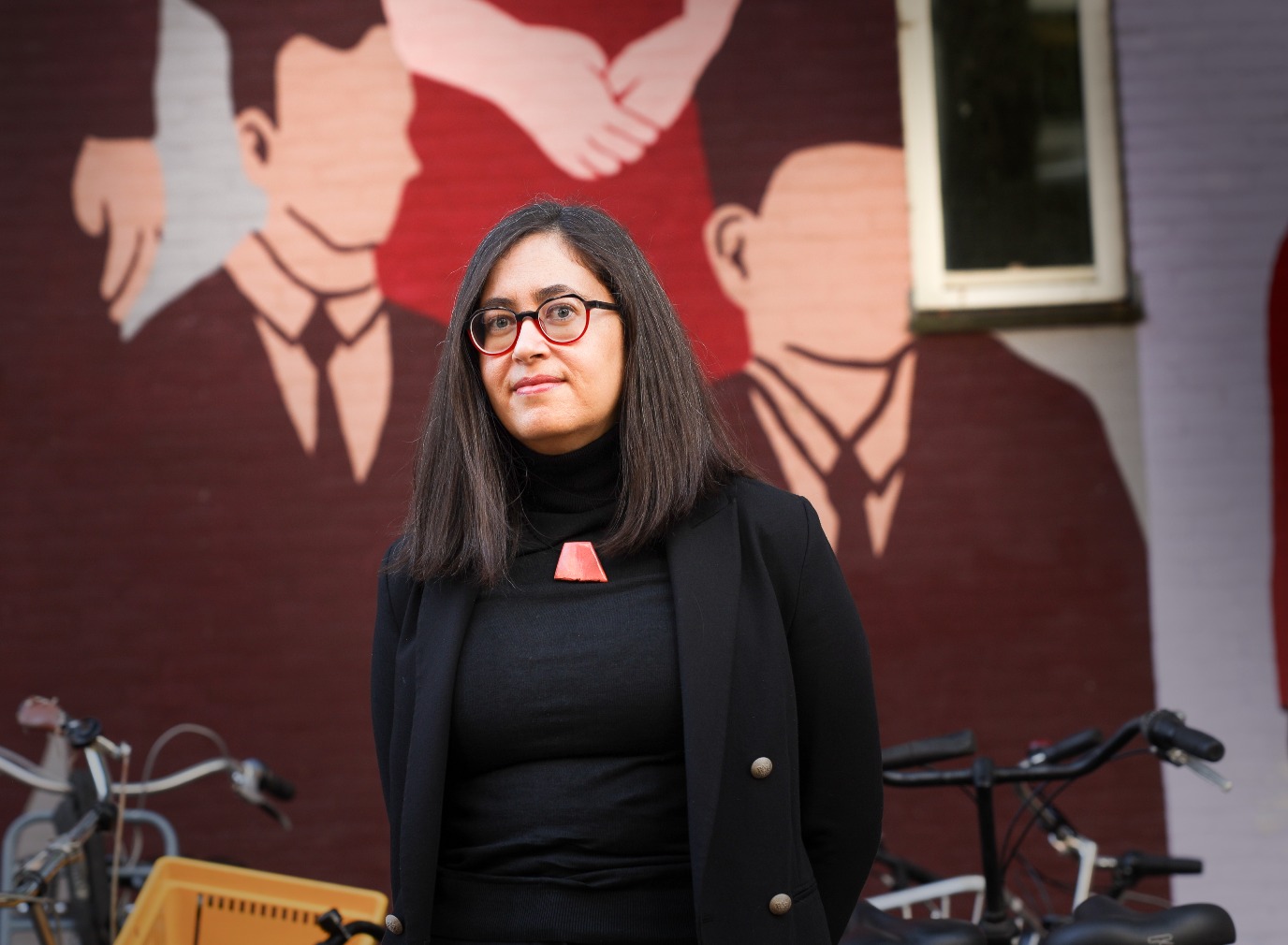
What concerns her is the question of how we can make human rights law more efficient. ‘What connects the topics I study is that we have to keep asking questions to make the invisible visible. We have to keep expanding the field, so that human rights reach as many people as possible.’
One question that keeps returning is: who do we not see? Underneath that lies a fundamental question: what mechanisms ensure that certain groups repeatedly remain out of sight, precisely in an area of law that should apply to everyone? Tsampi says: ‘Think of Roma, Indigenous peoples, people living on islands or women. It is always a work in progress: who are we forgetting? What questions are we not asking yet? That is how we make human rights stronger.’
Oppression
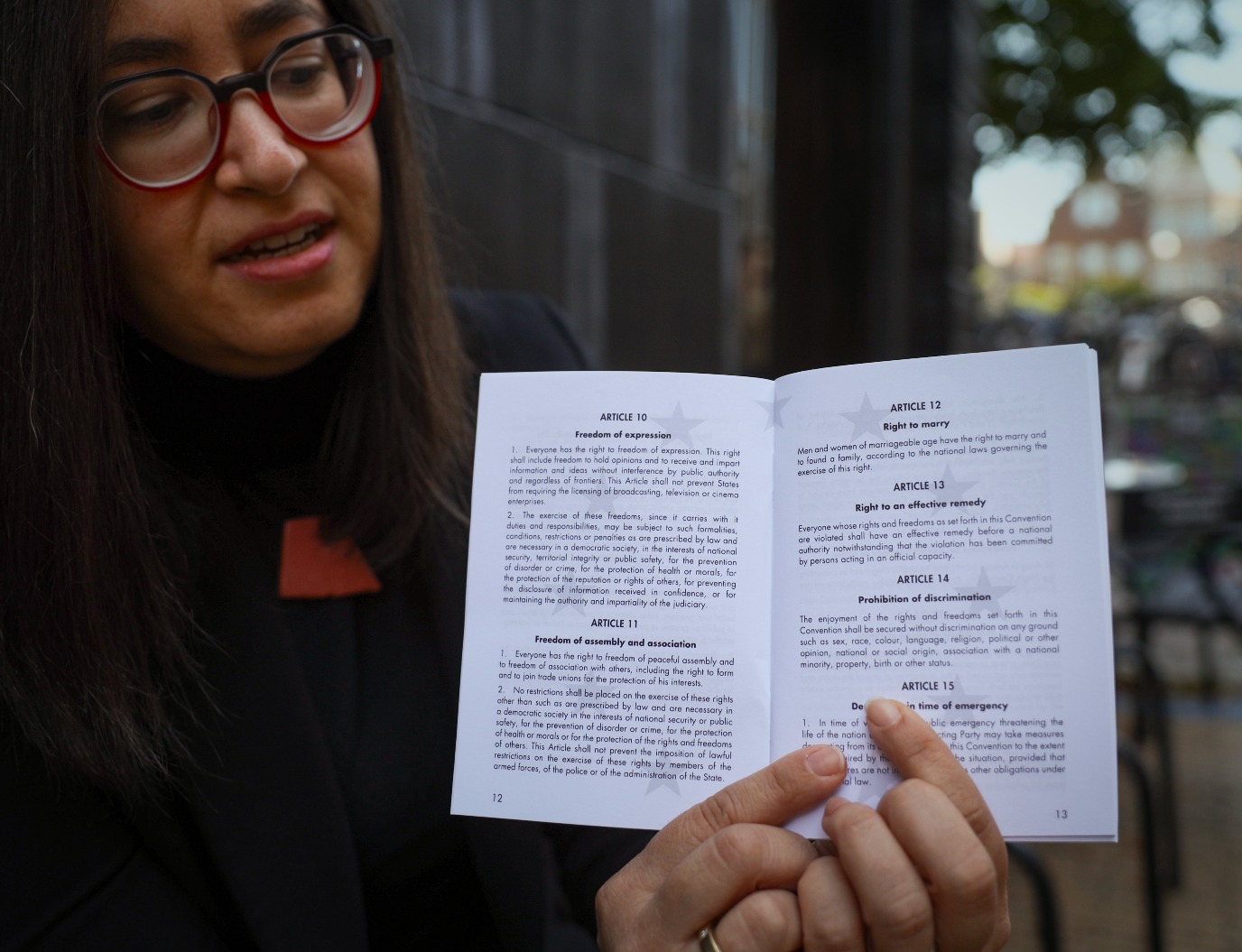
Recently, she conducted research funded by NWO into gendered political oppression: situations in which governments use human rights to oppress political opponents. A government may invoke concepts such as public order or security to restrict rights, while in reality there is a political agenda behind it. For example, to suppress or roll back women’s rights or use gendered forms of oppression. By examining the gender dimension, mechanisms that might otherwise easily remain hidden come to light. ‘This is important both for human rights and the rule of law.’
Tsampi conducts her research at a time when human rights are under pressure. This only makes her more determined to demonstrate the relevance of this field of law. ‘There is a strange discrepancy in our thinking. When human rights are violated, we say: ‘See, the law doesn’t work.’ But the law exists precisely because violations exist. I have never heard anyone say after a theft: ‘Let’s abolish criminal law.’’
The Court’s achievements
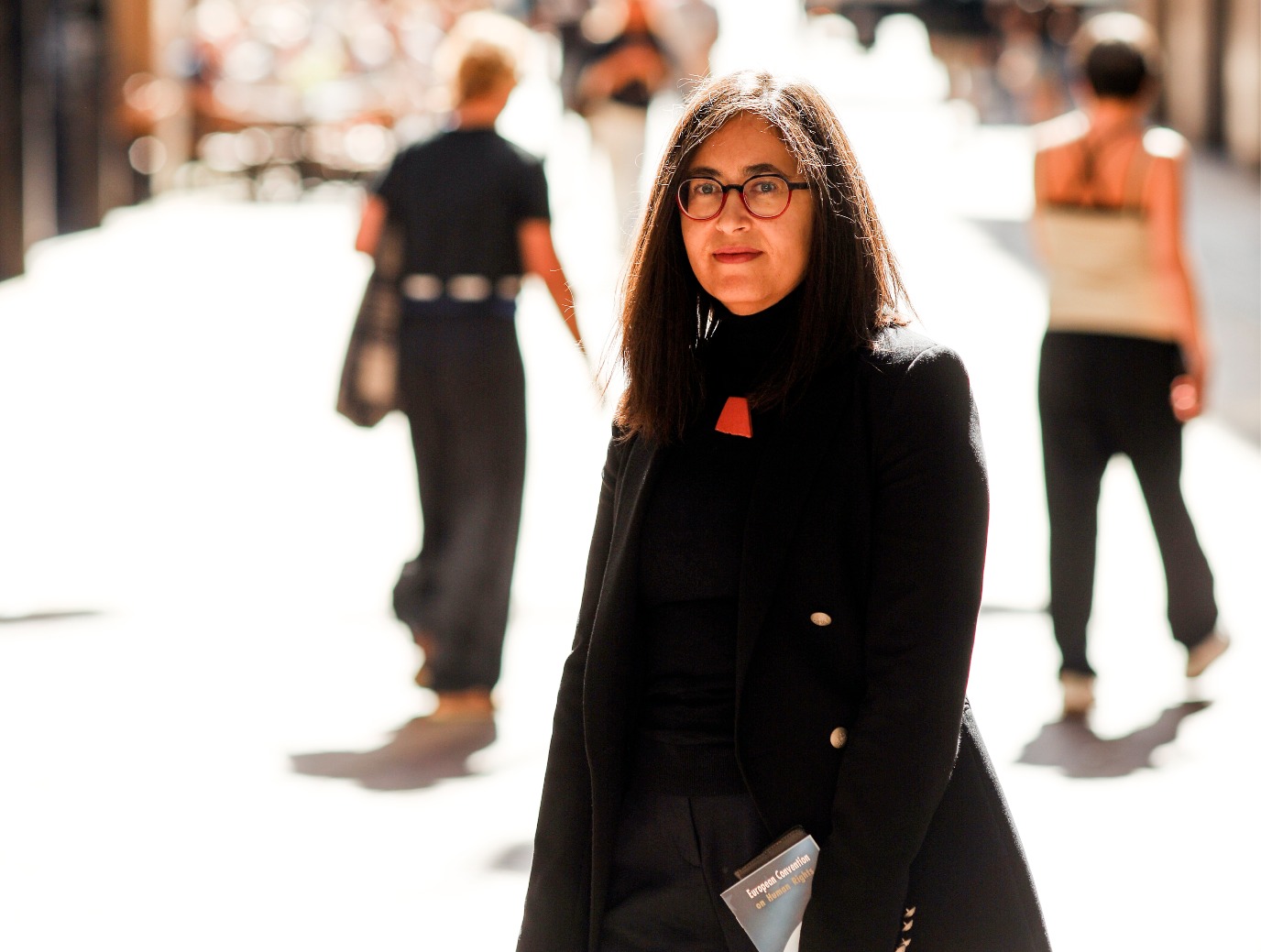
Moreover, human rights cases have already achieved so much. ‘The European Court of Human Rights has, for example, a wonderful website showing the impact of its judgments.’ Take a case from the early years of the European human rights system: the case of Frits Winterwerp. He was involuntarily admitted to a psychiatric institution in 1968 and remained there for years. He had hardly any opportunity to challenge this. The Court eventually ruled that his right to liberty and a fair trial had been violated. In 1980, Dutch law was amended: patients were given the right to be heard when a court reviewed their detention.
That does not mean that human rights work perfectly now. ‘Look at the recent judgment of the European Court of Human Rights requiring Turkey to immediately release the Turkish human rights defender and civil society leader Osman Kavala, who has been in prison for years. That is a great victory for human rights and the rule of law, but it is also a victory on paper, at least for now: because is Erdoğan actually going to release him? What means are there to make that happen? There is still a lot of work to do.’
The responsibility does not lie only with researchers, lawyers or judges. ‘Everyone should fight for human rights and the rule of law.’ Precisely because the system is under pressure, it is important not to take it for granted. ‘We have a system. We have tools. But it remains a matter of people. We need to keep defending them. That is why we have to keep asking questions, keep researching who we are overlooking, and keep looking at how we can make the law better.’
More information
More news
-
21 September 2026
Disinheritance is about much more than money
-
31 August 2026
A digital game of cat and mouse
-
03 August 2026
Opinion: ‘AI must not take the place of the judge’