
In Memoriam Doeko Bosscher (1949-2026)
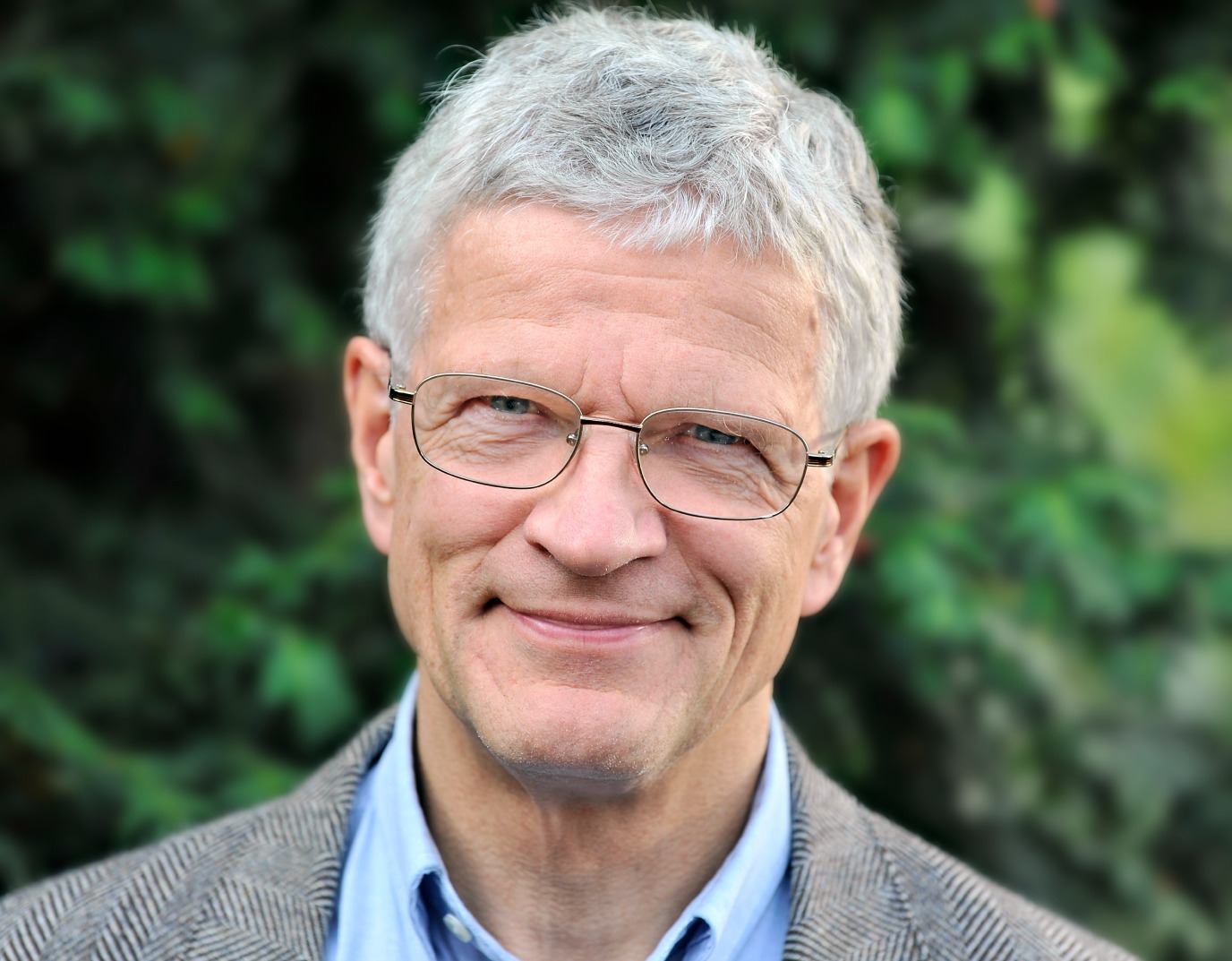
It is with great sadness and deep sorrow that the Board of the University of Groningen has learnt of the death of Professor Emeritus and former board member Professor D.F.J. Bosscher, on 15 June 2026.
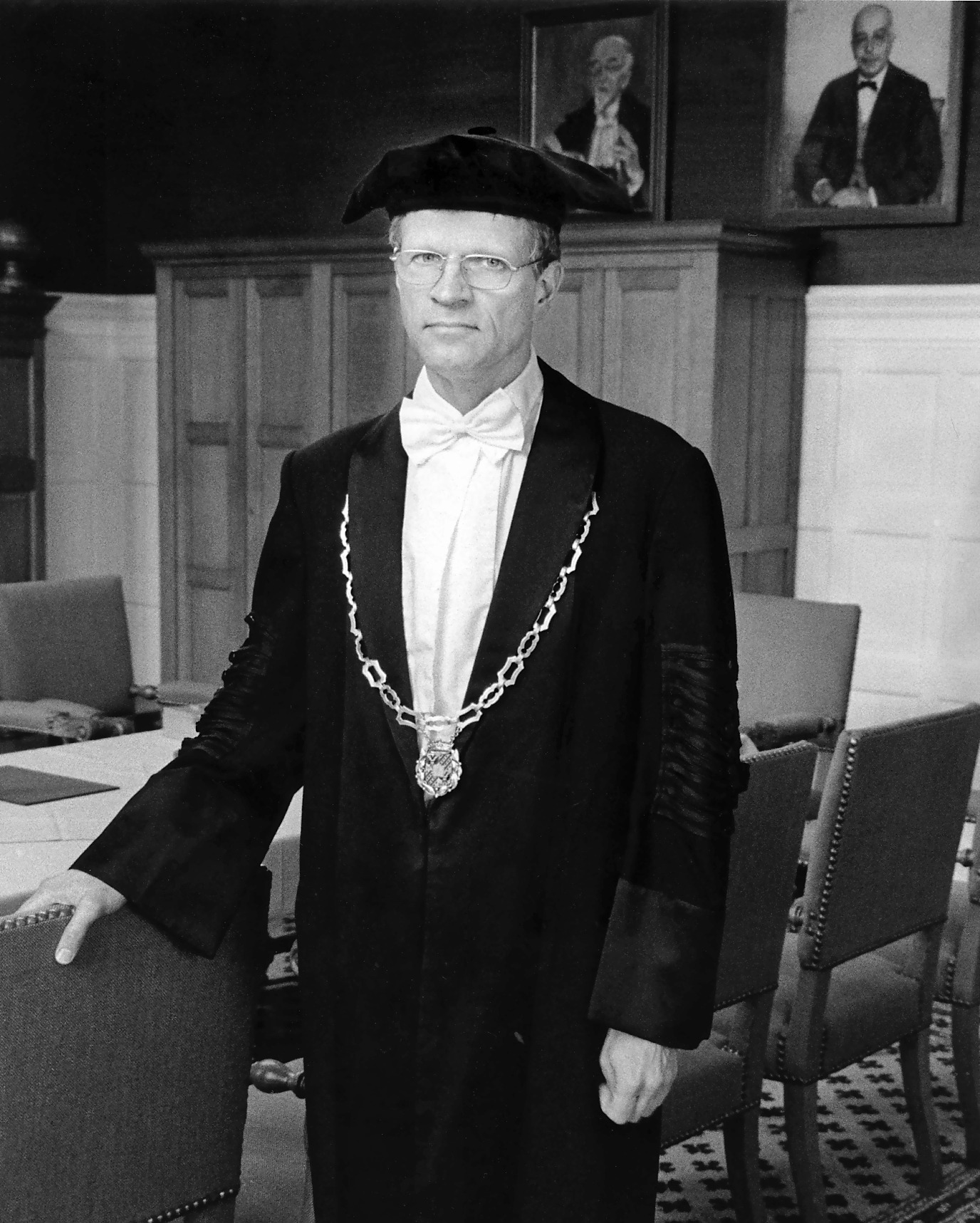
Doeko Bosscher was Professor Emeritus of Contemporary History at the University of Groningen. He was also active in an administrative capacity at the University of Groningen, including as Dean and Rector Magnificus from 1998 to 2002. He was known as an extremely conscientious and principled administrator, but decided to return to science. He was more interested in research than in meetings. Students described him as a dedicated, enthusiastic, and highly knowledgeable lecturer. In addition to numerous scientific and popular-science publications, he wrote fiction, including a novel and poems.
Doeko Fritz Jan Bosscher (Heiloo, 29 July 1949) studied history at the University of Groningen, where he was awarded a PhD in 1980 for his thesis Om de erfenis van Colijn. De ARP op de grens van twee werelden (1939-1952). In 1978, he was elected as a municipal council member for the PvdA in the then municipality of Warffum, where he served as an alderman between 1982 and 1990. In 1991, he was appointed Professor of Contemporary History at the University of Groningen. From 1994 to 1998, he was also Dean of the Faculty of Arts. He subsequently served as Rector Magnificus of the University. At his farewell, his successor, Frans Zwarts, described Bosscher as ‘the quintessential embodiment of the Groningen model of harmony, an oasis of tranquillity and dignity in what is often a hectic environment’.
During Bosscher’s term as rector, the University of Groningen celebrated its 380th anniversary in 1999. To mark this anniversary, an honorary doctorate was conferred upon the German Chancellor Helmut Kohl, who had stepped down shortly before – the man who had brought about German reunification. The award ceremony could not take place until October 2000. In the meantime, Kohl had become embroiled in a controversy in his own country over dubious financial transactions. The University of Groningen did not wish to revoke the honorary doctorate, but the academic ceremony now attracted even more national and international attention. Although Bosscher had resolved not to constantly take centre stage in his role as rector, as a professor of Contemporary History he was the obvious choice as honorary supervisor. He managed to ensure that his laudatory speech was warm and full of praise, whilst not ignoring the scandal surrounding Kohl. As Van Berkel writes in his three-volume history of the University of Groningen: ‘That requires moral courage, as clearly demonstrated by the University of Groningen – led in this instance by Rector Bosscher’.
His work as an historian and author was inextricably linked to his personal life. Coming from a Roman Catholic background himself and being an active member of the PvdA, he chose to write his doctoral thesis on the history of the Anti-Revolutionary Party (ARP), precisely because the Protestant Christian milieu was alien – and therefore of interest – to him. He had a special bond with the United States and was an expert on its history. In 1983, he spent a year at Central Michigan University as a Fulbright Scholar. He was also committed to promoting student and staff exchanges between the universities of Michigan and Groningen. This was one of the reasons why Central Michigan University conferred an honorary doctorate upon him in 2000.
Even though he was born in 1949, the Second World War had left a deep mark on the family, in which Bosscher was the youngest of seven children. His father (also called Doeko) was active in the resistance, was imprisoned for some time at Beekvliet camp near Sint-Michielsgestel, and later joined the Canadian liberation forces. His uncle, Fritz Conijn, was the leader of resistance groups in Amsterdam and North Holland and was executed by firing squad at Camp Vught in 1944, at the age of 21. In 2015, Bosscher published a book about him entitled Haast om te sterven. Het korte leven van verzetsman Fritz Conijn (In a Hurry to Die: The Short Life of Resistance Fighter Fritz Conijn).
Even after his retirement, Bosscher continued to publish regularly, in addition to giving lectures and talks at institutions such as HOVO (Higher Education for Older People) and Studium Generale on topics including the Second World War and American foreign policy. He took part in academic discussions and commemorative events, where he reflected on such topics as the value of freedom. He was also chair of the Supervisory Board of the Camp Westerbork Memorial Centre.
Bosscher had a special bond with the terp village of Warffum and the neighbouring Wadden Sea. He served as a municipal council member and alderman there until it became part of the larger municipality of Het Hogeland in 1990. In 2004, he published the novel Strandvondst (Beach Find), in which a man (an alderman) sets out to discover the origins of the body of a Canadian sailor that has washed ashore on the coast of the northern Netherlands. In Omringd door water (Surrounded by Water), which was published in 2021, Bosscher – together with his ‘partner in crime’ Jan Bank (also an emeritus professor of history, but at Leiden) – described the 25 islands in the European part of the Kingdom of the Netherlands: 8 that still exist (‘real’ ones) and 17 former ones. When he was an alderman for the municipality of Warffum, Bosscher regularly visited the island of Rottum, which was part of the municipality at that time. ‘You can hardly be any freer than on an island, precisely because you are trapped there. This island feeling is the perfect paradox’.
Bosscher remained involved with the University of Groningen until the very end, including as a board member of the Nicolaas Mulerius Fund. On 16 June 2025, he delivered a lecture in the Aula of the Academy Building to mark the celebration of 80 years of freedom, during which he specifically addressed academic freedom.
More news
-
-
03 September 2026
Ming Cao reappointed as scientific director of the Jantina Tammes School
-
01 September 2026
Evrim Ursavas appointed scientific director Wubbo Ockels School