
Islands as testing grounds for a sustainable society
Remote, close-knit communities in ecologically unique environments are some of the defining characteristics of many islands. This makes them particularly well-suited for research. The Islands & Sustainability Lab is an interdisciplinary knowledge network that conducts research and shares knowledge about islands across faculty and national borders.
Text: Jaap Ploeger, Corporate Communication UG | Photos: Henk Veenstra
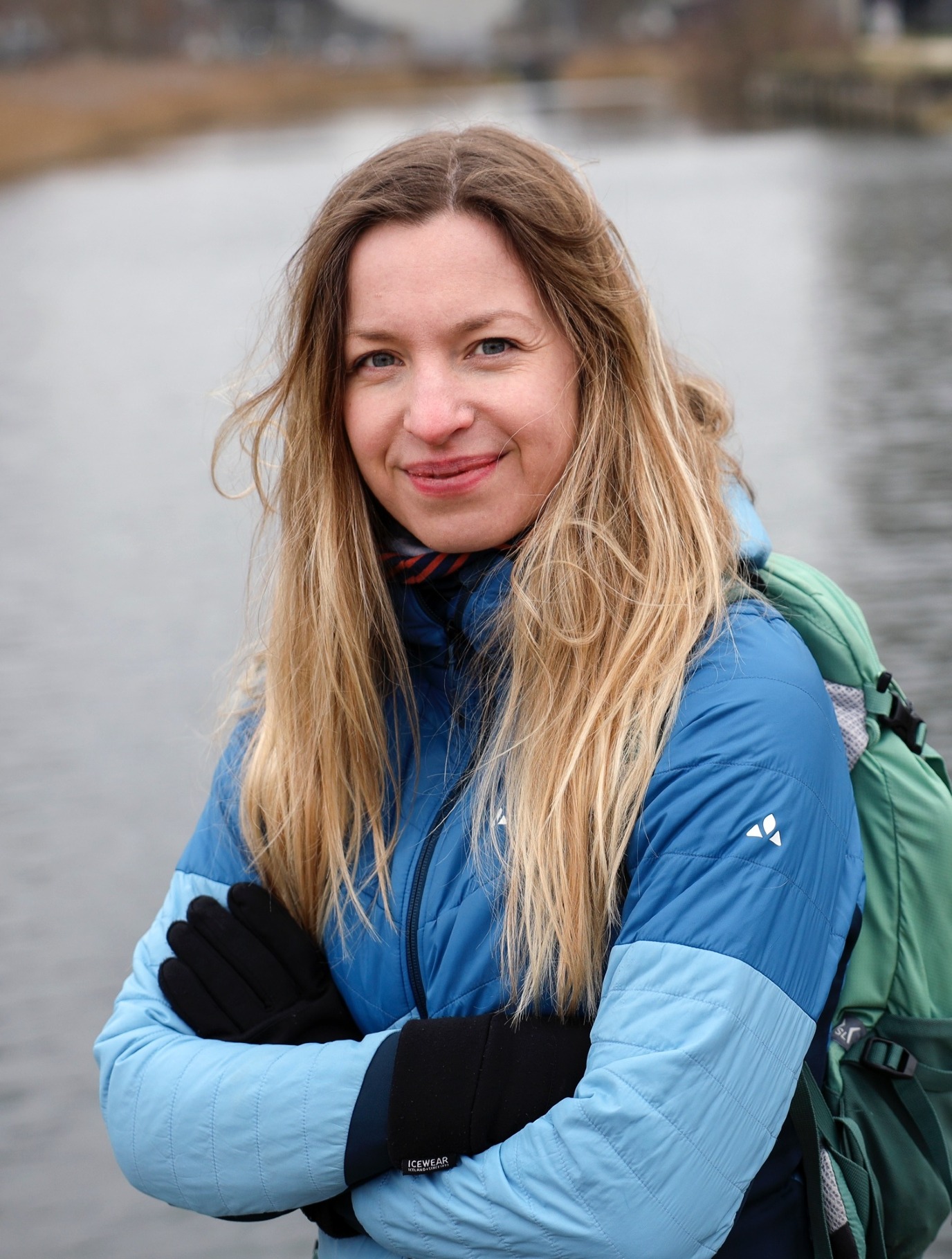
Loes Bouman is an assistant professor at Campus Fryslân. She has contributed to various island studies that focus primarily on citizen participation in the transition to more sustainable living.
Islands and Research
What makes an island so well-suited for scientific research? 'Islands are often places with a distinctive identity. They are frequently isolated communities where social changes are magnified in a concentrated space,' explains Bouman. 'At the same time, islands are also increasingly dependent on cooperation, because they can no longer exist completely autonomously. That unique situation makes islands suitable for certain research questions, because they are less directly influenced by surrounding countries than the mainland. Within the field, we therefore also speak of "islandness."'
Islands have traditionally had to rely on themselves. The distance from the mainland means there are many close-knit partnerships with short lines of communication within tight-knit communities. ‘That has both advantages and disadvantages during transitions,’ says Bouman. ‘Because residents know each other and each other’s viewpoints quite well, there can be social pressure to agree or disagree with something. There is less anonymity. On the other hand, a compromise can be reached more quickly, and the consequences of choices become visible sooner.’
Sustainable Development
According to Bouman, islands provide an ideal setting to examine the dynamics at play in areas such as sustainability or the energy transition. For example, the Danish island of Samsø, with a population of 3,800, has become completely self-sufficient in energy production. They achieve this through wind, solar, and tidal energy. 'For the H2020 SMARTEES project, I collaborated with social complexity and simulation expert Wander Jager to investigate how that energy transition was shaped. We wanted to understand how support was built within the communities on Samsø to make that sustainable transition.'
Bouman utilized simulation methods, interviews, questionnaires, and workshops. In doing so, she examined how people within social networks on the island formed ideas about the energy transition. 'The run-up to the transition on the island was quite long. There was also some polarization regarding the ideas, particularly concerning people’s own financial contributions. It requires quite a personal investment, which was a barrier for some residents. An important policy strategy was therefore the organization of many drop-in sessions where the islanders could discuss it with one another.' Residents wanted to be heard, which ultimately helped increase support. They were also kept informed of the plans more quickly and discussed them more with one another.
Knowledge Network and Incubator
The Islands & Sustainability Lab was established by Dimitris Ballas, professor of economic geography, and is housed within the Rudolf Agricola School for Sustainable Development. The Lab organizes symposia and meetings several times a year where international island researchers can meet. This facilitates the sharing of knowledge about island research.
The Faculty of Spatial Sciences also hosts the two-year research master’s program in Islands. Bouman: ‘The research questions devised by these master’s students often lead to broader collaborations. After graduation, students often go on to work at research institutes in the field of island research or pursue doctoral research.”
Islandness in Iceland
One of these PhD candidates is Sissal Dahl. Dahl has examined how the concept of islandness in Iceland contributes to understanding attitudes toward climate change and sustainable development. Working with islandness means emphasizing the many factors that together shape local dynamics and influence sustainability initiatives.
'While this work deepens our understanding of the specific local dynamics that influence attitudes toward climate change in Iceland, it also highlights the need for locally sensitive and meaningful sustainability initiatives, even beyond islands.' The research builds on work by Bouman and Ballas conducted within the EU-funded project PHOENIX: The Rise of Citizens’ Voices for a Greener Europe. In that project, they used simulation methods to map these attitudes on a regional scale.
Tackling deforestation
In Iceland, deforestation and the resulting soil degradation are major problems that the government is committed to addressing. Instead of relying on general scientific research, the project is exploring how Icelanders in the affected areas can be engaged to tackle the specific problems.
'As part of this project, a computer game was developed in consultation with residents and policymakers under the leadership of Professor Ben Henning,' Bouman explains, 'allowing them to virtually redesign an area affected by soil degradation caused by deforestation. People could also find scientific information within the game to familiarize themselves with the issue.' Later, the information from the game was used in the plans being developed. In this way, residents, policymakers, and academics are working together to determine how the problem of deforestation and soil degradation can be addressed locally.
Self-reliant and creative
Because islanders know they depend on one another and must solve problems together, they are also more willing to help each other. Research on the Wadden Islands confirms this. 'The reliance on ferry services and limited mobility means that islanders are resourceful and creative in compensating for that dependence. They also find out more quickly from one another if someone needs help or, for example, a job. This is where you see a difference from other places where mobility can be a limiting factor, such as in North Friesland or Groningen. There, people are more likely to be on their own.'
According to Bouman, there are lessons here for policymakers on the mainland as well. It makes sense to invest in citizen participation and to have communities work together to find solutions to problems and social innovations. This creates greater support among residents for a more sustainable future, even if you don’t live on an island.
More information
Dossier circularity & sustainability
The world faces significant challenges in climate change, resource scarcity, and environmental pollution. At the University of Groningen, we contribute to solutions through groundbreaking research and education in circularity and sustainability. In this dossier, we highlight the latest insights, projects, and collaborations that advance a circular economy and a sustainable society.
More news
-
02 June 2026
Impact | The Grounding AI Map
-
-
24 March 2026
A secure, resilient society starts at the local level