
Are robots the solution?

Robots are being used in more and more applications. In industry, at home, but especially in the service sector. Technological developments in this area are advancing rapidly, but our knowledge on how to best utilize robots in practice is lagging significantly behind, according to Jana Holthöwer. She studies the interaction between consumers and robots. ‘Robots are more than just technical tools – they shape how people experience care, support, and services. The key is not to use them in all circumstances, but to identify the moments when they actually add value.’
Text: Gert Gritter, Corporate Communication UG
Holthöwer’s research focused on the question of how you can encourage consumers to accept service robots, work with them, and be satisfied with the services they offer — and particularly in health and elderly care. This growing adoption of robots is particularly significant in these areas, where staff shortages are already a major challenge and are expected to worsen in the coming decades. Thus, organizations have been compelled to search for alternative sources of labour. Robots are being considered a logical solution.
Robots and condoms
Holthöwer obtained her PhD cum laude in 2024 from the Faculty of Economics and Business, where she now works as an assistant professor in the Marketing department. This year, she also received the Nicolaas Mulerius Prize for the best University of Groningen PhD thesis of 2024. ‘When my parents had to explain to acquaintances what my PhD research was about, they jokingly said it had something to do with “robots and condoms”. That was always an interesting conversation starter. As odd as that sounded, it actually pointed to a core insight of my work: people actually prefer interacting with a service robot rather than a human when they feel embarrassed. In one of my dissertation projects, I found that consumers are more willing to use service robots in situations where a human employee might make them feel judged—whether because of the product they need, like condoms, or because scheduling a sensitive doctor’s appointment. These findings matter. Embarrassing service encounters can have long-term negative consequences for companies because consumers avoid the service provider in the future. And in healthcare, avoiding services due to embarrassment can even put people’s well-being at risk.’
Uncanny Valley
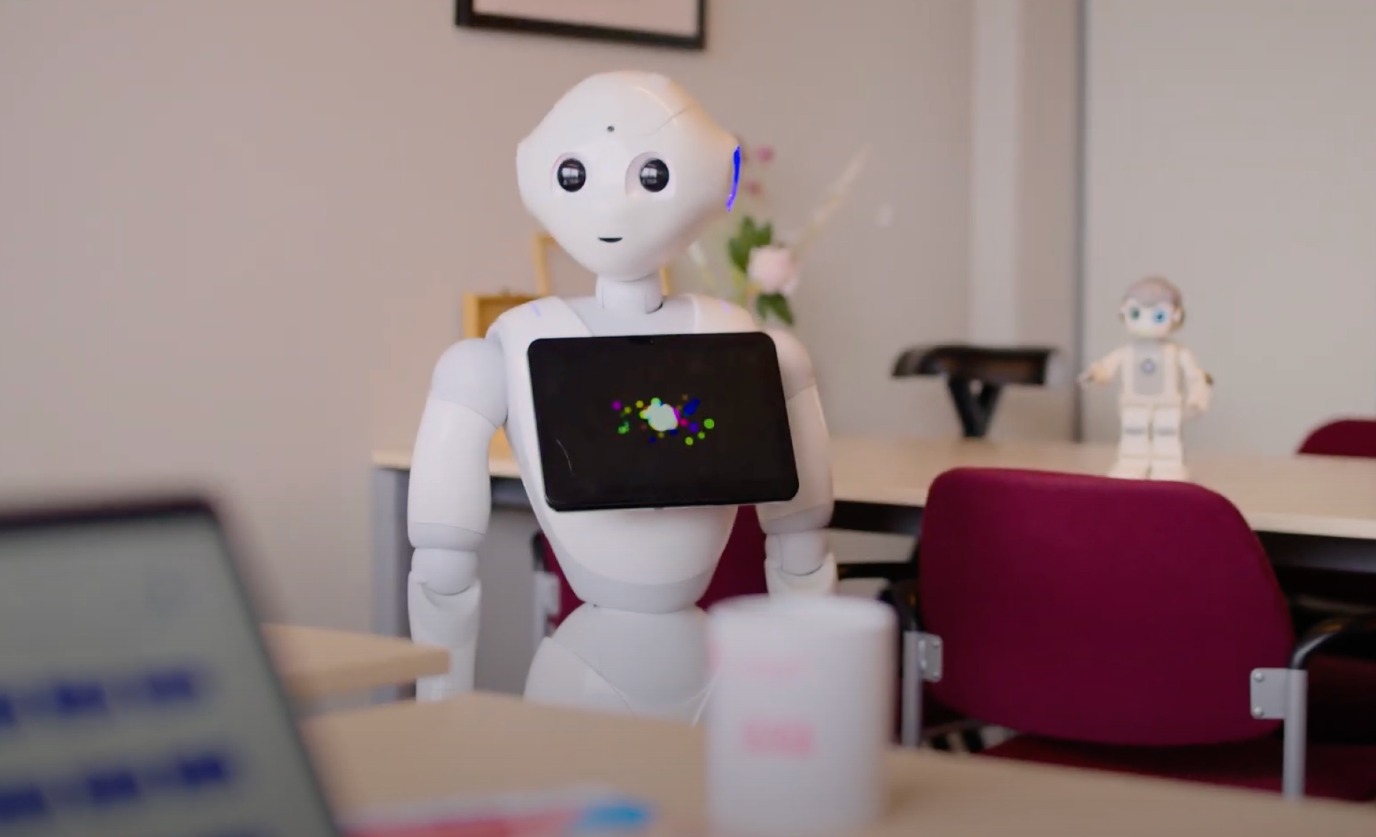
The holy grail of robotics is often to make them as human as possible. ‘The theory of the ‘Uncanny Valley’ has long been known in robotics. This term refers to the shape of a graph depicting how people perceive robots. Beyond a certain point, people begin to dislike humanoid robots — and so the graph starts to go downhill — namely when they start to look like real humans and become uncanny. The robots my colleagues and I use for research have friendly, approachable faces. We use Pepper and Maatje. Pepper is 1.20 metres tall. This height is convenient to accommodate patients who are typically lying down or sitting, as it allows for contact on eyelevel. It can be somewhat unsettling when a robot looks down on you. Maatje (Dutch for ‘buddy’) resembles a Lego figure, about 35 cm tall. It can also be a real companion. For example, for elderly people with dementia or people with autism, with whom it is difficult to make contact. Maatje can play a game with them, ask them how they are feeling, whether they have taken their medication, and whether they have eaten yet.’

Autonomy
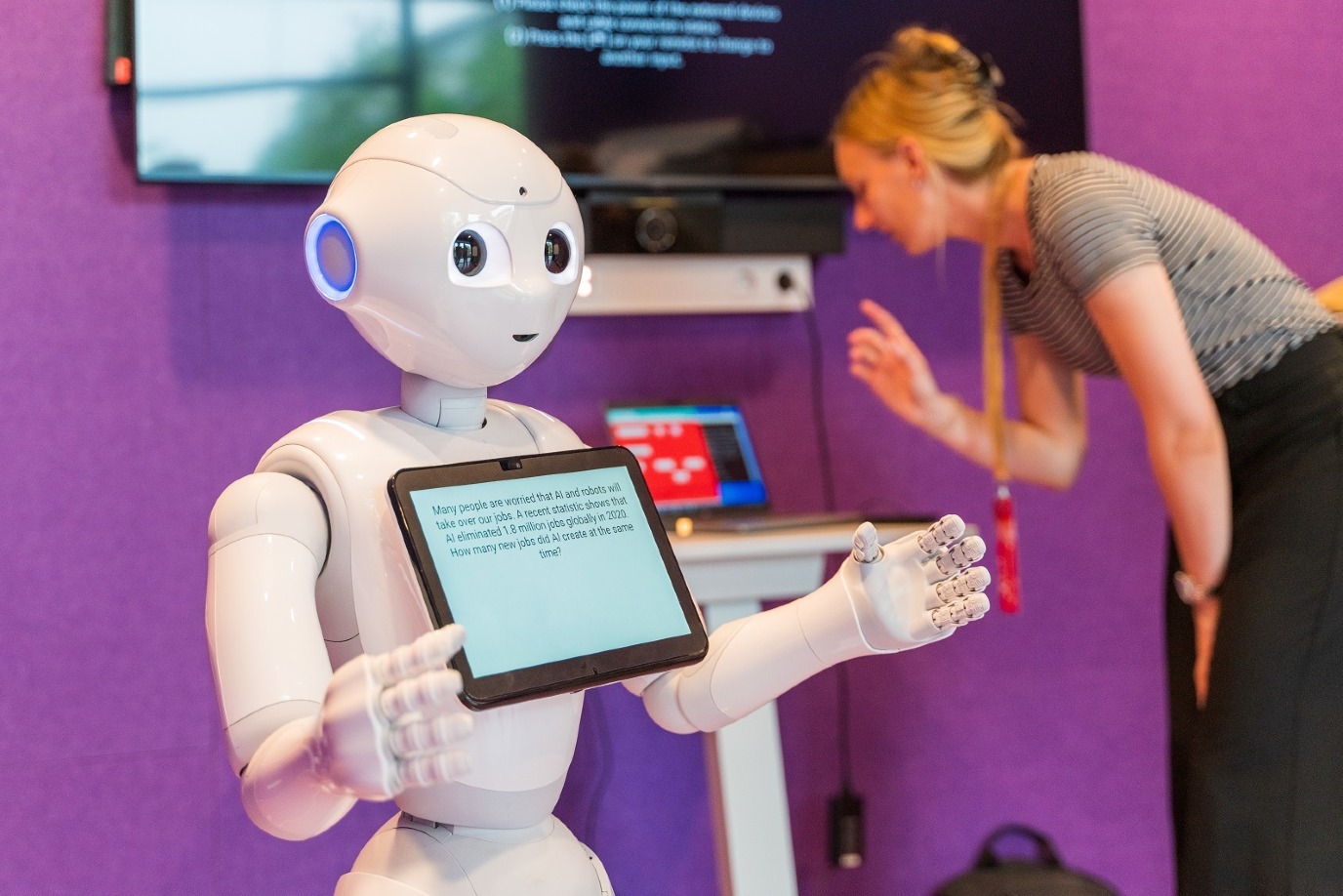
‘A robot can be defined as an AI system in a physical casing that performs physical as well as nonphysical tasks and can operate autonomously,’ says Holthöwer. This level of autonomy also determines how users experience and appreciate interacting with robots. ‘Many consumers feel a resistance to robots and sometimes react negatively or sceptically. As a result, they do to not follow requests from robots or ignore their advice, dismissing them as insignificant and incapable of understanding human needs. Although highly autonomous robots have the potential to transform service experiences through efficient task execution and personalized interactions, I found that in frontline contexts, especially in healthcare, full autonomy is not always the most effective approach. In some cases, limiting a robot’s autonomy can actually increase compliance. Greater willingness to follow advice from service robots can lead to real benefits: better health outcomes, fewer hospital returns, smoother recovery, and improved well-being. In the long run, this can also reduce healthcare costs and create value for both providers and society.’
Acceptance
Is the attitude towards robots not bound to change as the general public becomes more accustomed to them? Holthöwer: ‘Absolutely. And we’re already seeing this happen. As people interact more often with AI, through tools like ChatGPT or smart devices, robots and intelligent systems start to feel much more familiar. Research across different fields shows that this growing familiarity usually leads to greater trust and acceptance. But acceptance takes time and needs to come from all sides. In healthcare institutions, for example, not only patients will have to adapt, but so will staff.’
Will robots take over the world? ‘Predictions like that are fun in movies, but in reality, there are strong technical, ethical, and legal limits on what robots can do. Robots will take over certain tasks, especially repetitive or physically demanding ones, but not society. Still, I think it’s important to stay critical, ask questions, and not blindly trust everything AI produces. At the same time, I’m very curious to see how things develop. This is truly the job for me. I love working with robots and observing how people interact with them. I’ve learned that the most exciting developments are still ahead of us—and while robots won’t take over the world, they might make everyday life a bit easier.’
More information
-
Nicolaas Muleriusprijs (with video)
More news
-
07 September 2026
Why entrepreneurship thrives in specific regions
-
11 August 2026
InnoLaunch: Get your startup ready for takeoff in 8 weeks
-